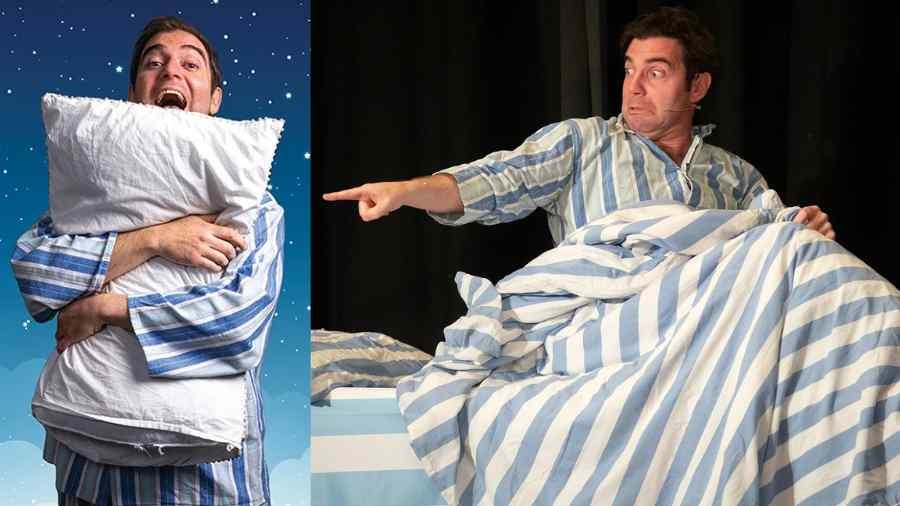
Mr Sleepybum is not merely a children’s show—it is a riotous, imaginative journey through the landscape of dreams, staged by a single whimsical performer. At its core, Mr Sleepybum is a character who recreates his wild, impossible nightly visions on stage with playful energy, physical humour, and boundless audience interaction. From gargantuan dinosaurs to flying beds, his dreams erupt into colourful chaos that enchants both children and adults.
The Birth of Mr Sleepybum
Concept and Inspiration
The idea behind Mr Sleepybum emerged from the fertile mind of character comic Jody Kamali. He conceived a show in which a man reenacts his dreams on stage—soaring into fantasy, distilled through the lens of absurdist humour. Children naturally drift between reality and imagination; Mr Sleepybum plays on that fluid boundary. He doesn’t just tell you about a dream—he becomes it.
The strength of this premise lies in its simplicity and universality. Everyone dreams, yet those inner visions are private. Mr Sleepybum externalises them theatrically. It invites children into the mysteries of sleep, fantasy, and laughter.
Early Development & First Performances
When first developed, Mr Sleepybum was a tight, compact show. The solo performer had to carry the narrative, the energy, the props, and the audience engagement all by himself. Early runs in small venues and festivals allowed the show to hone its pacing, test its audience cues, and refine transitions between dream sketches.
In those formative performances, children’s reactions were telling—shrieks of delight, participation, and sometimes surprise. The feedback from parents and festival organisers encouraged expansion, greater scope, and more visual spectacle.
The Structure of the Show: How Mr Sleepybum Works
Show Duration & Target Audience
Mr Sleepybum performances typically last around forty to fifty minutes—an ideal span for children aged 3 to 8 and their accompanying adults. The pacing is brisk: short dream vignettes punctuated by interactive moments, and opportunities for the audience to influence the unfolding chaos.
Dream Sketches & Variations
Each “dream” in the show is distinct yet tied to Mr Sleepybum’s inner logic. One night he might dream of a dinosaur invasion in his bedroom; the next, he dreams that his bedsheets have turned into a flying carpet. Props appear, change scale, and metamorphose in sight of the audience. Costumes, voices, and movement shift fluidly.
These sketches are deliberately varied in tone—a little bit silly, a little bit surreal, but always accessible. Because children’s attention is precious, the show does not linger; it dances from one idea to the next.
Audience Participation & Role
One of Mr Sleepybum’s greatest strengths is how it draws children into the action. The audience might be asked to roar like beasts, to chase or block runaway props, or to help Mr Sleepybum rebuild his dream set. Rather than a static viewing experience, it becomes shared creation.
However, this interactivity is carefully choreographed: children’s suggestions are acknowledged and woven in, but the narrative remains coherent. This keeps the magic alive and the show on track.
Evolution: From Mr Sleepybum to Dream Machine
Why Reinvent the Concept?
After several successful runs, Jody Kamali recognized the need to evolve. Simply repeating the same show would dull the novelty. So, the creative leap was to introduce Mr Sleepybum’s Dream Machine, a sequel or spiritual successor.
In this newer version, Mr Sleepybum is unable to dream normally. In response, he builds a machine to generate dreams—thus unleashing a new set of chaotic, high-energy vignettes, now powered by mechanical fantasy. This evolution opens fresh narrative possibilities while preserving the heart of the original show.
New Dreams, New Props, Expanded Scale
With a “machine” concept, the show can introduce more elaborate contraptions, transforms, and visual twists. Giant gears, unexpected noises, mechanical misfires and surprise reveals become possible. The stakes feel higher: what if the machine malfunctions, or dreams run wild?
Yet the tone remains playful. The show balances a thrilling sense of unpredictability with warm, silly humour. The transformations in the stage design mirror the transformations in Mr Sleepybum’s inner mind.
Why Mr Sleepybum Resonates: Theatre, Imagination & Childhood
Celebrating Creativity and Fun
At its heart, Mr Sleepybum is a celebration of creative play. It rewards children’s capacity to imagine wildly—and then shows them that imagination can be shared, literal, and joyful. In a world often constrained, it offers a liberated space where absurdity is welcome.
Empowering Young Audiences
Many children’s shows talk at the audience. Mr Sleepybum invites them to co-create. Even younger kids feel empowered when their voices, actions, or suggestions ripple into what happens on stage. That interactivity gives a feeling of ownership.
The Emotional Comfort of Laughter
Comedy is an emotional glue. Through physical humour, gentle surprise, and palpable delight, Mr Sleepybum makes children laugh—and in that laughter lies comfort. Even when dreams go haywire, the show reassures: the chaos is part of the magic, not danger.
Bridging Adult and Child Enjoyment
A clever children’s show entertains adults too; Mr Sleepybum walks that line. Its visual cleverness, physical theatre, and comic timing appeal to grown-ups who appreciate the craft. Parents seated with their children often find themselves laughing just as much.
Behind the Scenes: The Making of Mr Sleepybum
The Solo Performer Challenge
Jody Kamali must manage multiple roles: actor, prop handler, narrator, technician, and sometimes crew. The transitions—changing hats, activating mechanisms, adjusting scale—must feel seamless. The show is meticulously rehearsed so that every physical cue flows.
Design, Props, and Transformations
A hallmark of Mr Sleepybum is the way props change shape, size, or function in front of the audience. A pillow might unfold into a giant sheet. A toy dinosaur might burst from a suitcase and then shrink back. These transformations require clever engineering, stagecraft, and hidden mechanisms.
Designers work closely with Kamali to build lightweight, flexible, safe props. Materials are selected to be durable but malleable. Puppetry, reversible pieces, hinges, and quick-change costume elements are common.
Sound, Lighting, and Atmosphere
Though minimalistic, lighting and sound cues play a subtle but powerful role. A shift in dream state may be signalled by lighting colour change or sound effects (whooshes, small booms, magical chimes). Timing is essential so that transitions feel fluid — for instance, a blackout helps mask a rapid prop reset.
Tour Logistics and Adaptability
Because Mr Sleepybum tours theatres and festivals of varying sizes, the show is modular. The set must scale down or up depending on venue. Some bits are optional extras, executed only in spaces that can accommodate them. The show team plans for variable stage depth, wing space, ceiling height, and audience proximity.
Reception, Awards & Public Response
Critical Acclaim
Over its runs, Mr Sleepybum (and the Dream Machine version) have garnered praise for originality, heart, and visual inventiveness. Critics often highlight how the show “captures the wonder of children’s minds” and is a “joy for all ages.” It has been nominated and won awards at regional comedy and fringe festivals.
Audience Praise & Word of Mouth
Parents often comment in post-show feedback that their children were captivated, asking to revisit or continue imagining after the show ends. Many note that the show sparked conversations about dreams, creativity, and play. In local theatre listings, sold-out family shows and return bookings attest to its appeal.
Festival Circuits & Touring Momentum
Mr Sleepybum has graced stages at children’s theatre festivals, fringe festivals, regional theatres, and community venues. Its success in smaller venues built momentum for wider tours and the transition into Dream Machine. Each tour builds visibility, critical notice, and audience loyalty.
Strategies That Help Mr Sleepybum Rank and Be Discovered
SEO & Digital Presence
To ensure that “mr sleepybum” becomes a strong search term, the show’s digital presence emphasises that exact phrase in titles, headers, and metadata. Blog posts, theatre listings, reviews, and interviews repeatedly use “Mr Sleepybum” in natural, meaningful ways.
Keywords like “children’s theatre show Mr Sleepybum”, “interactive comedy for kids UK”, “Jody Kamali Mr Sleepybum” help bring in related search traffic. High-quality photographs, video snippets (trailers, teasers), and press quotes underpin shareability.
Partnership with Local Theatres & Schools
When the show visits a town, partnering with schools, local libraries, and children’s activity centres helps local awareness. Those partners often share the show on their channels, mention “mr sleepybum” in posts, and thereby boost local search relevance.
Reviews, Press & Social Shares
Encouraging local coverage by newspapers, parent bloggers, and theatre magazines ensures backlinks. Every article that mentions “mr sleepybum” provides a little SEO boost. Parents posting photos or reviews on social media that tag the show name also amplify its reach.
Repeat Performances & Word of Mouth
Success breeds success. A well-received performance leads to return bookings, recommendations, and audience loyalty. Over time, the show establishes a reputation that encourages new venues to book it—further expanding “mr sleepybum” mentions across geography.
Tips for Parents and Educators
Choosing the Right Time & Venue
Because young children’s attention is limited, choose performances that are daytime or early afternoon. A smaller, more intimate theatre helps maintain focus; large cavernous auditoriums can dilute interactivity.
Pre-Show Preparation
Reading or using a creative prompt beforehand helps children enter the dream mindset. Ask: “What’s the silliest thing you ever dreamt?” or “If you could dream anything tonight, what would it be?” This primes them to participate more confidently.
Post-Show Activities
After the show, encourage children to draw or write their own dream inventions. Hosting a mini “dream sharing circle” helps continue the imaginative space. Educators can use it as a springboard for lessons on storytelling, creative writing, or art.
Encouraging Participation (without pressure)
Some children are shy. Encourage them by letting small groups or pairs join in, or giving them simpler tasks (e.g. making sound effects, helping pass props). The key is making participation feel safe, supportive, and fun—not forced.
Challenges & Future Possibilities
Keeping Fresh Across Tours
A constant challenge is maintaining freshness. After multiple performances, even a creative show can feel routine. The ongoing reinvention (as with Dream Machine) is essential. Introducing seasonal variants, new dream themes, or surprise elements helps keep audiences guessing.
Adapting to Different Cultures & Contexts
If Mr Sleepybum tours internationally or beyond the UK, some cultural references or humour tropes might need adapting. Ensuring universal appeal in dream content—even when details differ—is key.
Incorporating Technology (Wisely)
While the show’s charm lies in its physical, tactile magic, future iterations might explore augmented projection, shadows, or reactive lighting. But care must be taken not to overshadow the human connection. The risk is that tech becomes spectacle rather than enabler of imagination.
Expanding the Brand
Beyond theatre, there is scope for related children’s media: recorded short pieces, picture books, educational resources (“Dream Diaries”), merchandise around whimsical props, or collaborative workshops. Each expansion must remain faithful to the core ethos of playful, shared imagination.
Conclusion: The Magic of Mr Sleepybum
“Mr Sleepybum” is more than a children’s show—it is a bold tribute to the richness of imagination. It respects children’s creative powers, invites shared play, and offers a space where dreams become visible, silly, and joyous. Its continued evolution into “Dream Machine” indicates a show that refuses to stay static, instead embracing reinvention and discovery.
For audiences and theatres alike, Mr Sleepybum offers a model: small cast, big heart, imaginative risk, and an understanding that young minds deserve wonder, not condescension. When “mr sleepybum” becomes a recognised search phrase, that visibility will mirror the show’s growing impact in the world of children’s theatre.