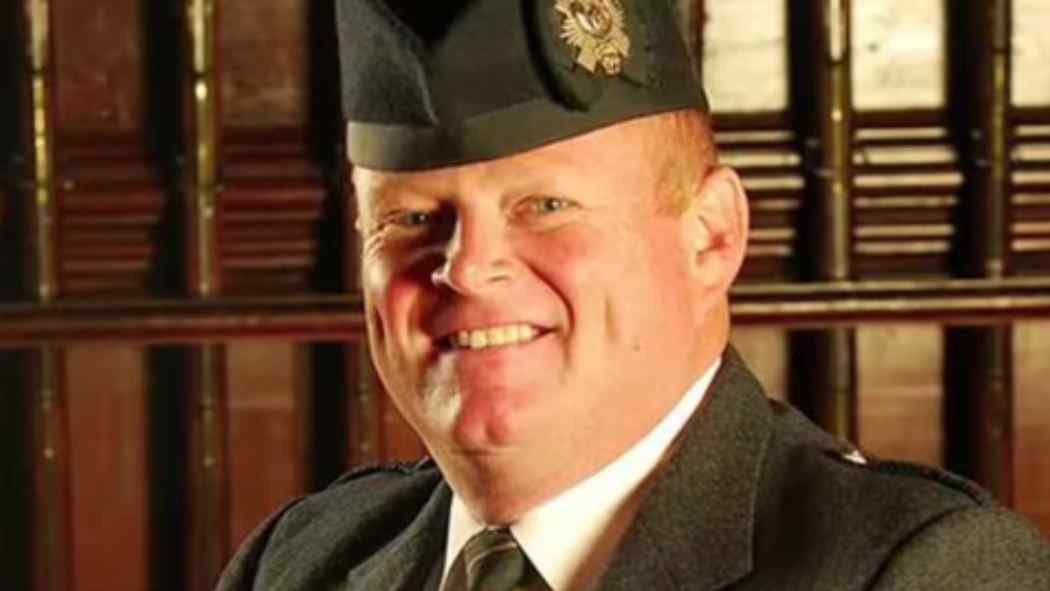
Among the towering names of Scottish piping, Alasdair Gillies remains a legend whose influence extends far beyond the world of bagpipes. Known for his unmatched skill, musical discipline, and expressive command of light music, Gillies redefined the art of solo piping and elevated Scottish musical heritage to international recognition. From his early days in Glasgow to his time as Pipe Major of the Queen’s Own Highlanders, his story is one of passion, precision, and profound dedication to his craft.
Early Life and Musical Roots
Alasdair Gillies was born on 6 December 1963 in Glasgow, Scotland, into a family deeply rooted in piping tradition. His father, Norman Gillies, was a renowned piping instructor whose influence on young Alasdair’s life was immense. When Alasdair was eleven, the family moved north to Ullapool in the Scottish Highlands, where his father took up the role of piping instructor for schools in Wester Ross. This move proved pivotal, placing Alasdair in an environment where the sound of bagpipes was part of daily life.
Under his father’s guidance, Alasdair developed a keen ear for tone, rhythm, and technique. He was not merely practising notes; he was internalising the emotional and historical essence of each tune. His natural musicality quickly became apparent, and by his teenage years, he had already begun to attract attention for his maturity as a player. His early training set the foundation for the discipline and precision that would later define his career.
Military Beginnings and the Queen’s Own Highlanders
At the age of 13, Alasdair joined the cadets of the Queen’s Own Highlanders, one of the most prestigious Scottish regiments. His passion and determination saw him rise swiftly through the ranks. By 1980, he became a full-time soldier, officially beginning his journey as a professional military piper.
The Queen’s Own Highlanders were known for maintaining an exceptionally high musical standard, and Alasdair’s time within the regiment honed not only his technical ability but also his leadership skills. He absorbed the discipline and camaraderie of military life, balancing precision with creativity — a combination that became his hallmark.
In 1992, he was appointed Pipe Major of the Queen’s Own Highlanders, a role reserved for the finest pipers in the regiment. This appointment placed him among an elite few who carried forward Scotland’s proud martial and musical traditions. When the regiment later merged into The Highlanders (Seaforth, Gordons and Camerons) in 1994, Alasdair became the first Pipe Major of the new unit, a testament to his leadership and respect among peers.
Musical Brilliance and Competitive Dominance
While his military career shaped his character, Alasdair’s name became immortal through his solo competition success. In the world of piping, few names evoke the same reverence. His competitive record remains one of the most formidable in modern piping history.
Gillies won both Gold Medals for Piobaireachd — one at the Argyllshire Gathering in Oban and the other at the Northern Meeting in Inverness — two of the most coveted honours in the piping world. Winning even one of these is considered a lifetime achievement; winning both marks a player of extraordinary ability.
But it was in light music — marches, strathspeys, and reels — where he truly dominated. Alasdair achieved an unprecedented eleven victories in the Former Winners March, Strathspey and Reel event at the Northern Meeting, a record that still stands today. Each of these wins showcased his technical mastery, impeccable timing, and the effortless flow of his playing.
In addition to these accolades, Gillies also triumphed at the Glenfiddich Piping Championship — considered the pinnacle of solo piping — winning it three times. His performances at the Glenfiddich were not merely displays of skill; they were masterclasses in artistry. Audiences often spoke of how he could make even the most complex tunes sound natural and alive, blending mathematical precision with musical emotion.
Style and Musical Philosophy
What set Alasdair Gillies apart was not just his technical perfection but the depth of his musical understanding. He approached each tune with respect for its historical context and emotional core. Whether playing a slow air or a lively reel, his delivery was rich with feeling and storytelling.
His tone was described as bold, resonant, and perfectly balanced — a sound that could fill any hall with warmth and clarity. Fellow pipers often commented on his ability to control the chanter and drones so perfectly that his instrument seemed alive, breathing through every note.
He also had a unique rhythmic style that became his signature. His execution of strathspeys and reels was marked by crisp articulation, powerful fingering, and expressive lift. To him, every tune had a narrative; the music wasn’t merely notes on a page but a living expression of Scottish identity and human emotion.
Teaching and Mentorship
After leaving the army in 1997, Alasdair Gillies continued his musical journey as an educator. He accepted a teaching position at Carnegie Mellon University in the United States, where he inspired a new generation of pipers. His teaching combined traditional Scottish methods with a modern approach to tone production, technique, and performance psychology.
Students recall his generosity, humour, and patience. He encouraged them to see piping not merely as a technical challenge but as a personal dialogue between player and instrument. Many of his students went on to achieve international success, carrying forward his legacy of excellence.
His influence extended beyond formal teaching. Gillies often conducted workshops, judged competitions, and gave masterclasses across the world. Through his humility and openness, he became not only a teacher but also a mentor to countless aspiring pipers.
Personal Life and Character
Behind the stage lights and trophies, Alasdair was known as a man of warmth and modesty. Friends and colleagues describe him as someone who never allowed fame to change his nature. He was approachable, full of humour, and deeply devoted to his family.
Even in competitive environments, he carried himself with grace and sportsmanship. He often encouraged younger players, offering advice and motivation. His presence in any piping event added a sense of joy and authenticity, reminding everyone that music, at its heart, is meant to bring people together.
Final Years and Untimely Passing
Tragically, Alasdair Gillies passed away suddenly on 27 August 2011, in his home town of Ullapool, at the age of just forty-seven. The piping world was stunned by his passing, as he was still at the height of his influence both as a performer and teacher. Tributes poured in from across the globe, with fellow pipers, military colleagues, and students remembering not only his exceptional talent but also his kindness and dedication.
In honour of his legacy, several composers wrote tunes dedicated to him, including “Salute to P.M. Alasdair Gillies.” These compositions stand as musical memorials celebrating the spirit of a man who embodied the essence of Highland piping.
Legacy and Lasting Influence
Today, Alasdair Gillies continues to inspire pipers worldwide. His recordings remain essential listening for students aiming to understand tone, timing, and interpretation. His competitive achievements set a benchmark that few, if any, have matched. But beyond the medals and accolades, his true legacy lies in the musical philosophy he imparted — that excellence is achieved not only through practice but through passion and authenticity.
Pipers often refer to him as “the complete musician” — a title few can truly claim. He bridged the gap between military discipline and artistic freedom, between the old tradition and the new generation of competitive pipers. His legacy continues through his students, his music, and the countless lives he touched.
To this day, performances of his signature tunes are met with reverence. Events commemorating him, whether at piping festivals or university concerts, remind audiences of the standard he set — one rooted in both technical brilliance and emotional truth.
Cultural Impact
Beyond the competitive circuit, Alasdair Gillies played a crucial role in promoting Scottish music on the global stage. His performances helped popularise the Great Highland Bagpipe as a symbol of both national pride and artistic expression.
He frequently performed at international festivals, bringing the unique rhythm of Scotland’s music to audiences unfamiliar with its traditions. In every performance, he carried the spirit of the Highlands — the rolling hills, the historic battles, and the soulful melancholy of Scottish culture.
Through his artistry, he transformed piping from a regional tradition into a respected international art form. This cultural contribution ensures that his name will forever be associated with the preservation and evolution of Scotland’s musical identity.
Inspiration for Future Generations
Alasdair Gillies’ life is a testament to what dedication, discipline, and love for one’s craft can achieve. His journey continues to inspire young musicians who see in him not just a legend, but a symbol of what it means to pursue excellence with humility.
For many pipers, studying his recordings is part of their education — a way to understand phrasing, ornamentation, and tonal balance. Competitions that he once dominated are now filled with players who grew up watching his performances, striving to capture even a fraction of his musical grace.
His influence extends into teaching methodologies, recording standards, and even the evolution of modern bagpipe design, as his tonal demands pushed instrument makers to reach new levels of refinement.
Conclusion
Alasdair Gillies remains an enduring symbol of Scottish musical excellence. His story is not only about victories and titles but about devotion to a lifelong passion. From his early days under his father’s guidance to his triumphs on the world’s greatest stages, he exemplified the perfect harmony of skill, emotion, and humanity.
More than a piper, he was a storyteller whose music carried the voice of Scotland itself. Though his life was cut short, his influence continues to resonate wherever the sound of the bagpipes is heard. For every aspiring piper seeking greatness, Alasdair Gillies stands as a beacon — proof that true mastery is achieved not through competition alone, but through a genuine love of the music and the spirit it represents.