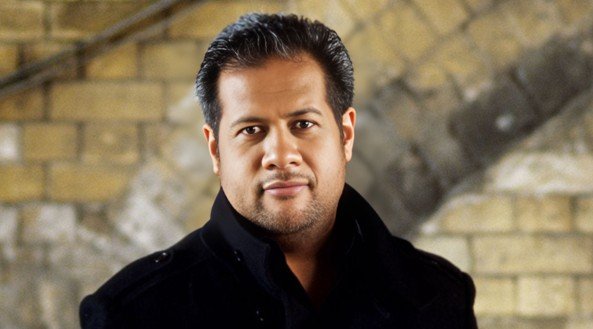
Jonathan Fa’afetai Lemalu was born in 1976 in Dunedin, New Zealand, to Samoan parents who had migrated to the country in search of better opportunities. Growing up in a culturally rich but musically modest household, Jonathan was surrounded by traditional Samoan hymns, community gatherings, and the discipline of education instilled by his parents. From a young age, his deep, resonant voice stood out—teachers and family members often noted that his speaking tone already hinted at something extraordinary.
He attended Otago Boys’ High School, where his first formal introduction to classical singing came under the guidance of Honor McKellar. With her mentorship, Lemalu discovered not only his passion for music but also the discipline of classical technique. Despite this growing love for performance, he initially pursued a Bachelor of Laws (LLB) at the University of Otago. Balancing both music and law, Lemalu proved to be as intellectually rigorous as he was artistically gifted—a dual strength that would later define his professionalism and depth as a performer.
Academic Journey and the Road to the Royal College of Music
After completing his degree in law in 1999, Lemalu decided to dedicate himself fully to music. His acceptance into the prestigious Royal College of Music (RCM) in London marked the beginning of his international career. At the RCM, his talent flourished under world-class mentorship, and he quickly became known for his warm bass-baritone voice, emotional authenticity, and technical mastery.
During his time at the RCM, Lemalu won several top honours, including the RCM Gold Medal and the Kathleen Ferrier Award—both in 2002, a rare double achievement in the same year. These awards cemented his reputation as one of the most promising young opera talents of his generation. His graduation with distinction not only showcased his musical prowess but also reflected his commitment to academic excellence and artistic integrity.
Breakthrough into the Global Opera Scene
Lemalu’s rise in the early 2000s was swift yet earned. From 2002 to 2004, he was selected as one of the BBC Radio 3 New Generation Artists—a platform that spotlights exceptional young classical musicians. This exposure opened doors to collaborations with the world’s leading orchestras and conductors.
Soon after, Lemalu began performing at some of the most prestigious venues in the world:
- Royal Opera House (London) – where he debuted in roles that showcased both power and sensitivity.
- Metropolitan Opera (New York) – performing alongside international opera legends.
- English National Opera and Bayerische Staatsoper – where critics lauded his expressive range.
- Glyndebourne Festival and Salzburg Festival – solidifying his place as a global name in opera.
What set Lemalu apart was his natural stage presence. Critics often remarked that he had the rare ability to make even the most complex operatic characters feel human. Whether portraying Mozart’s noble figures or Britten’s troubled souls, Lemalu’s interpretations resonated deeply with audiences across Europe, the United States, and Asia.
Signature Roles and Musical Versatility
Jonathan Lemalu’s voice type—a rich, velvety bass-baritone—allowed him to perform a wide variety of roles across different musical eras. His repertoire includes works by Mozart, Verdi, Handel, Britten, and many contemporary composers. He became particularly celebrated for his roles in Britten’s Billy Budd, The Marriage of Figaro, and Don Giovanni.
In Billy Budd, his contribution to the London Symphony Orchestra’s recording earned him a Grammy Award for Best Opera Recording. This global recognition placed him among an elite group of New Zealand classical musicians to receive such an honour. His debut solo album, featuring a mix of arias and songs, won Gramophone Magazine’s Debut Disc of the Year, further proving his artistry transcended live performance.
Beyond opera, Lemalu also explored the world of concert recitals and chamber music. His collaborations with pianist Malcolm Martineau were especially praised for their emotional intimacy and clarity of diction. Each performance revealed his gift for storytelling—a quality that makes even the most technical pieces feel deeply personal.
Teaching and Mentorship
In addition to performing, Jonathan Lemalu has committed much of his later career to teaching and mentoring young vocalists. As a Professor of Vocal Studies at institutions such as the Guildhall School of Music & Drama and the Royal College of Music, he has influenced a new generation of singers. His teaching style combines rigour with empathy, reflecting his own experiences as a student who once balanced two demanding disciplines—law and music.
Students and colleagues often describe him as both “humble and inspiring.” His mentorship focuses not only on vocal technique but also on emotional interpretation, cultural sensitivity, and professional discipline. He frequently conducts masterclasses around the world, emphasising that true musical excellence lies in connecting deeply with one’s audience rather than merely delivering perfect notes.
Awards, Honours, and Recognition
Throughout his career, Lemalu has received numerous accolades, including:
- Kathleen Ferrier Award (2002) – for exceptional young singers.
- RCM Gold Medal (2002) – the highest honour of the Royal College of Music.
- Royal Philharmonic Society Young Artist of the Year (2004) – for his outstanding contributions to British classical music.
- Grammy Award for Best Opera Recording – for Billy Budd.
- Officer of the New Zealand Order of Merit (ONZM) – awarded in 2022 for services to opera.
These honours highlight not only his vocal brilliance but also his broader cultural and educational impact. His appointment to the New Zealand Order of Merit was particularly significant, acknowledging how he has become a cultural ambassador for the Pacific region in one of the world’s most elite artistic domains.
Cultural Significance and Identity
Jonathan Lemalu’s Samoan heritage remains central to his identity and public image. In interviews, he often speaks about the pride he feels representing Pacific peoples on international stages. He views his success as part of a larger story—one that challenges stereotypes about who belongs in the world of classical music.
His performances frequently carry subtle elements of his background, from the emotional depth of Samoan storytelling to the communal values of humility and respect. By embodying these principles, Lemalu bridges two worlds: the traditions of Western classical opera and the spirituality of Polynesian culture. His presence has inspired countless young Pacific artists to pursue careers in music, theatre, and other creative fields once considered inaccessible.
A Voice that Transcends Boundaries
Lemalu’s artistry lies in his ability to make music feel both grand and personal. His bass-baritone voice possesses extraordinary power, yet he uses it with restraint and precision. Each phrase he sings seems to tell a story; each silence feels intentional. Critics have described his tone as “dark honey with iron beneath,” capturing both its warmth and strength.
Whether performing on the grand stage of Covent Garden or an intimate recital hall, Lemalu maintains a rare emotional authenticity. He often says that music should “speak to the soul before it pleases the ear,” a philosophy that guides both his singing and teaching.
Beyond the Stage: Humanitarian and Community Work
Outside performance, Lemalu remains actively involved in community initiatives that promote music education. He frequently supports scholarships and programmes that help underrepresented students access world-class training. In New Zealand, he has worked with outreach projects encouraging Pacific Island youth to explore classical singing. His advocacy for cultural inclusion has earned him deep respect not only within the music world but also among educators and policymakers.
Legacy and Ongoing Influence
Today, Jonathan Lemalu stands among the leading bass-baritones of his era. Yet he continues to evolve, exploring new roles, teaching with passion, and recording with renewed creative focus. His influence extends far beyond his performances; it is seen in every young singer who finds the courage to bring their full cultural identity to the stage.
In many ways, Lemalu has redefined what it means to be a global opera artist. He is not merely a performer of European classics but a storyteller of universal human emotion—an artist who unites law, culture, intellect, and spirituality through voice. His legacy will continue to inspire not only opera audiences but anyone who believes that art can transcend boundaries of geography, language, and tradition.
Conclusion
Jonathan Lemalu’s journey from Dunedin to the world’s grandest opera houses is a testament to talent, discipline, and authenticity. He has proven that excellence in classical music is not limited by origin, background, or tradition—it is built through dedication, education, and emotional truth.
As a performer, teacher, and cultural ambassador, Lemalu embodies a blend of humility and greatness that few artists achieve. His voice, both literally and symbolically, speaks for generations of Pacific artists who now know they too can stand centre-stage at Covent Garden or the Met.