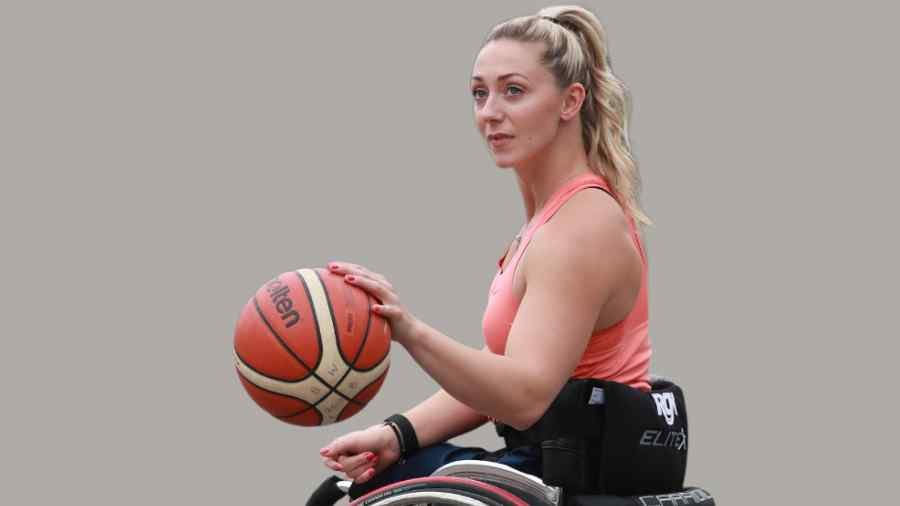
Sophie Carrigill, born on 19 January 1994 in Leeds, England, grew up as a lively and athletic child with an undeniable love for sports. From a young age, she thrived in school activities, particularly netball, hockey, and tennis. Her vibrant energy and strong competitive nature set her apart, and she was known among her peers for her enthusiasm and leadership on the field. Like many children, she dreamed of representing her country in sport, unaware that her journey to achieve that goal would take a path very different from what she had imagined.
At sixteen years old, Sophie’s life changed dramatically when she was involved in a serious car accident while on holiday in the United States. The crash left her with a severe spinal cord injury at the T6 vertebra, resulting in permanent paralysis from the waist down. What followed was a long, painful, and emotional recovery process — one that tested her courage, patience, and willpower. Yet, in the midst of despair, Sophie found a new meaning to life. It was during rehabilitation that she was introduced to wheelchair basketball, a sport that would become her new passion and purpose.
Finding a New Path Through Wheelchair Basketball
Discovering wheelchair basketball opened an entirely new world for Sophie Carrigill. Initially, it was not about competition or medals — it was about rebuilding confidence and rediscovering her identity. She had lost something precious, but sport gave her back a sense of belonging. Wheelchair basketball became her therapy, her motivation, and ultimately her career.
Her first experiences in the sport came through local clubs and development programs. She trained relentlessly, learning how to manoeuvre the wheelchair with agility and precision while mastering shooting and defending techniques. Her natural determination, combined with her athletic instincts, quickly caught the attention of national selectors.
In 2013, just three years after taking up the sport, Sophie made her international debut for Great Britain. This remarkable milestone reflected her hard work and her refusal to be defined by her disability. For Sophie, wheelchair basketball was more than a sport — it was a symbol of resilience and empowerment.
Rise to International Success
Once she joined the British Women’s Wheelchair Basketball Team, Sophie Carrigill’s career took flight. In 2013, she earned her first international medal, a bronze at the European Championships. Only a year later, she was appointed captain of the national team for the 2014 World Championships in Toronto — a tremendous achievement that made her one of the youngest captains in the team’s history.
In 2015, she played a pivotal role in leading the Great Britain Women’s Under-25 team to a gold medal at the World Championships in Beijing. This victory was not just a sporting triumph but also a deeply personal one. For Sophie, it validated her belief that hard work, positivity, and self-belief can transform any obstacle into an opportunity.
The years that followed saw continued success. Sophie and her teammates secured bronze medals at the European Championships in both 2015 and 2017, before achieving an incredible silver medal at the 2018 World Championships in Hamburg — the best-ever result for the British women’s team at that time. The team’s fourth-place finish at the Rio 2016 Paralympic Games was another landmark moment, marking Great Britain’s highest position in Paralympic history for the sport.
Education and Personal Growth
Alongside her sporting career, Sophie Carrigill was equally committed to her education. She studied Sport Psychology at the University of Worcester, graduating with first-class honours. Her academic focus on psychology complemented her athletic journey, helping her understand motivation, mindset, and resilience — qualities that define both elite athletes and individuals overcoming personal challenges.
Through her studies, Sophie also developed a deep interest in mental health and wellbeing. She often speaks about the psychological challenges that accompany life-changing injuries, particularly the need for emotional recovery alongside physical rehabilitation. Her perspective combines academic understanding with personal experience, making her a powerful voice for mental health awareness within the disability community.
A Voice for Disability Awareness and Empowerment
Beyond the basketball court, Sophie Carrigill has become a passionate advocate for disability rights, inclusion, and empowerment. She uses her platform to challenge stereotypes about disability, encouraging people to focus on what individuals can do rather than what they cannot. Her message is one of strength, confidence, and acceptance.
She has spoken publicly at schools, universities, and corporate events, sharing her story to inspire others. Sophie’s talks often emphasise resilience, adaptability, and the power of mindset — lessons drawn not just from her sporting life but from her entire journey of recovery and growth. Her authenticity and warmth make her a compelling speaker, one who connects deeply with audiences.
Sophie also works with brands and organisations that promote accessibility and adaptive sports. Through collaborations and ambassador roles, she demonstrates how mobility equipment and adaptive technology can empower independence. Her influence extends across social media, where she uses her platforms to highlight the importance of diversity, inclusion, and equality in sport and society.
Overcoming Adversity with Strength and Grace
What makes Sophie Carrigill’s story so remarkable is not just her achievements, but her attitude towards adversity. After her accident, she could have easily chosen to step back from the world of sport altogether. Instead, she decided to redefine her goals and find new ways to succeed. Her journey is a living example of how strength does not come from physical ability alone — it comes from mental resilience and self-belief.
Sophie often speaks about how sport gave her a reason to smile again, to push her limits, and to embrace life fully. She acknowledges the challenges she faced — from adapting to a wheelchair to rebuilding confidence in social situations — but she never allowed them to hold her back. Instead, she turned them into opportunities for growth.
Her story encourages others who face setbacks, whether physical, emotional, or professional, to keep moving forward. Sophie’s message is universal: obstacles are not the end of the road; they are merely detours on the way to discovering one’s true strength.
Role Model for the Next Generation
As an athlete, mentor, and public figure, Sophie Carrigill serves as an inspiring role model for young people, especially women in sports. She consistently advocates for equal opportunities and greater visibility for female athletes with disabilities. Her belief is that sport has the power to unite people, break barriers, and transform lives.
Sophie’s involvement in community programs and youth initiatives further reinforces her commitment to nurturing the next generation of athletes. She often works with schools and organisations to promote inclusive sports participation, encouraging children of all abilities to find joy and purpose through physical activity.
Her journey from a hospital bed to representing her country on the world stage is a testament to what determination and support can achieve. Sophie’s success also reflects the growing strength of the Paralympic movement in the United Kingdom, where athletes like her continue to redefine perceptions of ability and inspire the nation.
Continuing the Journey
Even after more than a decade in wheelchair basketball, Sophie Carrigill remains as driven as ever. Her dream of winning a Paralympic medal continues to fuel her passion for the sport. She trains tirelessly, constantly improving her technique and fitness, and remains a key part of Great Britain’s national team setup.
Off the court, she continues to grow her influence as a public figure and motivational speaker. Her focus on mental resilience, confidence, and inclusion has made her a respected voice beyond the sporting world. She represents a generation of athletes who see sport not only as competition but as a platform for change.
Sophie’s life continues to evolve, but her mission remains clear — to inspire, to educate, and to empower. She stands as a symbol of perseverance, proving that circumstances do not define destiny.
Lessons from Sophie Carrigill’s Story
There are many lessons to learn from Sophie’s remarkable journey. Her story teaches the importance of adaptability — the ability to accept change and turn it into opportunity. It shows that courage is not the absence of fear, but the determination to move forward despite it. And it reminds us that resilience is built not in moments of success but in how we respond to hardship.
Sophie’s story also highlights the role of community and support networks. Family, coaches, and teammates played vital roles in her recovery and development. Her journey reflects the power of human connection — how encouragement, love, and shared purpose can help rebuild even the most broken spirits.
In a world that often focuses on limitations, Sophie Carrigill’s life stands as proof that there are no limits when determination, passion, and hope come together. She embodies the essence of modern heroism — humble, hardworking, and deeply human.
Conclusion
Sophie Carrigill’s journey from a tragic accident to international sporting success is a story of courage, transformation, and triumph. Through her achievements in wheelchair basketball and her work as an advocate for disability inclusion, she has become an inspiring figure not only in British sport but across the world.
Her life teaches us that resilience can overcome tragedy, that purpose can be found in unexpected places, and that true strength lies within. Sophie continues to inspire thousands with her message of positivity and perseverance, reminding us that every setback can be the beginning of something extraordinary.