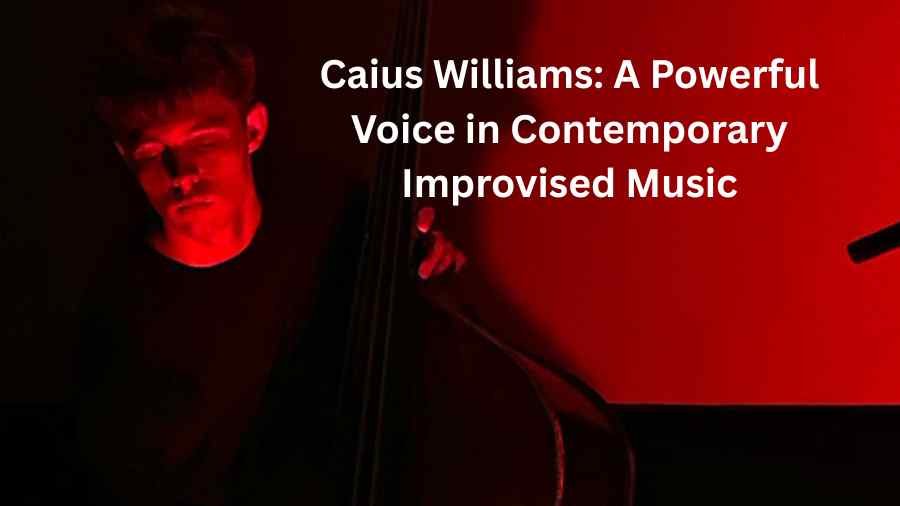
In the evolving landscape of contemporary music, certain artists stand apart not through volume or spectacle, but through depth, patience, and originality. Caius Williams is one such figure. Emerging from London’s fertile experimental scene, he has quietly built a reputation as a thoughtful musician whose work challenges expectations and rewards attentive listening. His approach to sound, structure, and collaboration places him among the most compelling voices in modern improvised music.
Early Life and Musical Foundations
While Caius Williams maintains a private personal profile, his musical development clearly reflects deep engagement with listening, practice, and experimentation. Like many musicians drawn to improvisation, his early influences appear to span genres rather than sit comfortably within a single tradition. Classical textures, free jazz sensibilities, and elements of experimental rock can all be felt within his sound world.
The double bass became a central instrument in his creative journey, not simply as a rhythmic or harmonic foundation but as a vehicle for texture, resonance, and extended techniques. Rather than treating the instrument conventionally, Williams approaches it as a source of raw sonic material. Bow pressure, string noise, silence, and physical interaction all play vital roles in shaping his musical language.
This foundation allowed him to develop a style that is instantly recognisable yet difficult to categorise, rooted in careful listening and a willingness to let sound unfold organically.
The Language of Improvisation
Improvisation lies at the heart of Caius Williams’ artistic identity. His work avoids showmanship in favour of restraint and intention. Every sound feels considered, even when emerging spontaneously. This balance between freedom and control is one of his defining strengths.
Williams treats improvisation not as an act of chaos, but as a structured conversation between musicians, spaces, and audiences. Silence is as important as sound, and pauses are used to create tension, reflection, and emotional depth. This approach draws listeners into a shared experience, where attention and presence become essential components of the performance.
His improvisations often unfold slowly, revealing subtle shifts in tone and rhythm. Rather than pushing towards climactic moments, he allows music to breathe, encouraging listeners to engage with the smallest details.
Solo Work and Sonic Exploration
As a solo performer, Caius Williams demonstrates remarkable command of space and texture. Performing alone with the double bass demands both confidence and vulnerability, and his solo sets reflect a deep trust in the instrument and the moment.
He explores the physicality of sound, using bowing techniques, harmonics, and percussive gestures to create layered sonic environments. These performances feel immersive, often blurring the line between music and sound art. Listeners are invited to experience the instrument in new ways, discovering tones and resonances that are rarely foregrounded.
His recorded solo work captures this sensibility with clarity and intimacy. Rather than attempting to replicate live energy artificially, his recordings preserve the quiet intensity and openness that define his performances.
Collaboration as Creative Practice
Collaboration plays a central role in Caius Williams’ musical life. He regularly works with a wide range of musicians across disciplines, each partnership offering new perspectives and challenges. These collaborations are not about blending styles superficially, but about engaging deeply with different creative approaches.
Williams is known for his ability to listen closely and respond thoughtfully, making him a valued collaborator within improvising ensembles. His contributions often anchor performances without dominating them, providing a flexible framework within which others can explore.
Through duos, trios, and larger ensembles, he demonstrates a consistent commitment to collective expression. Each project feels distinct, shaped by the personalities and ideas of the musicians involved.
Influence of Place and Space
London’s experimental music scene has played a significant role in shaping Caius Williams’ artistic outlook. The city’s diversity, density, and constant cultural exchange provide fertile ground for improvisation and experimentation.
Performance spaces, from intimate cafés to alternative venues, influence how his music is heard and experienced. Williams is particularly attentive to acoustics, often allowing the characteristics of a room to guide his playing. This sensitivity to environment reinforces the sense that each performance is unique and unrepeatable.
Beyond performance, his involvement in curatorial projects reflects a desire to support and sustain creative communities. By organising concerts and presenting emerging artists, he contributes to a wider ecosystem that values experimentation and inclusivity.
Recording Philosophy and Sound Aesthetics
Caius Williams approaches recording with the same care and intentionality that characterise his live performances. His recordings avoid excessive production, favouring clarity and authenticity over polish. This allows the natural qualities of sound to remain intact, preserving the nuances that define his work.
Microphones capture not just notes, but textures, movements, and moments of silence. The listener is placed close to the instrument, creating an intimate relationship with the music. This aesthetic aligns with his broader artistic philosophy, which prioritises honesty and presence.
Rather than releasing music frequently, Williams appears selective, choosing projects that feel meaningful and complete. This measured approach reinforces the sense that each release is part of a larger, ongoing exploration rather than a response to external pressures.
Artistic Philosophy and Creative Values
At the core of Caius Williams’ work lies a clear set of creative values. He prioritises listening over speaking, process over product, and collaboration over individual display. These principles shape not only his music but also his interactions within the artistic community.
He embraces uncertainty as a creative force, allowing performances to evolve naturally rather than imposing predetermined outcomes. This openness requires trust in oneself and in others, a quality that resonates strongly with audiences seeking genuine artistic experiences.
Williams’ work also reflects a resistance to commodification. His music does not chase popularity or easy categorisation. Instead, it invites thoughtful engagement, rewarding listeners who are willing to slow down and listen deeply.
Reception and Critical Recognition
Within experimental and improvised music circles, Caius Williams is widely respected for his integrity and originality. Fellow musicians often highlight his sensitivity, adaptability, and commitment to collective sound. Audiences, too, respond to the immersive quality of his performances, describing them as meditative, challenging, and emotionally resonant.
While he may not occupy mainstream visibility, his influence is evident in the growing interest in minimalist and textural approaches to improvisation. Younger musicians, in particular, find inspiration in his refusal to conform and his dedication to artistic exploration.
This form of recognition, rooted in community rather than mass exposure, aligns closely with Williams’ values and reinforces the sustainability of his creative practice.
The Future of Caius Williams’ Work
Looking ahead, Caius Williams appears poised to continue deepening his exploration of sound and collaboration. Rather than expanding outward in predictable ways, his trajectory suggests a steady refinement of ideas and techniques.
Future projects are likely to build on his existing interests while introducing new elements shaped by evolving partnerships and contexts. As experimental music continues to gain broader recognition, his work may reach new audiences without compromising its core principles.
What remains consistent is his commitment to authenticity, curiosity, and listening. These qualities ensure that his contributions will remain relevant and meaningful, regardless of shifting musical landscapes.
Conclusion
Caius Williams represents a compelling example of what contemporary improvised music can achieve when guided by patience, integrity, and deep listening. Through his solo performances, collaborations, recordings, and curatorial efforts, he has carved out a distinctive space within the experimental music world.
His work challenges listeners to engage more fully with sound, time, and silence, offering experiences that are as reflective as they are innovative. In an era often defined by speed and surface-level engagement, Caius Williams stands as a reminder of the power of attention, restraint, and creative honesty.