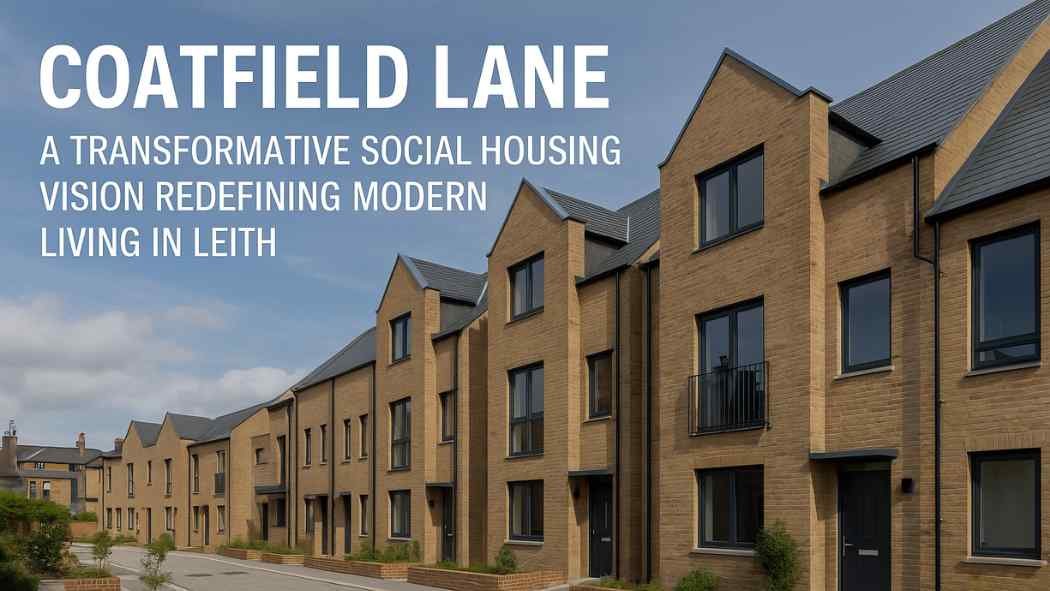
Coatfield Lane has become a shining example of how modern social housing can transform urban communities when thoughtfully designed and rooted in the needs of residents. Located in Leith, Edinburgh, Coatfield Lane has undergone a remarkable journey, evolving from ageing post-war accommodation into a modern residential development that represents sustainability, affordability, community integration, and architectural innovation. The name itself has started to symbolise renewal and forward-thinking planning, particularly in the context of Scotland’s growing focus on better quality social housing.
Understanding Coatfield Lane and Its Significance
Coatfield Lane sits within the historic district of Leith, a community known for its maritime history, cultural diversity, and evolving character. Over recent decades, Leith has been gradually shifting from its industrial roots to a more modern, vibrant urban environment. New residential developments, cultural venues, walkable areas, cafés, and creative workspaces have reshaped the region’s identity. Yet, for many years, Coatfield Lane remained one of the areas struggling with outdated housing infrastructure and declining living conditions.
The original buildings around Coatfield Lane were constructed during a period when Britain needed rapid, large-scale housing solutions. At the time, they served their purpose, offering accommodation to local residents and families. However, as decades passed, the buildings became increasingly inefficient, visually unappealing, and difficult to maintain. Issues such as poor insulation, ageing structure, outdated layouts, and low occupancy began to surface. Some portions even faced social challenges including antisocial behaviour, lack of community interaction, and a visible decline in residential appeal.
The council eventually recognised that refurbishment alone would not solve the long-standing problems. A complete redevelopment became necessary, opening the door for a new vision that would not only replace the old housing but also uplift the quality of life in the area.
Why the Redevelopment Became Essential
The decision to redevelop Coatfield Lane stemmed from several interconnected reasons. The existing buildings were energy-inefficient, expensive to heat, and structurally dated. Many residents struggled with dampness, limited space planning, and a general lack of modern living comforts. As tenancy numbers decreased and maintenance concerns rose, the area lost the community warmth it once held.
Additionally, outdated architectural design meant that the physical structure promoted isolation rather than interaction. In contrast, modern housing aims to encourage community living, environmental efficiency, and wellbeing. The redevelopment project allowed planners to step back and reimagine Coatfield Lane entirely, rather than attempting to save buildings that no longer met modern standards.
By demolishing the old blocks, planners made way for a concept that promotes human-centred living instead of merely building housing units. The redevelopment reflects an investment in people, not just property.
The New Coatfield Lane Vision
At the heart of the new Coatfield Lane development lies a future-focused vision centred on sustainability, affordability, and community togetherness. Instead of high-rise blocks that separate residents vertically and socially, the design features terraced housing with a modest three-storey profile. This creates a neighbourhood that feels human in scale, welcoming, and visually harmonious with surrounding Leith architecture.
The development is structured around walkable routes, greener communal zones, and plenty of natural light. Families, elderly residents, and young professionals are all accommodated through a mixture of adaptable flat layouts. The design also prioritises passive environmental performance, meaning homes stay warm in winter and beautifully cool in summer.
Several key goals shaped the redevelopment vision:
• Offer affordable high-quality social-rented homes
• Create an environmentally sustainable residential model
• Reduce long-term energy usage to counter fuel poverty
• Promote health, comfort, and liveability through modern design
• Strengthen pedestrian connectivity within Leith
• Restore pride and value to public housing
This refreshing direction reflects a shift in how public housing can be viewed. Coatfield Lane demonstrates that council developments do not need to feel bleak or generic; they can be inspiring, livable, architecturally appealing, and socially impactful.
Architectural Design and Urban Layout
One of the most notable aspects of Coatfield Lane’s redevelopment is its strong architectural identity. Rather than replicating typical modern apartment blocks, the design takes inspiration from traditional Edinburgh colony-style housing. These well-known terraces historically represented shared community life, duplex layouts, and neighbourly connection. Reintroducing similar residential patterns allows modern families to enjoy privacy while still feeling part of a community.
Homes are arranged into terraces, each with a distinct frontage and carefully thought-through proportions. Ground-floor properties are accessible for residents with mobility needs, while upper-floor duplex units suit larger households. The planning also ensures each home receives generous daylight exposure and cross-ventilation, reducing reliance on artificial heating and cooling.
Green areas, communal paths, wider pavements, and an open-feel layout bring softness to the space. This approach replaces previously enclosed walkways and poorly lit corners that had contributed to social discomfort. Instead, Coatfield Lane introduces breathable outdoor space where children can play and neighbours can interact without feeling restricted.
Materials used in construction reflect both durability and aesthetic quality. Brickwork, controlled colour tones, and clean detailing create a look that feels contemporary but still respectful of Leith’s historical streetscape.
Sustainability at the Core
A standout feature of the new Coatfield Lane development is its sustainability-first approach. Homes are constructed to high energy-efficiency standards, aiming to minimise carbon footprint over the building’s entire lifespan. With current global emphasis on climate responsibility, the development positions itself as an example for future social housing projects across the UK.
Energy performance features include improved insulation, airtight building envelopes, modern ventilation systems, and high-performance glazing. These elements reduce heat loss and energy bills — a major benefit for residents, especially during winter. Such enhancements also support Scotland’s climate goals by cutting emissions and reducing dependence on traditional heating systems.
Sustainable living is not a luxury reserved for private developments. Coatfield Lane proves that environmentally responsible housing can be accessible, affordable, and socially beneficial.
Social Benefits and Community Enhancement
Redevelopment is about more than buildings; it is about improving lives. A key objective behind Coatfield Lane was creating a place where people feel comfortable, safe, and proud to live. With modern, welcoming homes replacing outdated structures, the emotional and social impact is significant.
Community benefits include:
• Safer, well-lit neighbourhood surroundings
• Encouragement of social interaction through shared spaces
• Reduced noise transfer due to modern construction techniques
• Healthier homes with better indoor air quality
• Lower heating bills supporting cost-of-living relief
• Attractive environment promoting mental wellbeing
Instead of the previous atmosphere that discouraged outdoor presence, the new environment invites social activity. A neighbourhood thrives when people feel free to talk, relax outdoors, watch children play, and participate in community life without anxiety.
Recognition and Influence
The redevelopment has been positively acknowledged within architectural and urban design circles. Recognition of this nature signals that Coatfield Lane is more than just a local improvement; it stands as a high-quality model for public housing design. By demonstrating that council housing can match or even surpass private developments in design quality, Coatfield Lane sets a precedent that may influence future policies across Scotland and beyond.
Good design is powerful. It can elevate social housing perception, dissolve stigma surrounding council accommodation, and prove that affordability does not mean compromise.
Coatfield Lane in the Wider Regeneration of Leith
Leith has been experiencing a gradual yet steady revival. New infrastructure, waterfront enhancements, improved public spaces, and modern residential projects have collectively reshaped its image. Coatfield Lane contributes meaningfully to this regeneration without pushing out the local population.
Some regeneration projects risk replacing old communities with higher-income residents. Coatfield Lane takes the opposite approach — it preserves affordability, uplifts local life, and supports existing residents through better housing conditions. This makes it a socially considerate example of urban renewal done correctly.
The balance of progress and community preservation is one of Coatfield Lane’s most admirable characteristics.
Long-Term Future Prospects
Looking ahead, Coatfield Lane is likely to grow into a lively residential pocket enriched with identity and communal warmth. Families will enjoy modern living conditions, outdoor areas will be utilised, and neighbours will gradually build relationships that strengthen the social fabric.
Over time, the project may contribute to:
• Higher resident satisfaction and wellbeing
• Growth in neighbourhood pride
• More stable tenancies and lower turnover
• Increased interest in sustainable developments
• National examples for future council housing models
As tenants settle in and the streets become familiar, Coatfield Lane may stand as a testament to how thoughtful redevelopment can restore dignity and opportunity within public housing.
Conclusion
Coatfield Lane represents a powerful evolution from outdated post-war accommodation into a forward-thinking residential community designed for modern, sustainable, and inclusive living. It shows that social housing can be beautiful, functional, environmentally responsible, and emotionally uplifting. This redevelopment reflects not just architectural progress but a deeper social movement — a recognition that people deserve homes that support their wellbeing, community connection, and financial comfort.
In Leith, Coatfield Lane is more than a collection of homes. It is a symbol of renewal, an investment in future generations, and a strong example of how urban planning can serve humanity rather than merely replacing structures. The project captures what the future of housing should look like: dignified, efficient, sustainable, and rooted in community life.