Ewen MacRae: Chartered Construction Manager with a Distinct Record of Practical Leadership and Project Delivery

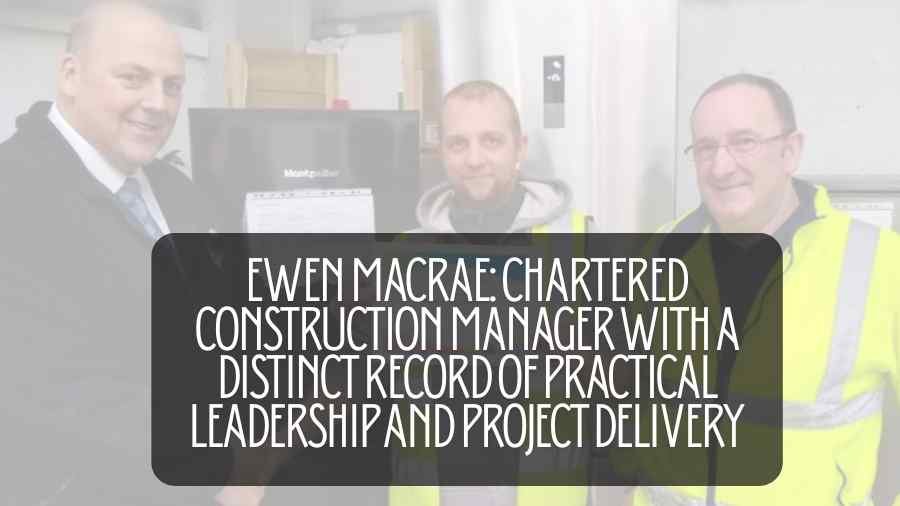
The construction industry in the United Kingdom thrives on precision, trust, and long-term professional reliability. Within this environment, the role of a seasoned construction manager shapes not only outcomes on individual sites but also contributes to the standards of practice across the field. One notable professional associated with strong project delivery and a grounded understanding of construction operations is Ewen MacRae, a Chartered Construction Manager recognised for his experience, leadership, and consistent approach to planning and implementation. His profile suggests more than just familiarity with the job; it reflects an attitude formed through decades of hands-on involvement, responsibility, and measured decision-making.
Background and Professional Context
A Chartered Construction Manager is an individual who has achieved recognised professional status through the Chartered Institute of Building (CIOB). This designation requires demonstrated experience, ongoing ethical commitment, knowledge assessment, and peer-reviewed evidence of competence. The role is not honorary; it reflects responsibility and performance based on real situations handled across years of work.
In the case of Ewen MacRae, his career is characterised by more than twenty years of work in construction environments. Experience at this scale typically involves multiple project cycles, changes in industry regulations, the introduction of new materials and digital technologies, and evolving health and safety legislation. Adapting effectively to this continuous movement is one of the markers of a reliable construction manager. It also suggests a pragmatic understanding of the relationship between budget, timeline, workforce, suppliers, and client expectations.
His professional scope, as described in his public profile, includes estimating and project management. These two functions are both essential and closely linked in construction. Estimating refers to determining realistic costs and timeframes based on drawings, materials, market conditions, workforce capacity, and potential risks. Project management ensures that the work is delivered according to these estimates through coordination, communication, and problem-solving.
A manager with competence in both of these areas has a distinct advantage: they can not only plan but also execute. Continuity between the planning stage and the build stage reduces misunderstandings, delays, and costly revisions. This is a quality that is recognisable in long-term professionals who have spent enough time seeing a project from the start to its handover phase.
Strategic Approach to Construction Management
In the modern UK construction environment, leadership requires a balance of technical understanding, workforce management, and communication. As construction activities involve engineers, architects, subcontractors, suppliers, safety officers, and clients, the manager must act as a stable reference point for everyone involved.
Professionals such as Ewen MacRae demonstrate strategic planning in several key areas:
1. Clear Coordination
Construction sites require coordination between different trades, each arriving at the correct time. A delay from one party can affect several others. Strong managers schedule work to minimise disruption and keep progress aligned with agreed plans.
2. Risk Assessment and Mitigation
Weather conditions, supply delays, unexpected ground conditions, and regulatory inspections can all complicate a project. Experienced managers maintain alternative plans, monitor risk indicators, and maintain communication channels that allow for timely adjustments.
3. Budget Control
Cost overruns can weaken profitability and damage professional relationships. A manager who has worked across decades develops a strong understanding of how to track spending without halting necessary works. This requires methodical attention and calm decision-making.
4. Quality Assurance
Ensuring that construction meets design intent and regulatory standards is a constant responsibility. Chartership reinforces accountability in this area, as members commit to professional standards set by the CIOB.
Leadership Style and Professional Reputation
Though public information about private project details may be limited, the tone of his professional presence suggests a steady and practical leadership style rather than a promotional or self-marketing approach. In UK construction culture, consistency and reliability carry greater value than personal publicity. Many senior construction managers build strong careers through trust gained on site, rather than through extensive public posts or media attention.
The emphasis on excellence and commitment in his summary statements reflects a typical chartered professional stance: deliver performance, follow regulations, and maintain ethical standards. These qualities help ensure that projects move smoothly, conflicts are reduced, and outcomes remain aligned with clients’ expectations.
Relevance of Chartered Status
The Chartered Institute of Building is a well-established body shaping practice standards in construction management. Achieving chartership is not automatic; it involves documented proof of experience, competence interviews, and continuous professional development thereafter. For clients, contractors, or collaborators, a Chartered title offers reassurance. It means the professional is held to a recognised code of conduct and professional responsibility.
In the case of Ewen MacRae, his inclusion in listings welcoming new Chartered Members reflects recognition by peers and by the industry itself. It marks a point where career experience aligns officially with an acknowledged professional status. Individuals in this position are viewed as fully qualified to manage complex construction activities, evaluate site challenges, and lead teams to successful outcomes.
The Broader Impact of Construction Managers on Industry Standards
Construction managers not only oversee physical sites but also influence how organisations evolve. They support apprentices, reinforce health and safety culture, work with engineering methodologies, and sometimes mentor less experienced coworkers. Over decades, this creates a generational impact.
In practical terms, a construction manager like Ewen MacRae contributes to:
- The safe construction of residential and commercial spaces
- The training and confidence of construction workers
- The economic health of contracting organisations
- The maintenance of standards within the wider profession
Construction is often discussed in terms of structures and budgets, but the human element is equally significant. Reliable leadership reduces stress across teams, prevents accidents, and helps sustain morale. Effective communication also ensures that clients remain informed without being overwhelmed by technical complexities.
Why Profiles Like This Are Important for Industry Insight
Understanding the professional character of individuals in key roles helps others in the sector form realistic expectations. For example:
- Architects approach the build stage more smoothly when they work with managers who value clarity and accuracy.
- Property developers feel more secure working with someone who can both cost a project realistically and deliver to that cost.
- Contractors benefit from leadership that respects their skill and time while ensuring productivity.
The construction sector depends on cooperation. When managers demonstrate calm, practical decision-making, everyone involved finds it easier to meet objectives.
Conclusion
Ewen MacRae represents the qualities associated with a long-term, professionally respected Chartered Construction Manager in the United Kingdom: commitment to quality, practical understanding of project delivery, and the ability to operate consistently over time. His experience in estimating and project management supports an integrated approach to construction work, where planning aligns closely with execution. Through chartership, he has formally demonstrated his competence and reliability to peers and industry bodies.
For those seeking examples of dependable leadership in construction, profiles like his illustrate how consistency, professionalism, and steady practice form the foundation of successful long-term careers in the field.