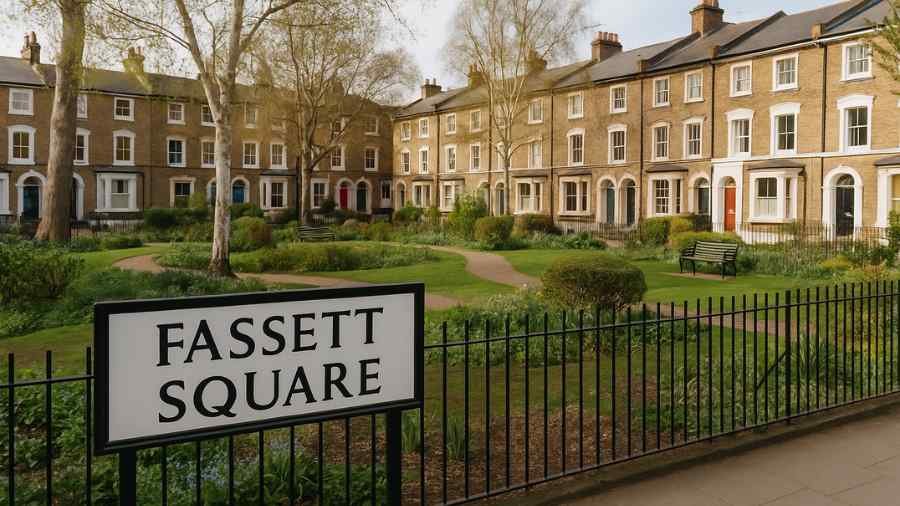
Fassett Square is far more than a residential patch of Victorian architecture tucked away in the heart of Hackney. For many Londoners, the name evokes a sense of familiarity, even if they have not walked through its charming pathways or admired the symmetry of its historical terraces. This is because Fassett Square served as the real-life inspiration for the iconic Albert Square, the central setting of one of Britain’s longest-running and most beloved television dramas. Yet, beyond its television fame, Fassett Square stands proudly as a remarkable example of Victorian urban planning, a thriving modern community, and a peaceful green space offering a breath of nature within the dynamic atmosphere of East London.
The Origins and Development of Fassett Square
Fassett Square was developed in the mid-19th century, during an era when London was expanding rapidly. The Victorian period saw a surge in residential construction, driven by industrial growth and urban migration. Developers sought—and often succeeded— to create elegant yet functional housing clusters arranged around communal green spaces. Fassett Square is a textbook example of this movement.
It was built on land once owned by local landholders and designed to provide high-quality accommodation for London’s growing middle class. The architects and planners of the time prioritised symmetry, proportion, and the inclusion of shared outdoor areas. These ideals manifested beautifully in the form of a central garden surrounded by two-storey terraces. The enclosed garden was intentionally designed to offer residents a peaceful retreat away from the noise of the developing city, and remarkably, this aim continues to be fulfilled today.
The early residents of Fassett Square were drawn to its calm ambiance and practical layout. Its strategic location in Hackney made it accessible, while still offering separation from busy commercial zones. The houses themselves were built with characteristic Victorian detailing: brick facades, sash windows, decorative ironwork, and neatly proportioned entrances.
A Model of Victorian Garden City Principles
To understand Fassett Square’s importance, it helps to place it within the broader context of Victorian urban design. During the 19th century, there was a shift in London’s residential planning toward self-contained communities centred around green spaces. Overcrowding and industrial pollution had prompted a desire for healthier living environments, and garden squares became highly desirable features of middle-class housing.
Fassett Square represents this philosophy perfectly. The garden sits at its heart, offering a space for leisure, social gatherings, and quiet reflection. The layout reflects intentional balance: houses on all sides face inward, creating a sense of unity and protection. The original pathways, flower beds, and trees helped establish an atmosphere that blended aesthetic pleasure with public usefulness.
Although the surrounding neighbourhood has changed dramatically over the last century and a half, Fassett Square has retained much of its original charm. Its garden remains a shared sanctuary where residents continue to enjoy nature, reinforcing a sense of community that many modern developments struggle to replicate.
Architectural Character and Lasting Beauty
The Victorian terraces surrounding Fassett Square form one of its most distinctive features. These homes exemplify architectural principles that are still admired today. Their simplicity, proportionality, and functional beauty have allowed them to age gracefully while remaining perfectly suited to contemporary living.
Many of the houses maintain original features such as decorative cornices, brick detailing, wrought ironwork, and timber sash windows. These elements combine to create a timeless aesthetic. Even when modern refurbishments occur, they tend to respect the square’s heritage, ensuring that the historical character remains largely intact.
In addition to the classic Victorian design, Fassett Square includes later architectural additions that contribute to its uniqueness. Among them is a Grade II listed residential building, reflecting modernist influences while blending harmoniously with its older surroundings. This combination of eras adds depth to the architectural landscape, showcasing how London’s history continues to evolve while preserving its roots.
Fassett Square and Its Connection to British Television
Perhaps the most famous aspect of Fassett Square is its connection to the long-running BBC drama EastEnders. Although the programme is filmed on a set rather than on location, the show’s original production team visited Hackney during the planning stages. They were inspired by the design, arrangement, and neighbourhood character of Fassett Square, prompting them to base the fictional Albert Square on its layout.
This link between a real residential area and one of the UK’s most recognisable television settings has cemented Fassett Square’s place in popular culture. Fans of the show sometimes visit Hackney specifically to view the square that inspired Albert Square, hoping to catch a glimpse of the environment that shaped the original creative direction of EastEnders.
Despite its fame, Fassett Square has retained its privacy and peacefulness. It is not a tourist hotspot in the traditional sense, but rather a quiet residential area that invites admiration from a respectful distance. This delicate balance between cultural recognition and neighbourhood tranquility contributes significantly to its enduring appeal.
The Community and Lifestyle of Fassett Square Today
In modern times, Fassett Square continues to flourish as a vibrant and close-knit community. Residents often describe it as a peaceful oasis within the energetic environment of Hackney. The central garden remains a cherished asset, maintained with care and enjoyed throughout the year. Seasonal planting, community clean-ups, and informal gatherings all reflect the strong sense of belonging among those who live there.
Hackney itself is known for its diversity, creativity, and youthful energy. Fassett Square benefits from this cultural richness while maintaining an atmosphere of calm and stability. Its location offers access to popular areas such as Dalston, London Fields, and Shoreditch, ensuring that residents are never far from cafes, markets, art spaces, and nightlife. Yet, as soon as one steps back into the square, the city’s intensity seems to soften.
The housing around Fassett Square remains highly desirable. The blend of historical architecture, communal garden access, and neighbourhood charm makes it particularly attractive to professionals, families, and individuals who value heritage as much as convenience. Homes rarely stay on the market for long, and the area is considered one of Hackney’s architectural jewels.
Cultural, Historical, and Social Significance
The significance of Fassett Square goes beyond its aesthetics or its television fame. It represents a carefully preserved piece of London’s history, reminding visitors and residents alike of Victorian ideals about community living. It is a testament to the power of thoughtful urban design and showcases how shared green spaces can foster social cohesion.
Many Londoners feel an emotional connection to garden squares because they reflect a way of living that prioritises balance—between nature and architecture, private life and community, history and progress. Fassett Square epitomises this balance beautifully.
Its preservation is also a communal effort. Residents value their surroundings and recognise the importance of maintaining the square’s heritage. From maintaining the garden to upholding architectural guidelines, the collective responsibility contributes to its lasting beauty.
Conclusion
Fassett Square stands as a timeless embodiment of Victorian planning, cultural heritage, and community spirit. With its beautiful terraces, lush communal garden, and enduring architectural harmony, it continues to offer a peaceful haven amid the energetic streets of Hackney. Its connection to one of Britain’s most iconic television dramas adds to its fame without overshadowing its authentic charm. Above all, Fassett Square exemplifies how thoughtful design, historical preservation, and a strong sense of community can create a living environment that remains as relevant today as it was over 150 years ago.
Whether admired for its history, its atmosphere, or its connection to popular culture, Fassett Square is undeniably a London gem—quietly influential, visually captivating, and rich in stories that continue to unfold with every passing generation.