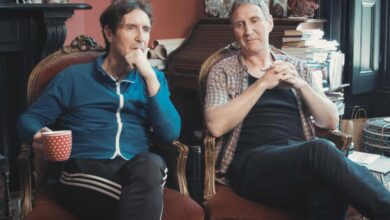
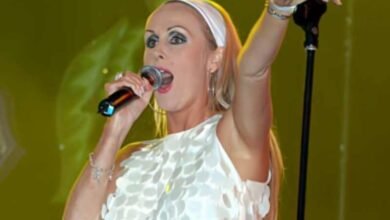
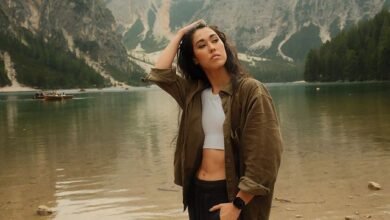
Heather Taddy is an American paranormal researcher, investigator, producer, and television personality. She gained prominence for her work on Paranormal State, where she served as the team documentarian while studying at Pennsylvania State University. Over time, she has expanded her career to include multiple television appearances, her own series, advocacy and personal storytelling.
Early Life and Roots of Interest in the Supernatural
Born and raised in Altoona, Pennsylvania, Heather grew up fascinated by unexplained phenomena. From her early teens, she explored haunted sites, tried out Ouija boards, and filmed experiences whenever possible. Her curiosity was always about more than thrills — she wanted to document, understand, and share what people believe they witness when the veil lifts.
During her time at Penn State, she combined her interest in the paranormal with stronger academic foundations. She studied Film and French while joining the Paranormal Research Society (PRS) on campus, where she received training in field investigation and documentation.
Rise to Television and Media
Heather’s first major exposure came via Paranormal State, a series chronicling investigations by the PRS. She worked as documentarian, venturing into haunted locations, gathering evidence, filming, and sharing stories of families and communities living with paranormal phenomena.
After Paranormal State, Heather’s television resume grew. She has appeared on shows such as Alien Highway, Portals to Hell, and Mysteries Decoded. These appearances allowed her to broaden her investigative scope — not only ghosts or hauntings but also UFOs, remote viewings, cryptids, and other forms of so-called high strangeness.
Travel the Dead: Breaking New Ground
In more recent years Heather Taddy has been co-producing, filming, and co-hosting a series called Travel the Dead with Katrina Weidman. This project is particularly important in understanding her development and influence, because it shifts away from traditional paranormal TV tropes. Rather than being constrained by network formula, it allows for flexibility in storytelling, varied episode formats, deeper dives into locations, and a more intimate, less sensationalist approach.
One of the distinguishing features of Travel the Dead is that both Heather and Katrina serve as lead investigators, not as host and sidekick. It’s also a female-led series in a genre historically dominated by male figures. They explore multiple phenomena — haunted buildings, psychic readings, UFO lore, and more — and frequently test new equipment or investigation methods.
Style, Philosophy, and Approach
Heather Taddy’s approach to paranormal investigation and storytelling is defined by several characteristics:
- Documentation over dramatization: She places strong emphasis on gathering evidence, using film and audio, recording the process, and letting the viewer see what she sees. She tends to favour authenticity, even when results are ambiguous.
- Empathy and human stories: Heather often works with communities, families, individuals who are experiencing purported paranormal phenomena. Her interest is not just “what’s there?” but “what does this mean for the people living with it?” She balances the unknown with respect.
- Flexibility & innovation: As Travel the Dead demonstrates, Heather doesn’t believe in strict rules for every investigation. Some episodes may focus on ghostly hauntings; others may emphasise UFOs or remote psychic observation. She and Katrina Weidman intentionally break out of “the norm” of paranormal TV formats.
Personal and Other Dimensions
Heather Taddy is also more than her investigations. Some of the personal facets that shape her are:
- Health Challenges: She is living with Interstitial Cystitis (IC), a chronic condition that affects the bladder. She has shared her story publicly, both to bring awareness to the condition and to support others with similar struggles.
- Creative Interests: She has interests in music (she is associated with the post-punk band Glowworms), vintage fashion, photography, horror film appreciation, and roller skating. These interests often intersect with her public persona and inform some of her aesthetic and storytelling choices.
Key Projects and Recognition
Below are several of the major projects and achievements that define her career so far:
| Project | Role(s) | What It Adds |
|---|---|---|
| Paranormal State | Team Documentarian | Early exposure; rigorous training; established cred in paranormal circles. |
| Alien Highway | Investigator / Host-figure | Explored UFO cases; broadened her domain beyond traditional hauntings. |
| Mysteries Decoded, Portals to Hell (guest appearances) | Investigator / Guest | Increased visibility; allowed her to engage with different investigative styles and collaborators. |
| Travel the Dead | Co-host, Producer, Filmmaker | More autonomy; opportunity to innovate; deeper storytelling; female leadership in the paranormal genre. |
Impact and Significance
Heather Taddy has become a respected figure in the modern paranormal media landscape for several reasons:
- Representation: She is among a growing cohort of women in paranormal television who lead investigations, produce their own content, and shape the narrative, not merely participating.
- Genre evolution: Her work helps push paranormal programming beyond formulaic haunted-house fear tactics. Travel the Dead especially shows that there can be different rhythms, tones, and investigative approaches. The show is recognised in media commentary as pushing against standard expectations in the genre.
- Community connection and authenticity: Because she works with individuals who believe they are experiencing real phenomena, and because she shares her own human challenges, Heather connects with audiences that want more than jump scares. Viewers are interested in explanation, empathy, and the human side of belief.
- Awareness of health issues: By speaking about her experience with IC, Heather also has expanded her public profile beyond paranormal research, demonstrating vulnerability and advocacy. It adds a dimension of real-life struggle and resilience.
Challenges and Criticisms
While Heather’s work is widely respected, there are inherent challenges in her field:
- Scepticism & proof: Paranormal investigation is inherently difficult to “prove”. Evading scepticism while maintaining credibility requires careful documentation, transparency about limitations, and an understanding that some phenomena remain unverified.
- Balancing entertainment with integrity: Genre expectations often push for dramatic, sensational content. Heather’s philosophy of authenticity sometimes conflicts with what traditional TV producers might want. This tension is visible in comparisons between earlier shows like Paranormal State and more recent independent or online series.
- Physical and mental toll: Investigations in dark, old, possibly unsafe settings, frequent travel, and dealing with people’s fears take both a physical and emotional toll. Additionally, managing a chronic health condition adds extra strain.
- Audience perception: Those outside the paranormal community may dismiss the work as pseudoscience; inside, there is occasionally criticism of how much content is edited, staged, or selective.
What’s Next: Trends and Future Directions
Based on her trajectory so far, here are areas Heather Taddy is likely to keep exploring:
- Digital / online content: Increased use of YouTube, podcasts, web series, along with more interactive or audience-engaged formats. Travel the Dead is a strong example.
- Cross-phenomena investigations: Going beyond hauntings to investigate UFOs, remote psychic work, cryptids, etc. She has signalled interest in interconnecting these phenomena rather than treating them in isolation.
- Educational and advocacy work: Both regarding paranormal literacy (how people perceive, record, interpret phenomena) and health issues like IC. There is potential for her to write or speak more formally, perhaps via books, lectures or workshops.
- Expanded collaborations: With other paranormal investigators, with scientists or sceptics, possibly with creators from adjacent fields, such as folklore, history, anthropology, or media studies.
Why Heather Taddy Matters
Heather Taddy holds significance not just as a figure in paranormal entertainment, but as someone who helps bridge gaps:
- She provides a voice of reason and authenticity in a field often criticised for sensationalism.
- She shows that belief, investigation, and respect for local stories can coexist.
- She helps humanise experiences of the supernatural by showing the people behind the stories.
- And by speaking publicly about her health condition, she reminds us that even “celebrity” investigators are real people with real struggles.
Conclusion
Heather Taddy is more than a paranormal investigator. She is a storyteller, documentarian, and innovator who is helping evolve how people think about and engage with the unexplained. From her early days at Penn State to leading her own creative projects, she balances curiosity with empathy, spectacle with substance. Whether one approaches the paranormal with belief, scepticism, or something in between, Heather’s work invites us to listen, question, and explore — not simply in pursuit of fear, but in search of meaning.