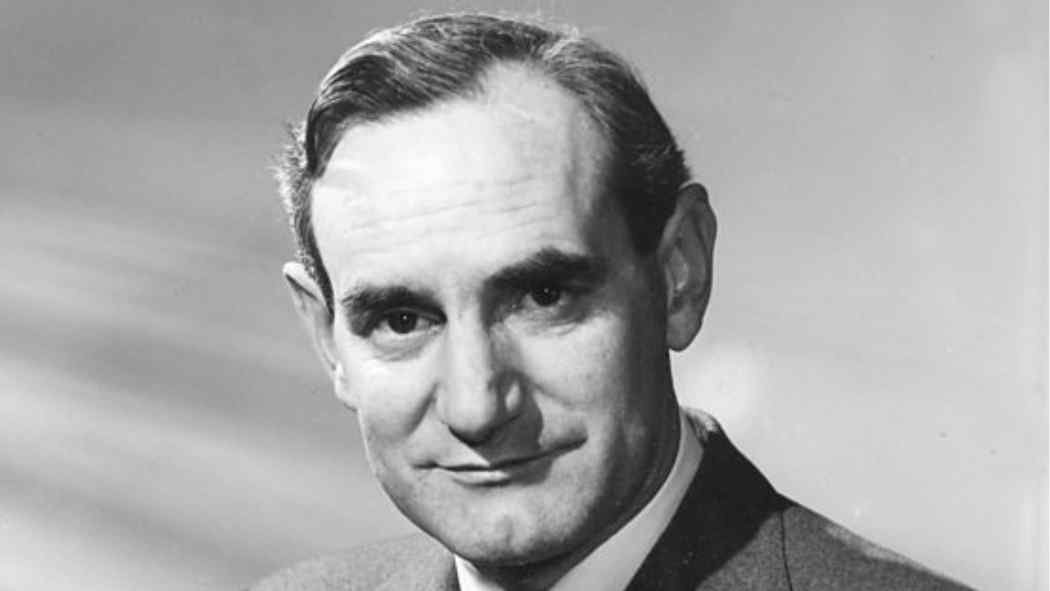
Sir Huw Pyrs Wheldon was born on 7 May 1916 in Prestatyn, Wales, into a family that valued education and service. His father, Sir Wynn Powell Wheldon, was an educator and decorated soldier from the First World War, setting an early example of discipline and public duty. Huw attended Friars School in Bangor before graduating in Economics from the London School of Economics in 1938, a foundation that would later influence his pragmatic yet idealistic approach to culture and communication.
The War Years: Courage and Leadership
When the Second World War broke out, Wheldon joined the Buffs (Royal East Kent Regiment) and was later commissioned into the Royal Welch Fusiliers. His military service was distinguished by bravery and discipline. Volunteering for airborne forces, he took part in the Normandy campaign with the 1st Battalion, Royal Ulster Rifles.
In June 1944, during intense combat near Sainte Honorine, he displayed remarkable courage under fire, moving between platoons to organise defences and evacuate the wounded. For this, he was awarded the Military Cross. Later, he participated in the Rhine Crossing of 1945, one of the war’s most dangerous operations, and was wounded in action.
These wartime experiences deeply shaped Wheldon’s character—he understood leadership, risk, and responsibility not as abstract virtues but as lived realities. They would later define his management style at the BBC, where he inspired through conviction rather than authority.
Entry into Public Service and the Arts
After the war, Wheldon channelled his sense of purpose into cultural service. He joined the Arts Council of Wales and later oversaw aspects of the 1951 Festival of Britain, a national effort to rejuvenate post-war confidence. His contributions earned him an OBE in 1952.
The Festival experience exposed him to the power of cultural storytelling—how exhibitions, performances, and television could rebuild morale and identity. It was this realisation that led him to the BBC, then emerging as Britain’s most influential cultural institution.
Joining the BBC: A New Era of Broadcasting
Wheldon joined the BBC in 1952 as a publicity officer but soon found himself drawn to production. His natural charisma, intellect, and curiosity made him ideal for television presentation. He hosted children’s programmes such as All Your Own, where young talents showcased their skills—a format that captured the innocence and optimism of the 1950s.
Yet Wheldon’s real legacy began with Monitor, an arts programme launched in 1958. As its editor, he assembled a team of young, ambitious filmmakers including Ken Russell and John Schlesinger. Under Wheldon’s leadership, Monitor transformed the presentation of arts on television. Instead of dull lectures or static performances, he introduced cinematic storytelling—close-ups, narratives, and atmosphere that drew viewers into the creative world of artists, writers, and musicians.
Monitor was not only visually compelling; it was intellectually engaging. Wheldon believed television could inform without being pretentious and entertain without being trivial. This philosophy—“to make the good popular and the popular good”—became his lifelong mantra.
Leadership at the BBC: Quality and Integrity
By the late 1960s, Wheldon’s rise within the BBC was inevitable. In 1968, he was appointed Managing Director of Television, one of the most powerful roles in British broadcasting. This was a period of immense change: colour television was emerging, audiences were diversifying, and competition from commercial networks was growing.
Under his stewardship, the BBC produced landmark documentaries and dramas that redefined television’s purpose. Series like Civilisation by Kenneth Clark, The Ascent of Man by Jacob Bronowski, and America by Alistair Cooke demonstrated that television could be educational, global, and beautifully crafted. These were not fleeting entertainment—they were cultural milestones.
Wheldon maintained high editorial standards and resisted the temptation to chase ratings at the expense of integrity. He famously warned against “programmes that are calculated rather than made”, calling them “slums of the spirit and slums of the mind”. His insistence on substance over superficiality gave the BBC a moral and intellectual authority that defined its global reputation.
The Art of Leadership: Making Creativity Flourish
What made Wheldon remarkable as a leader was his respect for creative people. He understood artists and producers, having been one himself. He delegated freedom but demanded purpose. He believed that great television emerged from individuals, not committees—a principle that has echoed through generations of British producers.
Colleagues described him as eloquent, witty, and formidable. His speeches were filled with insight and precision. To him, television was not merely a medium of entertainment; it was a civic tool, capable of shaping public thought and taste.
He encouraged risk-taking. Under his management, the BBC backed experimental dramas and groundbreaking documentaries. Yet even amid innovation, he maintained discipline—scripts had to be solid, editing sharp, and intentions clear.
Philosophy: The Balance of Excellence and Popularity
At the heart of Wheldon’s philosophy was a belief that culture should be both enriching and accessible. He despised the notion that “popular” meant “low quality.” In his view, the public could appreciate excellence if it was presented intelligently. This principle guided not only Monitor but also the great historical and scientific series of the 1970s.
His motto, “to make the good popular and the popular good,” is still quoted across the broadcasting world. It encapsulates a delicate balance—bringing sophistication to the masses without diluting its essence.
Wheldon’s emphasis on craftsmanship also extended to production ethics. He urged producers to approach every programme as a creation rather than a product. This distinction—between making and manufacturing—remains vital in today’s age of algorithm-driven content.
Retirement and Later Work
After retiring from the BBC in 1975, Wheldon was knighted in 1976 for his services to broadcasting. Yet he did not withdraw from public life. He co-wrote and presented Royal Heritage (1977), a ten-part series on the history of the British monarchy, which reached millions of viewers.
He later served as Chairman of the Court of Governors at the London School of Economics and as President of the Royal Television Society. The RTS established the annual Huw Wheldon Lecture to honour his legacy—a forum for discussing creativity, ethics, and responsibility in media.
Even in his later years, Wheldon continued to advocate for quality broadcasting. He warned against commercial pressures and the erosion of trust between broadcasters and audiences. His speeches in the 1980s reflect a prophetic understanding of issues that still challenge media today—sensationalism, declining attention spans, and the tension between truth and popularity.
He passed away in March 1986 at the age of 69, his ashes scattered in the Royal Botanic Gardens, Kew, where he had served as a trustee.
Influence and Legacy
Huw Wheldon’s influence on British television cannot be overstated. He transformed it from a novelty into a respected art form. His blend of intellect, integrity, and imagination set standards that few have matched. The programmes produced under his guidance are still studied for their visual style, editorial rigour, and cultural depth.
Beyond television, his ideas resonate across all forms of media. In today’s world of digital saturation and short-form content, his insistence on depth and meaning feels more urgent than ever. He would likely have viewed modern media metrics—clicks, shares, and watch-time—with scepticism, arguing that true success lies in impact, not visibility.
Lessons for Modern Creators
For contemporary content creators, Wheldon’s philosophy offers timeless wisdom. His call to “make the good popular” is not about elitism but aspiration. Whether one is producing a documentary, writing an article, or running a YouTube channel, the principle remains the same: quality attracts loyalty.
He also demonstrated that leadership in creative industries requires empathy and courage. To protect artistic integrity while appealing to large audiences is difficult, but Wheldon proved it was possible. His life shows that cultural innovation thrives under moral clarity and strategic vision.
Moreover, his career reminds us that creativity and management need not be opposites. A producer can be both artist and leader; an executive can care about beauty as much as balance sheets. This fusion of ideals defined Wheldon’s approach and ensured that his era at the BBC remains a benchmark for excellence.
The Enduring Spirit of Huw Wheldon
Nearly four decades after his passing, Huw Wheldon’s words still guide those who believe in meaningful media. His insistence on quality, his defence of the audience’s intelligence, and his celebration of art as a public service all contribute to his enduring legacy.
He was, above all, a man of conviction. Whether in the trenches of Normandy or in the boardrooms of the BBC, he embodied integrity, intellect, and humanity. His career stands as a testament to what can be achieved when vision and values align.
Conclusion
Huw Wheldon’s life was a story of courage, intellect, and cultural leadership. From soldier to broadcaster, from presenter to BBC chief, his journey reflects Britain’s evolution in the twentieth century—from war to reconstruction, from tradition to innovation.
He proved that television could be both intelligent and popular, that art could belong to everyone, and that leadership could coexist with creativity. His guiding philosophy—to make the good popular and the popular good—remains one of the most profound expressions of what public media should strive for.