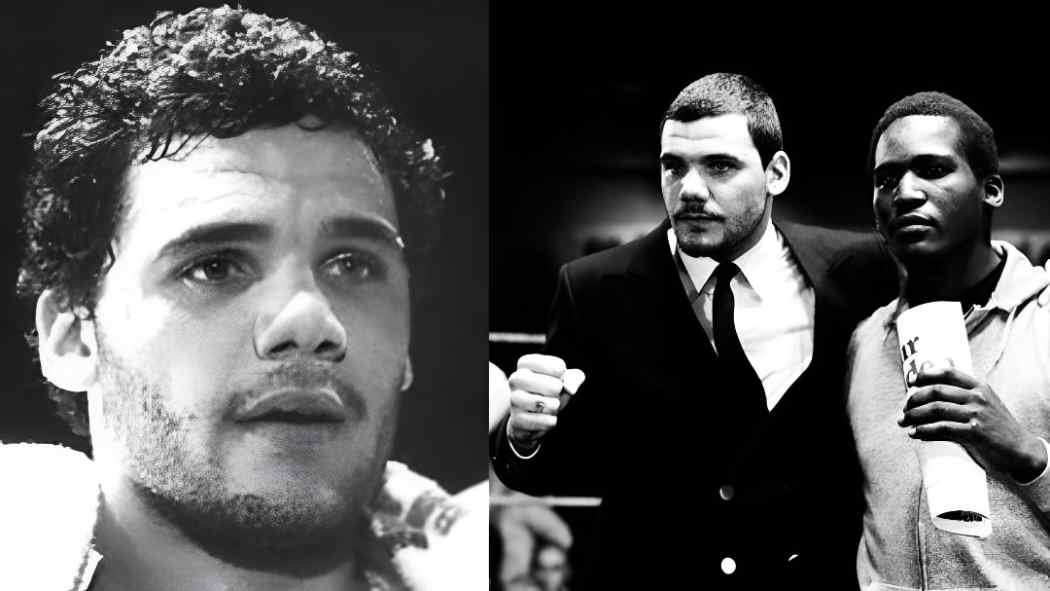
Every era of British boxing has its figures who blaze briefly, flicker with immense promise, and leave behind a legacy shaped as much by potential as by results. Noel Quarless is one such name. A heavyweight from Liverpool with natural athleticism, movement, and punching ability, he appeared poised at times to break into the upper levels of the sport. His career produced moments of brilliance that still echo in conversations among boxing historians and long-time fans. Yet the story of Noel Quarless is not simply about victories and defeats. It is about the fragile margins that define greatness: timing, discipline, personal struggles, the psychological demands of a punishing sport, and the hard practical realities of professional boxing.
Early Life and Beginnings in Boxing
Liverpool, a city known for its working-class pride, rich sporting heritage, and uncompromising grit, has produced more than its share of fighters. Growing up in this environment often meant encountering boxing not as a curiosity, but as a familiar part of everyday neighbourhood life. Gyms, community halls, and amateur clubs provided structure and direction. Young men found purpose in the discipline of training, and boxing offered both a challenge and a possible escape.
Noel Quarless emerged from this atmosphere with the traits many Liverpudlian boxers display: toughness, resilience, and confidence. His physique made him a natural for the heavyweight division, and he carried himself like a fighter long before stepping into professional arenas. Reports and memories from those who saw him early describe a boxer who moved with surprising lightness, used angles rather than brawling recklessly, and possessed respectable power in both hands.
Turning Professional
Quarless entered the professional ranks in the early 1980s, a period when the British heavyweight landscape was competitive but transitional. The sport was full of opportunities for someone who could make a mark quickly. Promoters were always seeking sellable talent, especially heavyweights, who tend to draw public and media attention more readily than smaller weight classes.
What set Quarless apart at this stage was not only his ability, but the poise he showed inside the ring. He boxed like someone aware of his strengths: tall, rangy, and able to dictate tempo when he used his reach effectively. He was not the type of heavyweight who charged forward without thought. Instead, he worked with rhythm, judging distance and timing, looking for openings.
But like many rising fighters, he also faced challenges. Early professional careers demand stamina not only in the ring but in lifestyle. Success requires consistent training, reliable coaching, and the mental stability to persevere through setbacks. Those who falter do not always fade due to a lack of ability; sometimes, it is the toughest opponent of all: life outside the ropes.
The Breakthrough Wins
The defining early moment in Quarless’s career came with his victory over the Swedish heavyweight Anders Eklund. Eklund was strong, accomplished, and internationally respected. He later became European heavyweight champion, which only enhanced the meaning of Quarless’s victory. The fight lasted barely over a minute. Quarless attacked decisively, showing not only speed and sharpness but also the confidence of a fighter who believed entirely in himself. The result made boxing observers take notice.
His victory over the former British and Commonwealth champion John L. Gardner added to the sense that Quarless was rising rapidly. Although Gardner was not at his peak, the result still carried weight. Wins like these create momentum. Momentum builds hype. Hype leads to opportunities. In boxing, a few strong performances at the right time can propel a fighter toward major title contention.
At this stage, many believed Quarless was on the verge of pushing his name into the national spotlight. The ingredients were present: talent, size, appearances against recognised opponents, and momentum.
The Missed Opportunities
However, boxing careers do not always unfold in straight lines, and success in this sport rarely comes simply from talent. Quarless began to experience setbacks. He lost key British title eliminators against strong domestic rivals, including Horace Notice and Hughroy Currie. These were not humiliating defeats, but they shifted the trajectory of his rise.
Each loss matters in boxing, not only for rankings and opportunities but for confidence. A fighter must believe that all the training, sacrifices, and pain lead somewhere meaningful. When progress stalls, doubt tries to push its way in. The public, too, is fickle. A fighter with a spark becomes “the next big thing” one month and “another nearly man” the next.
It is also important to consider the era in which Quarless fought. The late 1980s and early 1990s were transitional years in world boxing. A new wave of enormous, powerful heavyweights was emerging, fighters who combined technical skill with near-superhuman size and athleticism. One of the earliest and most significant examples of this new breed was Lennox Lewis.
Facing Lennox Lewis
Noel Quarless’s final professional fight came in January 1990 against a young, hungry Lennox Lewis, a future world champion and one of the greatest heavyweights of the modern era. Lewis was rising fast and was physically and mentally in peak competitive form. For Quarless, this was both a high-profile match and a difficult challenge.
Lewis stopped Quarless in two rounds. It was a defeat that closed a chapter. For Lewis, it was another stepping stone toward global dominance. For Quarless, it marked the end of his time as a professional fighter.
It is impossible to discuss this moment without acknowledging the complexity of boxing careers. A single evening can summarise a journey, but it never tells the whole story. Quarless did not leave the sport in disgrace. He left having fought good fighters, earned notable victories, and proven at times that he could compete at a high level.
Boxing Style and Strengths
Observers and trainers described Quarless as a boxer with natural fluidity. He did not fight like a rigid heavyweight. He could move, pivot, and adjust in mid-exchange. His jab could set range effectively when he committed to using it, and his punching power was respectable enough to stop strong opponents quickly when he found rhythm.
Yet, there were vulnerabilities. He could sometimes be drawn into fights that did not suit his strengths. His chin was occasionally questioned, not because it was weak, but because his style left gaps that sharper opponents could exploit. And perhaps most importantly, consistency was not always present.
This combination of strengths and weaknesses is not unusual. Many talented fighters occupy a space where they could have done more, could have climbed higher, had circumstances aligned differently.
Legacy and Remembrance
Noel Quarless is remembered today as part of a vibrant chapter in British boxing history. He is spoken of with respect, especially among those who appreciate the sport beyond mere records. His career embodies the drama that defines boxing: talent, promise, triumph, frustration, and the unending question of “What might have been?”
His story teaches something important about boxing. The sport is not only about champions. It is also about the fighters who push champions, who shape divisions, who create unforgettable nights of brilliance, and who show that the distance between success and struggle is very small. In that distance, character reveals itself.
Conclusion
Noel Quarless remains a meaningful figure in British boxing history, not because he claimed world titles, but because he personified the deep human truth at the heart of the sport. Boxing is not merely a contest of strength and technique; it is a test of discipline, self-belief, timing, and life itself. Quarless showed flashes of greatness that demonstrated what he was capable of. His victories were impressive, his challenges were significant, and his journey reflects the reality experienced by many professional fighters. His legacy endures as a reminder that even those who do not reach the highest summit can still leave a lasting mark on the history of the sport.