Plantation Place Fenchurch Street Accenture: The Intersection of History, Architecture, and Innovation

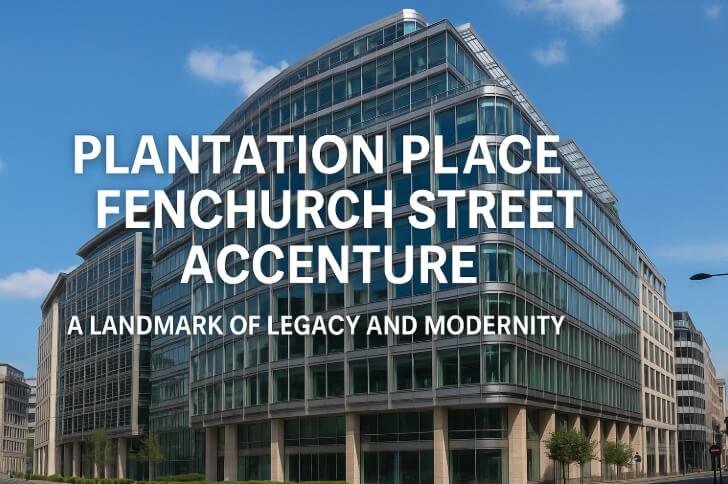
In the heart of London’s financial district stands a building that represents both the legacy and transformation of corporate Britain — Plantation Place Fenchurch Street, now widely recognised as 30 Fenchurch Street. Home to several global firms, including the renowned consultancy giant Accenture, this address embodies a powerful blend of historical context, architectural brilliance, and modern business excellence. Beyond its polished façade and bustling offices lies a story of evolution — from colonial-era commerce to a twenty-first-century hub of innovation and sustainability.
The Historical Foundations
The story of Plantation Place begins long before its 2004 completion. The site originally hosted Plantation House, built in 1935, which served as the headquarters for commodity trading companies. During the mid-twentieth century, it became a symbolic centre for London’s tea and rubber trade — industries deeply intertwined with the global plantation economy. The London Metal Exchange also operated there until 1994, reinforcing the building’s reputation as a commercial cornerstone of the City of London.
However, the word “Plantation” carried with it an uncomfortable association. By the early 2000s, as London modernised its skyline, this site became a candidate for transformation. Developers aimed to retain its economic significance while reinventing it for a new era. The result was Plantation Place, a name initially meant to preserve continuity but which would later invite a broader discussion about heritage and identity.
Architectural Excellence and Urban Integration
Completed in 2004, the building was designed by Arup Associates, an architectural firm known for blending technical precision with aesthetic harmony. Rising sixteen storeys high, 30 Fenchurch Street commands attention without overwhelming the historic streetscape of the City. Its façade of glass and steel reflects both the sky and surrounding architecture, symbolising openness and modern ambition.
The development covers nearly an entire city block bounded by Fenchurch Street, Mincing Lane, and Rood Lane. Its adjoining counterpart, Plantation Place South, complements the structure through balanced proportions and a shared design philosophy. Together, they form one of the City’s most recognisable architectural ensembles.
The Roof Garden
One of the building’s defining features is its extensive roof garden, spanning around 3,000 square metres. This elevated green space offers panoramic views of the City and provides a rare oasis amid London’s dense urban fabric. The garden is occasionally opened to the public during the annual Open House London event, allowing visitors to experience its tranquil landscape and sustainable design firsthand. It also serves as a haven for employees seeking respite and inspiration above the city’s hustle.
Sustainable Design Principles
Arup Associates incorporated several sustainability-focused features into the building’s infrastructure. High-performance glazing maximises natural light while reducing energy loss. The interior layouts encourage flexibility, supporting both collaborative and private working modes. The developers envisioned a workspace that would endure technological shifts, environmental challenges, and evolving business cultures — a goal that remains relevant two decades later.
Accenture’s Presence and Role
Among its notable tenants, Accenture stands out as an anchor presence. The multinational consulting and technology firm utilises its space at 30 Fenchurch Street as a hub for client collaboration, digital innovation, and strategic operations. Its presence reinforces the building’s reputation as a nucleus for thought leadership and advanced services.
Accenture’s tenancy reflects its broader vision: to integrate human ingenuity with cutting-edge technology. At Plantation Place Fenchurch Street, the firm has hosted innovation sessions, leadership meetings, and technology showcases. The environment complements Accenture’s global culture of creativity, precision, and sustainability.
Beyond functionality, the location offers prestige. Situated in the City’s financial heart, Accenture is surrounded by major insurance firms, investment houses, and corporate legal offices — all within walking distance of Lloyd’s of London. This proximity facilitates seamless client engagement and underscores Accenture’s stature as a trusted advisor in global business transformation.
Other Prominent Occupants
While Accenture is among the most recognisable tenants, 30 Fenchurch Street accommodates a range of blue-chip companies, particularly from the insurance and financial services sectors. These include names like QBE Insurance, Aspen Insurance, Sedgwick, and IQUW. The neighbouring Plantation Place South hosts leading firms such as Arch, AXIS, and Beazley — consolidating the area as one of the world’s most significant insurance clusters.
This co-location of financial and consulting institutions creates a natural ecosystem of collaboration, competition, and opportunity. The building’s design supports this synergy through generous public spaces, efficient vertical transport, and flexible office layouts that can adapt to changing tenant needs.
The Name Controversy and Rebranding
For all its architectural and economic success, the name “Plantation Place” became a point of public debate in recent years. In a changing social and cultural climate, many began to question the suitability of a name that indirectly referenced colonial plantations — symbols of exploitation and inequality. Following widespread reflection and consultation, the owners rebranded the property as 30 Fenchurch Street in 2020.
The rebranding was more than a cosmetic gesture; it was an acknowledgment of the evolving understanding of history and the need for corporate responsibility in public representation. The new name preserves geographic identity while distancing the building from historical associations that no longer reflect the values of modern London.
Location and Connectivity
The building’s setting on Fenchurch Street offers exceptional connectivity. Just steps away lies Fenchurch Street Station, providing rapid rail access to Essex and East London. The Underground network is equally close, with Tower Hill, Monument, and Aldgate stations all within a short walk. This accessibility makes 30 Fenchurch Street a preferred address for global firms seeking proximity to clients, partners, and infrastructure.
Surrounding the property are historic and cultural landmarks that define the City’s unique character. The nearby Leadenhall Market offers boutique shops and restaurants, while the Walkie Talkie Building and Sky Garden enrich the architectural landscape. For many professionals, working at 30 Fenchurch Street means being at the confluence of history, commerce, and innovation.
Ownership and Investment Value
Initially developed by British Land, the building later became part of Brookfield’s prestigious London portfolio. The acquisition, valued at over £600 million, signalled strong investor confidence in the property’s long-term performance and tenant stability. Its robust lease profile, prime location, and sustainability credentials continue to attract institutional interest even amid shifting office-market dynamics.
The asset’s market value lies not only in its physical structure but also in its symbolic weight. It represents a stable, future-ready investment — a rare combination of heritage, functionality, and enduring demand in an uncertain global real estate environment.
The City Context and Neighbouring Structures
Plantation Place Fenchurch Street is more than a single building; it is part of a broader ecosystem. The City of London is home to some of the world’s most influential companies, and 30 Fenchurch Street sits squarely within this network. Nearby landmarks like Lloyd’s of London, The Gherkin, and 20 Fenchurch Street (the Walkie Talkie) form a visual and economic triad that defines modern London’s skyline.
Within this environment, the building’s understated elegance provides contrast to the more flamboyant glass towers nearby. Its design respects historical street alignments and pedestrian flows, maintaining accessibility while enhancing the area’s visual cohesion. This balance between innovation and tradition makes 30 Fenchurch Street a model for future developments in heritage-sensitive zones.
Workplace Experience and Innovation
One reason behind the enduring appeal of 30 Fenchurch Street lies in its ability to provide an engaging and holistic workplace experience. The building management focuses on community, wellness, and technology integration — essential factors in attracting and retaining elite tenants like Accenture. Amenities such as bicycle storage, modern fitness facilities, and digital access systems cater to contemporary professional lifestyles.
Post-pandemic, the building has also embraced flexible workspace models, enabling companies to configure environments that support hybrid working. These initiatives reflect a broader shift across the City, where premium office spaces must now deliver both efficiency and inspiration.
Economic and Social Significance
Plantation Place Fenchurch Street is emblematic of how London adapts to changing economic and ethical realities. Its journey from colonial commerce to global consultancy symbolises the city’s evolution — from an imperial capital to an inclusive hub of innovation. The site’s transformation mirrors the moral and material progress of its surroundings: a move from extraction to collaboration, from commodity trading to knowledge creation.
In this sense, Accenture’s tenancy is not accidental. The firm’s focus on digital transformation, sustainability, and human-centred progress perfectly aligns with the building’s narrative. Together, they represent a partnership between heritage and innovation, continuity and reinvention.
Future Outlook
As London’s commercial landscape continues to evolve, 30 Fenchurch Street remains well-positioned for longevity. Its combination of prime location, high-quality infrastructure, and strong tenant mix ensures enduring relevance. However, success will depend on continuous adaptation — integrating ESG principles, digital upgrades, and tenant-centric design.
Accenture’s continued presence will likely play a central role in shaping the building’s identity. As sustainability and technology redefine work, 30 Fenchurch Street is poised to serve as both a physical space and a symbol of progressive corporate culture.
Conclusion
Plantation Place Fenchurch Street Accenture stands as a modern London icon — a place where history meets innovation, and commerce meets conscience. Its architectural beauty, central location, and association with world-leading companies like Accenture make it more than an office address; it is a living narrative of adaptation and growth.
From its origins as Plantation House to its redefinition as 30 Fenchurch Street, the building reflects London’s capacity for renewal. Today, it continues to embody progress — not merely in business or architecture, but in the evolving story of what it means to create, inhabit, and represent space in a world that values both legacy and forward-thinking design.