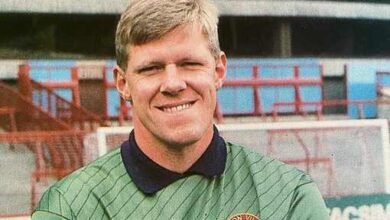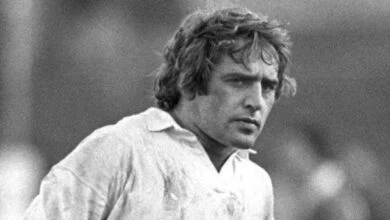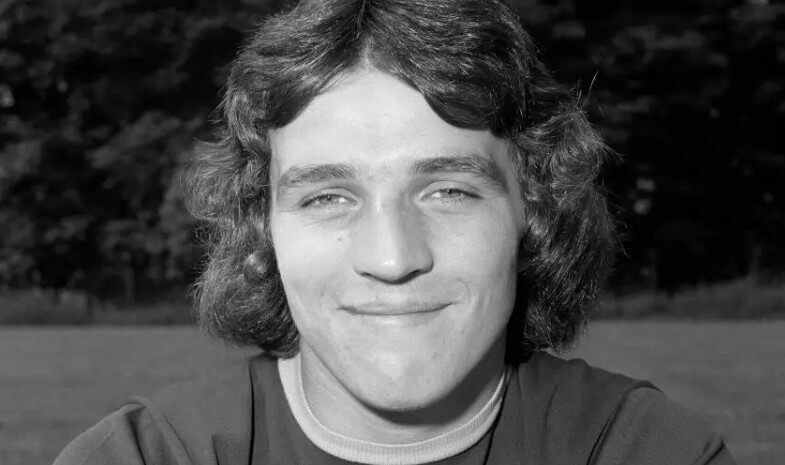
Ray Hankin, born on 21 February 1956 in Wallsend, Northumberland, emerged from a part of the country where football is more than a pastime – it is a way of life. Growing up in the industrial heartland of the North East, Hankin’s childhood was shaped by a love of the game that thrived on the local pitches and school playgrounds. From an early age he showed a natural talent for leading the line, using his physical presence and sharp football brain to stand out amongst his peers. His determination to succeed as a professional was evident even in his teenage years and this hunger for success became a defining characteristic throughout his career.
Breaking Through at Burnley
Hankin’s professional journey began with Burnley, a club that was renowned for nurturing young talent and giving opportunities to promising players. He turned professional in 1973, just as English football was undergoing a period of transition and when physical, aerially dominant strikers were highly prized. Making his senior debut at a young age, Hankin quickly established himself as a key figure in the Burnley first team. His combination of strength, courage and a keen eye for goal made him a natural fit for the physical demands of the English First Division.
During his time at Turf Moor, he became known for his bravery in the penalty area and his ability to outmanoeuvre experienced defenders. Over three seasons with Burnley, Hankin scored more than thirty league goals, a remarkable achievement for a young forward still finding his feet in top-flight football. His performances not only made him a favourite among the Burnley faithful but also attracted attention from bigger clubs seeking a powerful centre forward who could dominate in the air and unsettle even the most composed back lines.
Transfer to Leeds United and Rising Profile
In 1976, Ray Hankin made the move to Leeds United, a club with a formidable reputation and high expectations following their golden era under Don Revie. The transfer marked an important step up in his career and presented both opportunity and pressure. Leeds demanded success and their supporters expected a striker who could replace the goals of departing stars. Hankin embraced the challenge with characteristic confidence and quickly found his rhythm.
At Elland Road, he showcased his aerial strength and powerful finishing, qualities that made him a constant menace to opposition defences. He formed effective partnerships with his fellow forwards and scored vital goals that kept Leeds competitive in the top division. His time at Leeds was not without its difficulties – injuries occasionally interrupted his momentum and the club itself was going through a period of change – but his commitment and presence on the pitch never wavered. By the time he left, he had notched more than thirty league goals, proving his worth at one of England’s most demanding clubs.
Success and Experience in North America
After his spell at Leeds, Hankin took a bold step that few English players of his era attempted: moving abroad to the North American Soccer League. He joined the Vancouver Whitecaps, a side that was part of the NASL’s vibrant and growing football scene. The move gave him the chance to experience a different style of football and to bring his powerful English centre-forward game to a new audience.
In Canada, he quickly became a crowd favourite. His ability to lead the line, win aerial battles and score goals translated perfectly to the North American game, where the league was hungry for big personalities and high-quality imports. Hankin’s time with Vancouver proved successful both personally and collectively, with his goals helping the team to challenge strongly in their division. The experience broadened his horizons and demonstrated that his qualities as a striker were not limited to English pitches.
A Return to English Football and New Challenges
Following his stint in North America, Hankin returned to England where he had short spells with several clubs, including Middlesbrough, Peterborough United and Wolverhampton Wanderers. These later years of his professional career reflected the reality faced by many experienced players: constant adjustment and the need to bring leadership and know-how to new teams. Although injuries and the natural wear and tear of a long career occasionally limited his impact, his presence on and off the pitch remained valuable.
During this stage of his career he also had a brief association with Arsenal, although he did not make a league appearance for the club. He later played in the League of Ireland with Shamrock Rovers and even returned for a further spell with Vancouver. These experiences underlined his adaptability and willingness to embrace fresh challenges, qualities that defined his footballing life.
International Honours and England Representation
While Ray Hankin never earned a full senior England cap, his international career at youth level was highly notable. He represented England at Under-18 level and played a key role in the squad that won the European Under-18 Championship in 1973. This triumph highlighted his potential and gave him valuable experience on the continental stage. He later earned appearances for the England Under-23 side, further proof of the high regard in which he was held during the early part of his career.
Playing Style and Strengths
Hankin epitomised the archetypal English centre forward of the 1970s and early 1980s. Tall, strong and fearless in the air, he was a constant threat from set pieces and crosses. Defenders found it difficult to contain him, not only because of his physical presence but also because of his sharp football instincts. He possessed a natural ability to find space in crowded penalty areas and to convert half chances into goals. His heading ability, in particular, made him one of the most dangerous forwards of his generation.
Yet he was more than just a traditional target man. Hankin combined his physical strength with an intelligent reading of the game. He often dropped deep to link play, helping to bring midfielders into attacking moves. His hold-up play allowed his team-mates to advance and his awareness in front of goal made him a reliable source of goals throughout his career.
Discipline and Challenges
As with many competitive players of his era, Hankin’s fiery spirit occasionally led to disciplinary issues. His commitment and will to win sometimes crossed the line, and he collected his share of bookings and dismissals. While this occasionally drew criticism, it also reflected his fierce determination and refusal to be intimidated by opponents. In an age when physical battles were a hallmark of English football, Hankin’s aggressive style was both an asset and a source of controversy.
Injuries were another challenge. Knee problems and other setbacks sometimes interrupted his momentum and limited his opportunities to play at the very highest level for extended periods. Despite these obstacles, he continually demonstrated resilience, returning from injuries and adapting his game as necessary to continue competing.
Transition to Management and Life After Playing
After hanging up his boots, Ray Hankin remained in the game by moving into management and coaching. He took charge of Northallerton Town between 1989 and 1991 and later worked briefly at Darlington in 1992. His experience as a player at the highest levels of English football gave him a wealth of knowledge to pass on to younger players and to the teams he managed.
Later, he became involved in community-based football projects. He worked with Newcastle United’s “Football in the Community” scheme, a role that allowed him to use his footballing background to inspire and develop the next generation. When that position ended in 2008, Hankin shifted his focus to working with adults with special needs, demonstrating his ability to contribute positively to society beyond the football pitch.
Legacy and Influence
Ray Hankin’s career reflects the story of an English centre forward who combined natural talent with unrelenting physical commitment. From his early days at Burnley, where he announced himself as a fearless young striker, through his successful spell at Leeds United and his adventurous move to the North American Soccer League, he showed ambition and a willingness to take risks. His time in North America helped spread the reputation of English football abroad at a time when few players made such moves.
His journey also highlights the changing nature of professional football. Hankin played in an era before the financial rewards and global exposure that define the modern game. His career was built on grit, determination and a love for the sport. The respect he earned from team-mates, opponents and supporters speaks to the lasting impression he made.
Conclusion
Ray Hankin’s story is one of determination, skill and a lifelong dedication to football. From the streets of Wallsend to the pitches of Burnley, Leeds and Vancouver, he embodied the qualities of a classic English centre forward: powerful in the air, fearless in the challenge and always eager to score. His contributions at club and international youth level, combined with his later work in coaching and community projects, ensure that his legacy extends well beyond his playing days. For anyone looking to understand the heart and character of English football in the 1970s and 1980s, the career of Ray Hankin remains an inspiring example of passion, resilience and the enduring spirit of the beautiful game.