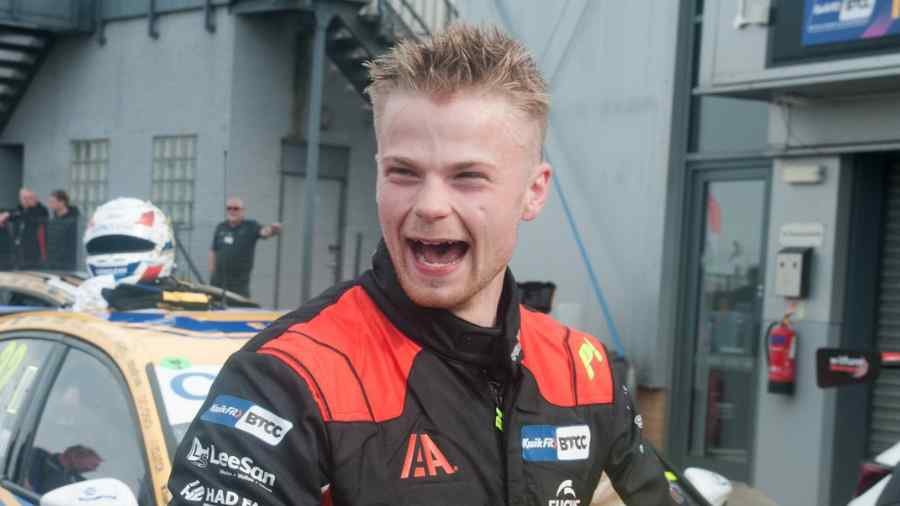
In the modern era of British motorsport, countless drivers dream of standing out, building a name, and competing at the highest level. Yet only a few have the determination, skill, and resilience to navigate the competitive landscape and emerge as genuine rising stars. Among these names, Ronan Pearson has quickly become one of the most compelling young racers of his generation. His journey, defined by persistence, continuous learning, and raw speed on-track, has earned him recognition not only from spectators but from team principals, sponsors, and racing analysts across the United Kingdom.
Born in Scotland, Ronan Pearson has steadily climbed the motorsport ladder, evolving from karting to junior touring car championships, and ultimately to the prestigious British Touring Car Championship (BTCC). He represents a new wave of ambitious, technically sharp, and mentally strong drivers who understand that racing success is shaped as much off the track as it is during wheel-to-wheel battles.
Early Life and Motorsport Beginnings
Ronan Pearson did not emerge overnight. Like most future racing professionals, his relationship with motorsport began in childhood. Growing up in Scotland, he was surrounded by a national culture with a proud history in racing. Names such as Jim Clark, Jackie Stewart, and Dario Franchitti cast long shadows of inspiration. For young drivers, these legends serve as proof that talent from Scotland can reach global motorsport stages.
Pearson first entered the world of karting, which remains the foundational stage for almost every professional driver. Karting teaches the essentials: racing lines, brake balance, racecraft, confidence in close proximity, and precision under pressure. Over several years of kart racing, he developed a strong competitive instinct and a natural feel for vehicle dynamics. Importantly, he also learned something that many overlook: how to stay composed when stakes are high.
These formative years shaped his identity as a calm, focused, and grounded athlete.
Transition to Car Racing
The shift from karting to car racing represents a major technical and psychological adjustment. Cars behave differently from karts in weight distribution, power delivery, braking stability, and aerodynamic sensitivity. Many talented karting drivers fail to make this transition smoothly. However, Ronan Pearson approached this phase with maturity and curiosity.
He entered junior car championships, where competition is intense and margins for error small. These early years tested his adaptability and strategic awareness. Instead of relying only on instinct, he studied technique, data analysis, and setup feedback. This shift demonstrated one of his greatest strengths: a willingness to learn deeply and consistently improve.
In car racing, learning to work effectively with engineers is vital. Pearson excelled in communication, showing he could provide precise feedback to guide setup decisions. This type of technical partnership is one of the hallmarks of a great professional driver, and it began serving him early.
Climbing Through the Motorsport Ladder
Ronan Pearson’s rise through national series reflects his determination and measured career planning. He did not rush into top-tier championships before he was ready. Instead, he competed in developmental series where he refined his skills and established his reputation.
His time in Clio Cup racing was particularly important. The vehicles are closely matched, meaning outcomes depend heavily on driving skill rather than equipment advantage. Success in such a series indicates racecraft maturity. Pearson showed pace, consistency, and a confident approach to overtaking and defending. As he gained podiums and victories, his name began circulating among UK racing teams.
He later competed in the Mini Challenge UK series, which often serves as a stepping stone to the British Touring Car Championship. Across multiple seasons, he improved year after year. His final season in the Mini Challenge displayed both speed and reliability, proving he could compete at the front of a deeply competitive grid. It was here that he demonstrated not just speed, but race leadership and tactical awareness.
These accomplishments paved his path toward the BTCC, one of the most prestigious touring car championships in the world.
Entry into the British Touring Car Championship
The transition to BTCC marked a significant milestone in Ronan Pearson’s career. The championship features professional teams, factory-supported programs, and some of the most experienced touring car drivers in Europe. Competing here requires more than speed. It demands emotional control, race intelligence, and resilience against public pressure.
For Pearson, the opportunity to race in BTCC signified recognition of his development, but it was also the beginning of an entirely new challenge. BTCC cars are powerful, technically complex, and require careful management of tyre wear, brake temperature, and tactical deployment of hybrid boost systems. The races are close, intense, and often decided by fractions of a second.
Despite being one of the youngest drivers on the grid, he adapted with remarkable discipline. His early performances showed rapid improvement, strong racecraft, and a keen understanding of how to stay competitive even when battling drivers with far more years of experience.
Driving Style and Strengths
Ronan Pearson’s racing identity is defined by several key strengths:
1. Composure Under Pressure
He maintains calm when surrounded by aggressive competitors, allowing him to make calculated decisions rather than emotional ones.
2. Technical Feedback Precision
Pearson communicates effectively with engineers, enabling teams to develop competitive race setups.
3. Strategic Thinking
Instead of focusing solely on single-lap pace, he understands tyre conservation, opponent weaknesses, and long-race planning.
4. Controlled Aggression
His overtakes are assertive but clean. He defends firmly without unnecessary risks.
These attributes place him in the category of thoughtful, elite-level drivers rather than purely instinct-driven racers.
Challenges and Development
No athlete rises without encountering obstacles. Motorsport demands financial support, mental strength, and adaptability. Pearson has faced both competitive and commercial challenges during his journey. Funding motorsport career progression is never easy, especially for emerging drivers without early corporate backing.
Yet his response to obstacles reveals the depth of his character. Instead of becoming discouraged, he has continually reinvested in self-improvement, training, and professional development. His long-term focus remains intact: steady growth, well-structured goals, and a commitment to refining every aspect of his performance.
The Road Ahead
Ronan Pearson stands at a pivotal point in his career. He has the youth necessary to grow, the intelligence required to compete, and the racecraft that separates promising drivers from extraordinary ones. The coming seasons will determine whether he evolves into a consistent podium contender in BTCC.
If he continues improving at his current pace, a future filled with race wins, championship contention, and broader recognition is entirely realistic.
Moreover, his Scottish identity offers a valuable narrative that appeals to sponsors, fans, and media alike. He represents not just individual ambition, but a continuation of Scotland’s rich tradition in motorsport excellence.
Conclusion
Ronan Pearson is more than just a young racing driver; he is a symbol of determination, disciplined progression, and passion for the sport. His journey from karting circuits in Scotland to the high-pressure world of the British Touring Car Championship reflects a story of growth built on resilience and strategic development. As he continues to mature, refine his craft, and confront new challenges, he embodies the qualities of a future motorsport star.