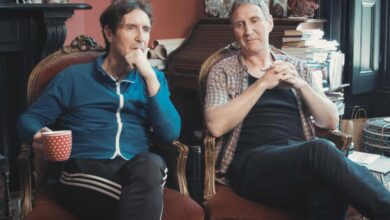
Stephen McCole is a name that resonates with strength, versatility, and artistic integrity within Scottish and British acting circles. From humble beginnings in Glasgow to commanding roles in television, film, and theatre, McCole’s path reveals a dedicated craftsman rather than a mere performer.
Early Life and Roots in Glasgow
Born on 18 February 1974, Stephen McCole hails from Castlemilk, a district in the south side of Glasgow. Growing up in an area often beset by economic challenges instilled in him a gritty authenticity that later permeated many of his performances. His upbringing in a working-class environment nurtured his sensitivity to character, motivation, and emotional truth.
McCole’s early exposure to theatre and storytelling occurred in local youth groups and community arts programmes. The cultural richness of Glasgow’s performing arts scene offered him foundational experiences. Rather than following a smooth, linear path into acting, he learned through local theatre, small television auditions, and by absorbing the stories and dialects of his surroundings.
Beginnings in TV and Film
Stephen’s early credits included small parts in television programmes and independent films, where he quietly honed his craft. One of his earliest significant film appearances was in Rushmore (1998). Though not a central role, this film allowed him to absorb large-scale production values, work alongside veteran actors, and understand the demands of screen acting.
He also appeared in The Acid House in 1998, adapting Ian Banks’s short stories, where he played the character “Boab” in one of the linking sequences. This role demonstrated early on his willingness to embrace unconventional, sometimes surreal material. He then featured in films such as Last Orders and Stone of Destiny, contributing supporting roles that deepened his understanding of narrative texture and ensemble work.
Through these early roles, McCole gained exposure to different directors, acting styles, and production scales. These experiences expanded his toolkit: how to modulate energy, calibrate to camera distance, adjust to pacing, and assimilate with cast dynamics.
Breakthrough: High Times and the Role of “Rab”
Stephen McCole’s major breakthrough came in the mid-2000s through television. He landed the role of “Rab” in the Scottish television series High Times, which aired from 2004 to 2008. This series was created by acclaimed Scottish writer and performer, Stephen Greenhorn. Through High Times, McCole became widely familiar to Scottish and British audiences.
Rab is a complex character — flawed, real, humorous, sometimes tragic — emblematic of everyday struggles in urban Scotland. McCole’s portrayal brought humanity, resilience and vulnerability to a character that could easily have lapsed into stereotype. He made Rab someone we empathised with, someone whose challenges mirrored those of many ordinary people. His performance earned critical praise and made High Times a show of reference in Scottish television drama.
His tenure in High Times also coincided with the series winning the BAFTA Scotland award for Best Drama — an achievement that further bolstered McCole’s reputation in his native land and beyond. Through this success, doors opened for more ambitious and varied roles in television and film.
Distinctive Style and Range
One of the hallmarks of Stephen McCole’s acting is his versatility. He does not confine himself to one genre, one type of character, or one medium.
- Emotional truth: McCole often portrays characters under duress, facing internal or external pressures. His acting does not rely heavily on showy expression; instead, he deploys restraint, letting small facial movements, timing, and silences speak volumes.
- Authenticity of voice and dialect: Having grown up speaking Scots dialects and English, McCole’s use of voice is natural and unforced. Whether playing Glaswegian, broader Scottish, or more neutral accents, he adapts convincingly.
- Character immersion: He does not rely too much on “playing the role.” Instead, he picks up mannerisms, postures, and thought patterns that allow him to disappear into character.
- Ensemble sensibility: McCole is often comfortable sharing the spotlight. He contributes to stories in a way that feels collaborative, rather than seeking to dominate.
His range includes gritty dramas, contemporary crime series, period pieces, psychological thrillers, and supporting or guest roles in large ensemble casts. In each setting, he brings a weight and awareness that lift the entire production.
Notable Television Work
Vigil
One of Stephen McCole’s more recent and high-profile roles came in Vigil, a BBC thriller that caught public attention across Britain and much of the UK. He played politician Patrick Cruden, a role requiring gravitas, tension, and measured portrayal of power dynamics. Within the thriller format, McCole’s presence stands out not by overt heroics but by subtle distortion — his character’s glances, speech pauses, and ambiguous motives keep the audience engaged.
Shetland
In Shetland, McCole joined for Series 6, contributing to a well-established crime drama known for its moody landscapes and emotionally intricate plots. His participation aligned him again with top Scottish production efforts and reinforced his stature as a dependable character actor in prestige television.
River City
He also appeared in River City as Alan Lindsay between 2014 and 2015, a popular Scottish soap opera. This role allowed McCole to demonstrate consistency over an extended run — narrative arcs, daily rehearsal rhythms, interaction with a recurring cast — deepening his television craft.
Other Credits
His television credits also include Merlin, Rebus, Taggart, Single Father, among others. Though some may be guest spots or minor arcs, they contribute to his cumulative credibility. Each role, regardless of size, has been an opportunity to refine his technique, manage camera demands, and build professional relationships.
Film Endeavours and Standout Roles
While McCole has gravitated more often toward television, his film contributions remain substantial and telling.
- In Stone of Destiny (2008), he was part of a historically rooted project about Scottish identity. This film demanded a balanced combination of period style, emotional connectivity, and ensemble unity.
- In The Wee Man, a film revolving around Glasgow’s gangster scene, McCole embraced a darker energy while retaining character coherence.
- Orphans and independent films have allowed him to explore marginal voices and psychological texture in tighter budgets and more intimate settings.
Such roles keep him artistically sharp: lower stakes in scale but higher stakes in substance.
Stage and Other Creative Ventures
Though Stephen McCole is best known for screen work, he has dipped into theatre and directing. He directed the short comedy Electric Blues (2005), illustrating his understanding of pacing, tone, and economy in storytelling beyond acting. Theatre work remains a less publicised but meaningful part of many screen actors’ craft, often serving as a rehearsal ground for presence, projection, and live response.
Challenges, Identity, and Craft
Stephen McCole’s journey has not been without obstacles. Coming from a working-class background in Glasgow, he had to fight for opportunities, audition in competitive environments, and prove his worth beyond first impressions. Scottish actors sometimes face expectations to “prove” neutrality or versatility to cross into broader UK markets. McCole’s ability to maintain both a Scottish identity and adapt for national roles is a testament to his discipline and craft.
Despite not being a mainstream, glamorous star, he commands respect in industry circles. His name isn’t plastered on tabloids, but among directors, casting agents, writers, and fellow actors, he is valued for dependability, depth, and integrity.
Influence and Significance
Why does stephen mccole matter in the context of Scottish and broader UK screen arts? Several reasons:
- Representation of Scottish voice: He contributes to narratives rooted in Scotland without turning them into clichés. His presence normalises Scottish identities in contemporary storytelling.
- Character acting excellence: He shows that you do not need to be the titular hero to leave a lasting impression. Supporting roles, when done well, shift the emotional balance of stories.
- Mentorship by example: Young Scottish actors can look at his steady, craft-driven path and find a blueprint more sustainable than chasing celebrity.
- Cross-market adaptability: McCole works in high end BBC dramas, streaming productions, independent films, and studio features. He bridges local and global scopes.
Ongoing and Future Trajectory
As of recent years, McCole shows no sign of slowing. His inclusion in Vigil (2021) brought him attention from audiences beyond Scotland. He continues to attract roles that demand emotional subtlety and moral ambivalence.
What lies ahead for him might include:
- Leading roles in limited series or mini-series where the narrative arc allows deeper character exploration.
- More creative roles behind camera — directing, script development, perhaps even producing.
- Continued work in independent films that value character over spectacle.
- International collaborations, where his grounded Scottish identity offers a distinctive voice in globally produced content.
Given his reliability, reputation, and depth, casting directors will likely continue offering him roles in prestige television and film.
Anatomy of a McCole Performance: A Closer Look
To understand stephen mccole not merely as a name but as a performer, one can break down certain recurring artistic patterns in his work.
1. Understated Intensity
McCole rarely shouts his emotion unless the story demands it. More often, internal tension, compressed expression, a sigh or frown carry weight. His performances feel lived, not acted.
2. Listening before speaking
In scenes with multiple characters, McCole often works as though he’s hearing or reacting in real time — adjusting his expression or pace midline. This gives interplay a freshness, an improvisatory feel even in scripted drama.
3. Modulated shifts
When his character transitions (anger to sorrow, doubt to resolve), McCole often shifts subtly — via broken voice, a trembling lip, a hesitate in pacing — rather than dramatic flourishes.
4. Text respect
He treats dialogue seriously. He does not overplay or overdeliver; each line sits in the rhythm of realism. His pauses, ellipses, and silences are intentional, allowing the audience to inhabit what is unsaid.
5. Relationship with surroundings
McCole’s characters often feel defined by context — rooms, weather, objects, other characters. He uses posture (lean, turn, glance) to orient to the space, letting environment affect choices rather than actors standing in flat vacuum.
Selected Filmography (Summary)
| Year | Project | Role / Notes |
|---|---|---|
| 1998 | Rushmore | Early film appearance |
| 1998 | The Acid House | Played “Boab” |
| 2004–2008 | High Times (TV) | Rab (major breakthrough) |
| 2008 | Stone of Destiny | Supporting cast |
| 2014–2015 | River City (TV) | Alan Lindsay |
| 2021 | Vigil (TV) | Patrick Cruden |
| 2019+ | Shetland (TV) | Series 6 appearance |
| Various (films, shorts) | The Wee Man, Orphans, Last Orders | Supporting / ensemble roles |
This list is illustrative rather than exhaustive; his full credits include guest arcs, short films, and theatre work.
What Sets Him Apart: An Actor to Watch, Not Just to See
There are many good actors; there are fewer whose consistency, humility, and integrity make each new role feel like a gift. Stephen McCole belongs to the latter category. His career trajectory shows that sustained, meaningful work is possible without constant media fanfare.
He also resists typecasting. He is not always the tough guy, nor always the emotional wreck. He can, within a single season of television, play a volatile politician, a weary father, a conflicted small-town man, or an outright outsider. He carries a natural credibility that allows him to move between such characters convincingly.
Moreover, his emotional economy is rare. Modern acting too often slides into “bigger is better”—McCole reminds us that silence, restraint, and breath serve performance as much as lines and gestures.
How Scholars, Critics, and Audiences See Him
Critical reviews often praise McCole for “bringing authenticity,” “anchoring ensemble casts,” and “making minor roles memorable.” Audiences respond to him as a “voice of the people” — someone whose Inner life is relatable, even when he plays dramatic extremes.
In Scottish acting circles, he is viewed as a standard-bearer for grounded performances. When new Scottish dramas emerge, casting teams often consider McCole a safe, enriching choice — someone who can elevate scripts and support co-actors.
Tips for Emerging Actors: Lessons from McCole
From analysing his career, here are takeaways for actors (especially in the UK and Scotland) who hope to follow a serious craft path:
- Focus on consistent work over headline glory
Small but well-written parts build credibility. Over time these accumulate into serious reputation. - Learn every medium
McCole acts in TV, film, theatre, shorts, and even directs. The skills from each complement each other. - Protect your voice
Maintaining authenticity (accent, posture, emotional approach) is a strength, not a liability. - Respect text and silence
Listen as much as you speak. Often, the pause in a dialogue is more potent than a monologue. - Collaborate
McCole is known for being a good scene partner, comfortable in ensemble settings, and supportive of directors and writers.
Conclusion: Why Stephen McCole Deserves Spotlight
When you search for “stephen mccole,” you won’t always find tabloid headlines or blockbuster roles — but you will discover something more enduring: a body of work built on integrity, craft, and depth. He is the kind of actor whose presence lingers after the credits roll, whose characters stay in your mind, and whose evolution you follow with respect.
In a world of spectacle, McCole is a reminder that acting at its core is truth told to camera, relationship felt on screen, and character lived. Whether he steps into lead roles or continues in supporting work, his trajectory matters — not because of hype or celebrity, but because of substance. As audiences and storytellers continue to value realism, emotional resonance, and grounded characters, stephen mccole stands ready, not just to be seen, but to be felt.