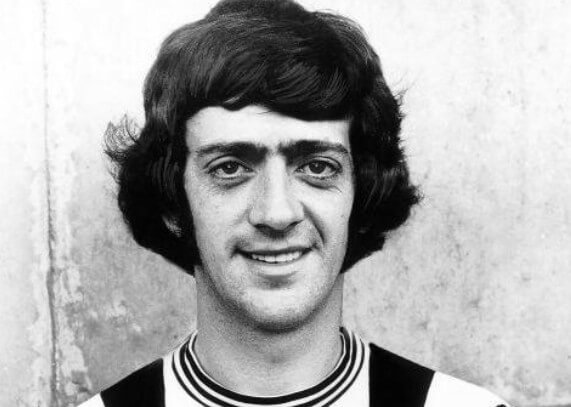
In the history of English football, some players earn their reputation through dramatic goals, powerful physicality, or fierce public presence. Others, however, shape the game in quieter ways. They influence matches through intelligence, timing, creativity, and subtle mastery of the ball. Terry Hibbitt was one of those players. He was never the loudest voice in the changing room, nor the most physically dominant figure on the pitch, but he possessed something far more valuable: the ability to read the game, to unlock defences with a single pass, and to provide the spark that turned ordinary attacking movement into genuine threat.
Born in Bradford on 1 December 1947, Hibbitt grew into a player admired not for how forcefully he played, but for how intelligently he played. His career took him through Leeds United, Newcastle United, Birmingham City, and later Gateshead, each stop reinforcing his reputation as one of the finest creative midfielders of his era. This is the story of a footballer whose genius lay not in noise or power, but in understanding.
Early Life and Youth Development
Growing up in Bradford, Hibbitt was shaped by a culture in which football was part of daily life. It was the common rhythm of the streets, the parks, and the school playgrounds. From a young age, he developed a natural feel for the ball. His control, passing, and timing came not from formal drills in his early years, but from endless hours spent in informal matches where instinct mattered more than instruction.
His talent eventually caught the attention of Leeds United, who brought him into their youth system in the early 1960s. Leeds, under manager Don Revie, was turning into one of the strongest and most disciplined sides in English football. This environment demanded exceptional work rate, focus, and adaptability. Hibbitt learned how to thrive among competitive personalities and high expectations. He understood that intelligence could equalise physical strength, and that timing could be more effective than speed.
Leeds United: Formation of a Football Mind
Breaking into the Leeds United first team during the Revie era was no simple task. The club was filled with hardened professionals, many of whom are remembered today as legends. Yet Hibbitt did not fade into the background. Even though his match appearances were limited in his early years, he made impressionable contributions. One of his most memorable moments at Leeds came when he scored with his first touch in a senior match. It was a glimpse of what he was capable of delivering: composure under pressure and the ability to make moments count.
Leeds was where Terry Hibbitt learned discipline, tactical understanding, and the responsibility of playing for a club with ambition. He was part of squads that won major honours, including the English First Division title and the Inter-Cities Fairs Cup. While he did not always start, he absorbed every lesson, every movement pattern, and every expectation of professionalism. These experiences sharpened his style into one defined by clarity, intelligence, and purpose.
Newcastle United: A Playmaker Comes Into His Own
Terry Hibbitt’s true rise occurred after his move to Newcastle United in 1971. At Newcastle, he had the space, trust, and role he needed to express his full ability. Here, his left foot became his signature. While many players of the era relied on physical dominance or raw speed, Hibbitt preferred precision. He was a playmaker in the most genuine sense, carefully selecting when to slow the game, when to quicken it, and when to pierce defensive lines with a sudden forward ball.
His partnership with forward Malcolm Macdonald became one of the defining relationships of his career. Macdonald was quick, direct, and always looking to score. Hibbitt was the mind behind him, supplying the passes that allowed Macdonald to thrive. Supporters quickly recognised that many of the goals celebrated at St James’ Park began with Hibbitt’s vision.
During Newcastle’s journey to the 1974 FA Cup Final, Hibbitt was one of the central figures. Although the final itself did not end in Newcastle’s favour, the football that led them there carried Hibbitt’s quiet signature. His influence was constant, even when it was not loudly celebrated.
Birmingham City and Leadership Through Example
In 1975, Hibbitt moved to Birmingham City, where he took on a more senior, guiding role within the squad. He was respected not because he demanded authority, but because he earned it through reliability and calm presence. His leadership style was not based on shouting instructions; it was in the way he carried himself in tense matches. His teammates knew that when the match tempo became chaotic, Hibbitt could settle the ball and stabilise the team.
He later returned to Newcastle United for a second spell, showing how deeply the club valued his presence and influence. Even as injuries began affecting his movement and physical endurance in the later stage of his career, his understanding of the game remained strong. He adapted, becoming a player who relied even more heavily on vision and passing intelligence rather than mobility.
Gateshead and Life Off the Professional Stage
After leaving top-flight football, Terry Hibbitt continued to play in the non-league system with Gateshead, where he also contributed as a manager. His love for football did not fade with age or injury. He stayed connected to the sport not because of fame, but because the game was part of who he was.
Outside of football, Hibbitt lived a modest life in the North East. He worked in small business and remained a familiar and approachable figure in the community. Supporters remember him as humble and grounded. The same quiet character that defined his playing style also shaped his daily life.
Playing Style: Intelligence Ahead of its Time
During a period when English football often celebrated strength more than subtlety, Hibbitt’s playing style was almost ahead of its era. He read matches like stories unfolding, always anticipating what could happen next. He did not rush, did not force plays, and did not rely on physical battles to win advantage. His greatest weapon was the left foot that could split defences or calm a game instantly.
He valued:
- Spatial awareness
- Timing of movement
- Balance and ball control
- The weight and direction of passes
Where others saw pressure, he saw patterns. Where others saw risk, he saw opportunity. His game was thoughtful, measured, and profoundly effective.
Legacy
Terry Hibbitt passed away on 5 August 1994 at the age of just 46 after battling cancer. His passing was a deep loss to the football communities of Leeds, Newcastle, Birmingham, and Gateshead. Yet his legacy remains firmly alive in those who watched him play and those who learned from him.
He left behind a reminder that football is not defined only by power or spectacle. It is also shaped by the players who think, create, and elevate the game for others. His career shows the value of intelligence, patience, and quiet mastery.
Conclusion
Terry Hibbitt was a remarkable example of what a creative midfielder can bring to the game. He did not need loud celebration or constant recognition. His influence existed in movement, in timing, in the pass before the goal. His story shows that greatness in football can be thoughtful, subtle, and beautifully simple. Terry Hibbitt remains a symbol of the lasting power of footballing intelligence, and his memory continues to inspire those who understand that true elegance in the sport often speaks softly rather than shouts.