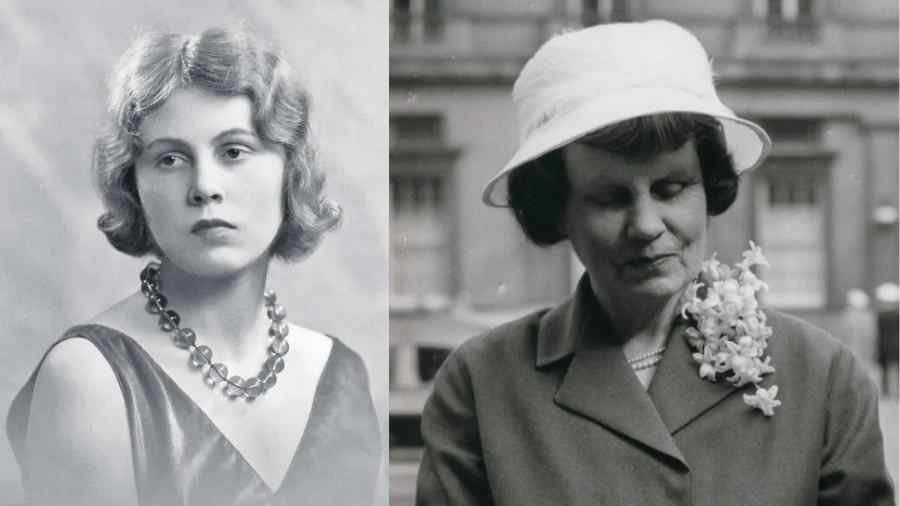
Penelope Chetwode was a remarkable English travel writer, adventurer, and cultural observer whose life bridged continents, histories, and personal transformations. Often remembered through her connection to her husband, the poet laureate John Betjeman, she deserves recognition in her own right as an independent thinker, a courageous traveller, and a writer whose work continues to inspire curiosity and imagination. Her explorations through Spain and the Indian Himalayas displayed a rare mixture of openness, humour, scholarship, and deep cultural appreciation.
Early Life and Family Background
Penelope Valentine Hester Chetwode was born on 14 February 1910 into a distinguished British military family. Her father, Field Marshal Philip Chetwode, later became the Commander-in-Chief of the Indian Army, meaning Penelope’s early childhood unfolded against the backdrop of colonial India. This atmosphere of open landscapes, vibrant cultures, and cross-cultural encounters shaped her personality from a young age.
Growing up between England and India, she developed an appreciation for distance, geography, and the spiritual rhythms of nature. While many young women of her class and era were prepared primarily for domestic and social expectations, Penelope’s surroundings introduced her to travel, observation, and adventure. Horses in particular fascinated her, and she became an accomplished rider—something that would play a major role in her later journeys and writings.
Marriage, Religion, and Personal Growth
In 1933, Penelope married John Betjeman, one of the most beloved English poets of the 20th century. Their union was culturally rich, but complex. Penelope converted to Roman Catholicism in 1948, a decision that deepened her reflective and spiritual nature. Her marriage to Betjeman eventually grew strained, partly due to differing personal pursuits and emotional paths, yet the two maintained a bond of shared history and family.
They had two children together, including the writer and historian Candida Lycett Green. Although Penelope is often mentioned in connection with her husband, her life story expands far beyond the role of a poet’s spouse. Her journey is one of personal discovery, independence, and intellectual curiosity.
A Life of Travel and Observation
Travel was not merely a hobby for Penelope Chetwode; it was a calling. She possessed the rare ability to move through unfamiliar landscapes with both sensitivity and enthusiasm. She approached other cultures with respect rather than judgement, something that sets her apart from many travel writers of her era.
Her most well-known travels took her through Spain and the Indian Himalayas. These journeys were not strategic expeditions or leisurely holidays—they were real, immersive, and often physically challenging adventures. She travelled slowly, often on horseback, speaking with local people, listening, watching, and absorbing. Her travel philosophy valued depth over speed, connection over spectacle.
Major Literary Works
Penelope Chetwode produced two major books that capture the essence of her journeys:
Two Middle-Aged Ladies in Andalusia (1963)
This book is a lively account of her horseback journey across southern Spain accompanied by her friend, the horsewoman and enculturated traveller, Fellowes Gordon. Instead of presenting Spain as an exotic backdrop, Penelope wrote with an intimate awareness of regional customs, landscape, and the everyday experiences of rural life. The humour in the book arises naturally from the challenges of travel, language encounters, and the unpredictable nature of horses.
The tone is conversational and reflective, offering readers not just a story of travel, but a relationship with the land.
Kulu: The End of the Habitable World (1972)
This second work reflects her deeper connection to India, particularly the Himalayan region of Kullu. The book displays her fascination with temple architecture, mountainous terrain, and the spiritual energy of the region. Unlike her Spanish travel narrative, this book carries a tone of reverence and discovery.
She travelled on horseback and foot along narrow mountain trails, tracing paths shaped by pilgrims, shepherds, and ancient storytellers. Her descriptions of villages, shrines, forests, and rivers hold a profound sense of presence. The Himalayas were not a location she merely visited—they were a place she belonged to in spirit.
Cultural Sensitivity and Perspective
Penelope Chetwode wrote at a time when many travel narratives still carried a tone of superiority or exotic spectacle. In contrast, her writing is marked by cultural respect, curiosity, and humility. She did not travel to prove something or extract meaning. She travelled to listen, to see, and to understand.
She learned from the people she met, accepted hospitality graciously, and acknowledged that every landscape carries countless stories. Her work resonates today because it demonstrates ethical travel long before the term became fashionable.
Her Final Journey and Passing
In 1986, Penelope returned to her beloved Himalayas, leading a group on a trek through Himachal Pradesh. It was during this journey that she passed away. There is something deeply poetic in the fact that she died in the landscape she loved most, among the mountains, temples, and pathways that had shaped her inner world.
Her death was peaceful, and she was buried near the village of Neri, in the hills of Himachal Pradesh. The local people honoured her not as a visitor, but as one of their own.
Legacy and Influence
Penelope Chetwode’s legacy remains strong among travel writers, cultural historians, and lovers of the Himalayas. Her granddaughter, Imogen Lycett Green, later retraced her steps, documenting Penelope’s journeys and keeping her story alive for new generations.
Her writings continue to inspire because they capture something timeless: the beauty of slow travel, the value of curiosity, and the power of human connection. In an age of fast tourism and instant photography, Penelope’s approach offers a reminder to pause, to engage, and to experience the world with attention and heart.
Why Penelope Chetwode Still Matters
Penelope Chetwode matters today because she represents:
- Travel as a form of learning, not consumption
- Writing as a craft rooted in observation rather than performance
- Cultural curiosity instead of cultural judgement
- A slow, thoughtful engagement with landscapes that many simply pass through
Her voice is relevant for everyone who seeks to travel meaningfully or appreciate the human stories that exist beyond borders and timelines.
Conclusion
Penelope Chetwode lived a life shaped by movement, reflection, and discovery. She was not a tourist, nor a celebrity, but a traveller in the truest sense. Her writings are windows into lived experience, shaped by the land she crossed, the people she met, and the ideas she carried with her.
In remembering Penelope Chetwode, we celebrate not just her journeys across Spain and India, but also her journey toward understanding, empathy, and self-awareness. Her works continue to inspire those who believe that travel is more than distance travelled—it is the expansion of the heart and mind.