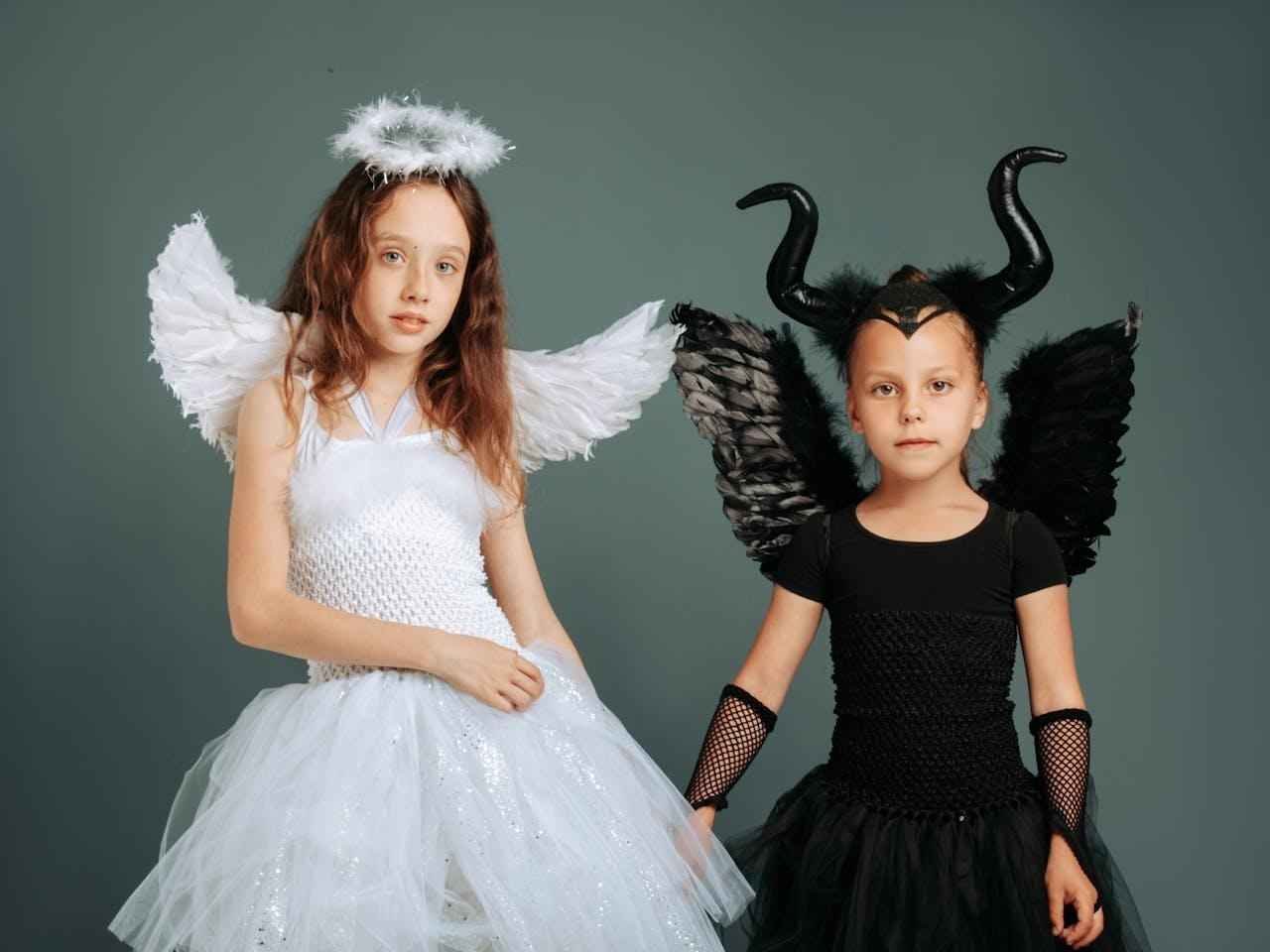
Watch a group of children at a costume party and you will likely spot distinct patterns in their choices. The room often divides neatly into superheroes and princesses or knights and fairies. While individual preference plays a role, these choices rarely happen in a vacuum.
Social expectations and deep-seated traditions quietly steer children toward specific themes from a very young age.
The Origin of Gender Norms in Dress-Up
History shows us that color coding and costume expectations are relatively recent inventions. Pink was once considered a strong color suitable for boys, while blue was viewed as delicate and dainty for girls. These standards flipped in the mid-20th century, and the marketing machine solidified the divide shortly after.
Today, these historical shifts have hardened into rules that feel permanent to a child. From the moment they are born, girls receive messages about what is appropriate for them. Soft fabrics, glitter, and domestic themes become the default setting for their play.
Cultural Influences on Costume Choices
Culture acts as a powerful scriptwriter for children’s play. It dictates which roles are valued and which behaviors are rewarded for each gender. In many societies, girls are praised for beauty and grace, while boys receive validation for strength and action. These values inevitably bleed into the costumes they desire.
When a parent sets out to find girls fancy dress options for a school play or party, they often encounter shelves dominated by these cultural ideals. The selection reinforces the message that a girl’s primary role is to be decorative or nurturing.
This limited scope makes it harder for children to imagine themselves in roles that contradict societal expectations, such as scientists, warriors, or leaders.
Media Portrayals and Character Selection
Television and movies amplify these cultural messages significantly. Children want to embody the characters they see on screen. For decades, female characters were predominantly damsels in distress or sidekicks, while male characters drove the plot.
Although modern media is improving, the legacy of the “princess culture” remains a dominant force in the playground. It is worth noting that while costume suppliers like Smiffys provide a vast array of character options, the demand is largely driven by the stories children consume.
If the most popular movie of the year features a passive heroine, girls will naturally gravitate toward that costume.
Parental Influence on Dress-Up Themes
Parents serve as the first filter for a child’s understanding of the world. The way you compliment a child in costume shapes their future preferences. Telling a girl she looks “pretty” in a dress versus “brave” in a cape sends a subtle signal about what qualities you value.
Even well-meaning parents might unconsciously steer their daughters toward traditional choices to avoid social friction. It feels safer to buy the fairy wings than to explain why a girl wants to be a construction worker.
Break Free from Traditional Norms
Changing these patterns requires conscious effort and open-mindedness. Encouraging girls to explore a full spectrum of characters expands their imagination. A costume box should be a mix of everything, including doctors, astronauts, animals, and mythical creatures.
Mix-and-match play is a fantastic way to disrupt rigid categories. There is no reason a princess cannot wear a firefighter’s helmet, or a superhero cannot wear a tutu. When you remove the labels and let creativity take over, children often surprise you with their choices.