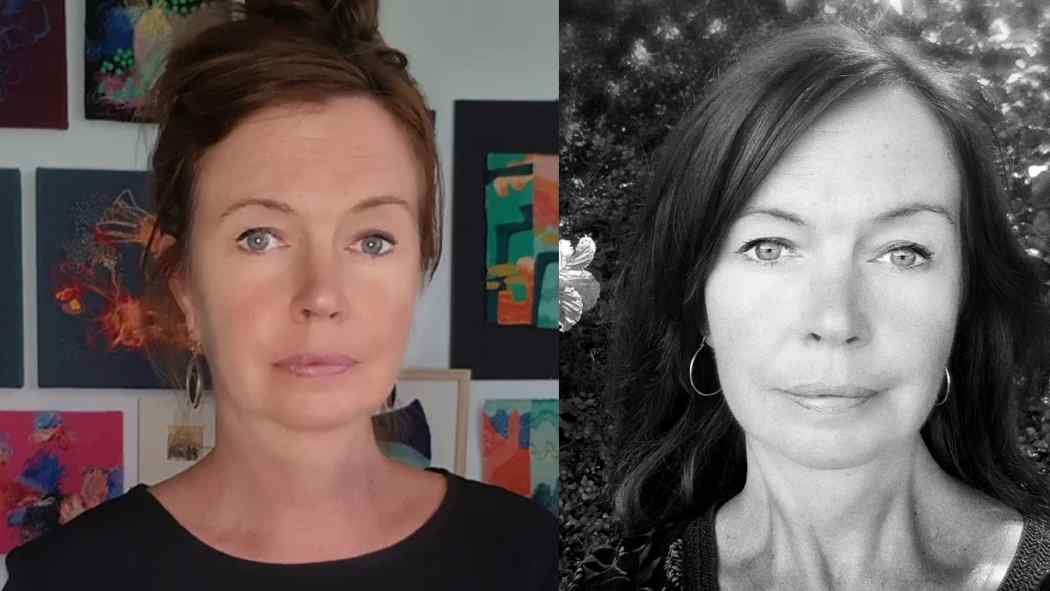
Kristine Stattin has emerged as one of the most compelling voices in contemporary textile art, captivating audiences with her vivid abstract embroideries and her bold fusion of traditional craft and modern artistic expression. Born in Stockholm and now based in southern France, she represents a new generation of fibre artists who are redefining the boundaries of thread, colour, surface, and form. Her work stands apart for its depth, its emotional movement, and its refusal to be boxed into conventional categories. Instead, she treats thread as a painter might treat pigment, building layers, textures, rhythms, and contrasts that draw viewers into immersive, almost meditative visual worlds.
Early Life and Artistic Roots
Kristine Stattin’s creative identity began forming long before she became known for her textile work. Growing up in Stockholm, she was surrounded by a culture that values design, craftsmanship, and artistic curiosity. However, her journey into textile art was far from linear. Unlike many who follow traditional art-school pipelines, her entry into embroidery came later in life, shaped by personal growth and creative reinvention. After leaving behind a business she once co-owned, she found herself exploring new forms of expression, gradually discovering embroidery as a medium through which she could channel both structure and spontaneity.
Although she holds a Bachelor’s degree in Fine Art, much of her textile education is self-developed. She experimented, tested, failed, reinvented, and refined until her signature language of layered thread emerged. Her commitment to continual exploration—rather than strict adherence to formal training—is one of the central pillars of her artistic identity.
Working Between Sweden and France
Now residing in the Occitanie region of southern France, Stattin’s surroundings deeply influence her creative practice. The region is known for its warm colours, textured landscapes, and artistic heritage, offering a contrasting environment to the crisp, minimalist aesthetics commonly associated with Scandinavian design. This shift in environment can be seen in her palette: bold contrasts, saturated tones, earthy foundations, and free-flowing compositions that echo both the wildness and the harmony of her adopted home.
Living between two cultures has also shaped her artistic independence. Swedish design principles—clarity, structure, balance—interact beautifully with the expressive, layered, intuitive tendencies nurtured in France. Her work is not tied to one tradition; it reflects the merging of two worlds.
Signature Style: Thread as Paint
One of the most recognisable aspects of Kristine Stattin’s work is her use of thread the way a painter uses colour. She does not approach embroidery as mere decoration; instead, she treats each stitch as a brushstroke, each layer as a part of a broader composition. Her work is characterised by:
1. Layered Thread-Painting
Stattin builds complex surfaces through multiple layers of thread. Some stitches are bold and thick, while others are delicate and whisper-thin. This layering creates a sense of depth and movement, allowing the artwork to shift depending on the viewer’s distance and angle.
2. Dynamic Linework
Lines are one of her central visual tools. Curved lines flow like rivers, sharp lines act like fractures, and spiralling lines create centres of energy. Her compositions often feel alive—full of motion and rhythm.
3. Rich Colour Composition
Colour is not an accessory in her work; it is the heartbeat. She uses striking contrasts, unexpected harmonies, and precise tonal transitions to build emotional resonance. A bright streak of orange may burst through a field of cool blues, or a soft gradient may calm a chaotic cluster of marks.
4. Tension Between Order and Chaos
Her pieces frequently explore the interplay of structure and spontaneity. Straight lines might intersect with free-motion machine stitches. Carefully placed elements coexist with sudden, instinctive gestures. This duality is one of the defining features of her voice as an artist.
5. A Mix of Machine and Hand Embroidery
Instead of choosing one technique, she seamlessly blends both. Machine embroidery provides speed, texture, and bold forms, while hand stitching introduces intimacy, focus, and delicate detail. Together, they create balanced yet unpredictable visual ecosystems.
Creative Philosophy: Freedom Over Perfection
Kristine Stattin’s approach to creativity is rooted in freedom. She often speaks about the importance of letting go and allowing the work to take shape naturally. For her, planning every detail of a piece restricts potential. Instead, she embraces instinct, improvisation, and the unknown.
This mindset allows her to move beyond the boundaries of traditional embroidery. Mistakes are not flaws—they are opportunities. Unexpected outcomes are welcomed rather than corrected. This philosophy resonates deeply with audiences because it reflects the unpredictability of human experience and the natural world.
Techniques and Materials
Stattin’s work is grounded in both tradition and innovation. Some elements of her technique include:
Linen as a Foundation
She often chooses linen for its stability and natural texture, which supports her layered approach.
Standard and Specialty Threads
From everyday cotton sewing threads to specialty embroidery threads, she uses a variety of materials to achieve contrast and dimensionality.
Combination Processes
Her work may include:
Free-motion machine stitching
Hand-embroidered embellishments
French knots
Appliqué
Occasional use of acrylic paint or screen-printed marks
Each component contributes to a rich, tactile world that cannot be replicated through digital or printed mediums.
Themes and Inspirations
While abstract in form, Kristine Stattin’s works are deeply connected to real-world inspiration. Her influences include:
Urban Environments
The lines and patterns of roads, buildings, and city grids often manifest in her compositions. Living in large cities before moving to rural France gave her a strong interest in the visuals of urban life—movement, architecture, noise, rhythm.
Nature and Organic Movement
In contrast, the textures and flows seen in her French surroundings appear in swirling lines, natural palettes, and organic forms.
Personal Reflection
Many of her works serve as emotional landscapes—non-literal reflections of feeling, memory, or experience. This gives her pieces a universal quality that viewers can connect with in their own way.
Recognition and Exhibitions
Over recent years, Kristine Stattin has gained increasing recognition. She has been featured in respected art and textile platforms, celebrated for her distinctive approach and her ability to merge fine art and fibre traditions. Her work is often exhibited in contemporary craft shows, textile showcases, and group exhibitions celebrating embroidery as a rising form of modern artistic communication.
Her membership in professional textile networks further demonstrates her dedication to the craft and her position within the international textile community.
Why Kristine Stattin Stands Out
In today’s expanding world of fibre art, many artists work with thread—but few manage to create a language as unique and recognisable as Kristine Stattin’s. She stands out because:
Her work bridges fine art and craft
She defies the idea that textiles are merely decorative or domestic.
She prioritises emotional resonance over strict technique
Her pieces feel alive, expressive, and deeply human.
She innovates through process
Her refusal to plan everything frees her creativity and leads to unexpectedly beautiful outcomes.
She brings a painter’s sensitivity to thread
Her mastery of colour, texture, and composition places her on par with contemporary painters, even though her medium is fibre.
Her works feel timeless yet modern
They hold the intimacy of handcraft and the boldness of modern abstraction.
Impact on Contemporary Textile Art
Kristine Stattin’s influence extends beyond her own body of work. She represents a larger movement of artists pushing textile art into galleries, museums, and mainstream conversations. As more people appreciate the depth, complexity, and emotional intelligence found in contemporary embroidery, artists like Stattin are at the forefront of this cultural shift.
Her dedication to authenticity, exploration, and personal expression inspires both emerging and established creators. Furthermore, her approach highlights the importance of embracing imperfection, trusting experimentation, and allowing materials to guide creative journeys.
Conclusion
Kristine Stattin is a compelling force in the world of contemporary textile art—a creator whose work invites viewers to look closer, feel deeper, and appreciate the infinite possibilities of thread. Through her layered embroideries, bold colour choices, and fearless approach to abstraction, she has carved a distinctive place in the artistic landscape. Her journey from Sweden to France, from structured paths to intuitive exploration, mirrors the very essence of her work: a continuous evolution, rich with texture, emotion, and meaning.