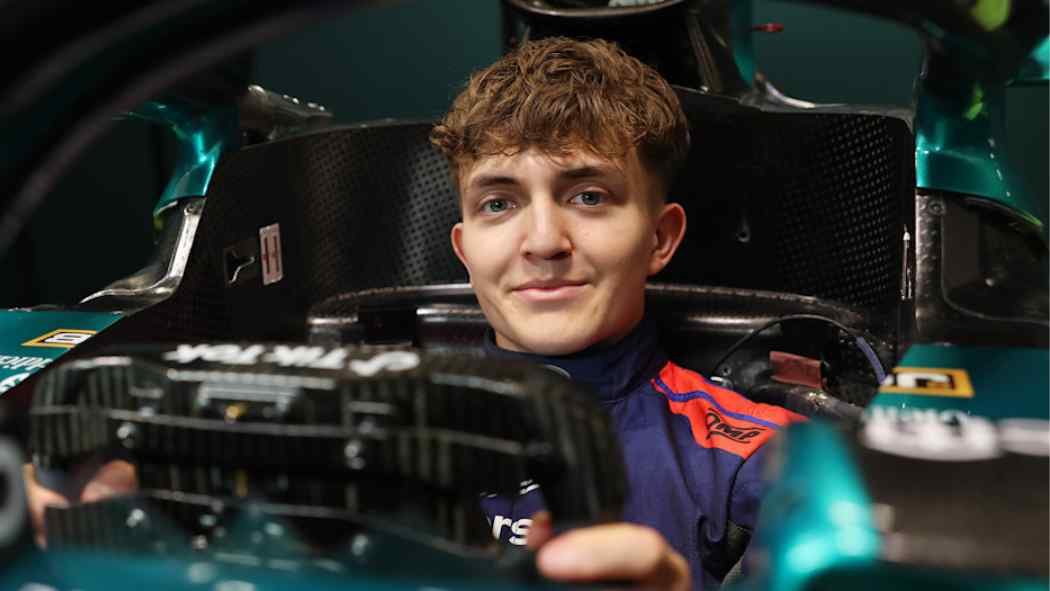
Deagen Fairclough is one of the most compelling young drivers to emerge in British motorsport in recent years. His story is not simply about natural skill or early opportunity; it is a story of an alternative route into racing, persistence despite financial constraints, and the changing face of talent discovery in modern motorsport. What separates him from so many other hopefuls is that his career was not built through the usual expensive karting ladder alone. Instead, it was shaped by a mixture of karting, saloon racing, and perhaps most significantly, simulator racing. His success shows how determination and resourceful thinking can still forge a pathway into elite motorsport.
The Early Years: From Karting to Sim Racing
The world of karting is well known for being both the starting point and filtering system for future racing stars. It is a fierce environment that builds driving instincts, reactions, and racecraft. Deagen’s early karting experience helped him develop the fundamentals needed to control a car and manage race pressure, particularly in wet weather conditions where confidence and touch are often the difference between success and failure. Yet, instead of continuing to put more money into karting, the decision to focus on simulator racing would change everything.
Simulator racing is now regarded as a legitimate training tool among racing professionals and engineers. For Deagen, it became more than a training method; it became his main competitive platform. While many dream of becoming racing drivers through virtual platforms, only a few truly succeed. The sim racing world is incredibly competitive and technical. Drivers are required to learn precise braking points, tyre management, and set-up nuances. They also learn strategic thinking and adaptability across different circuits.
Sim racing offered something else too: accessibility. Instead of relying on expensive private testing sessions and travel costs, he could race anytime and anywhere. Success in sims taught him how to manage pressure in the heat of competition against talented international opposition. It reinforced the idea that opportunity can be found beyond traditional routes if one is willing to stay committed and think differently.
A Real-World Breakthrough
Deagen’s step into real-world racing came through the Junior Saloon Car Championship. Driving competitively in saloon cars at a young age offered valuable seat time and developed the physical side of racing. It also sharpened his skills in real-life traffic situations, race starts, and managing on-track battles. His performances attracted attention because, despite his unconventional origins, he adapted quickly to the demands of physical racing. His results demonstrated a solid blend of raw talent, competitive determination, and a strong understanding of racecraft.
He later continued in the Ford Fiesta Junior Championship, where his performances showed he was more than a talented simulator driver. He achieved multiple wins, podiums, and championship contention. This step revealed a defining trait: he did not simply transfer sim skills; he enhanced them, turning them into mature race performances on real circuits.
British F4: The Proof of Potential
The British F4 Championship is often regarded as the stage where true prospects are measured. It is the first major step on the ladder towards professional single-seater racing. Deagen entered British F4 with the pressure of proving that his route into motorsport was justified. If sim racing and saloon cars could pave the way, then results would ultimately validate him.
His rookie season was impressive. He adapted quickly to the complexities of single-seater racing: aerodynamics, slick tyres, and technical race setups. What followed was a season of podiums, wins, fastest laps, and consistent pace. By the end of his first year in British F4, his position near the top of the standings confirmed something important: he was not simply a novelty, nor a one-dimensional driver. He was a competitor.
The following season, however, would completely redefine his trajectory. Driving for Hitech, Deagen produced one of the most dominant seasons in British F4 history. Fourteen race wins across the calendar established him as a record-holding champion. It was a level of consistency, speed, and determination that few rookies ever achieve. It also demonstrated maturity beyond expectations. Winning races is one thing; consistently winning across varying conditions, tracks, and race situations is something entirely different.
Breaking Down the Skill-Set
One of the key discussions surrounding Deagen is what makes him different. Many drivers are talented, but his route created a unique blend of skills:
Adaptability
His pathway forced him to adapt to different cars, different racing formats, and different forms of competition. Instead of specialising early in a single category, he became versatile.
Resilience
Financial limitations can discourage many families, but Deagen’s situation did not slow him. Instead, it became the reason to innovate and find other opportunities.
Technical Understanding
Sim racing develops a very technical understanding of setups, balance, and driving style. When applied to real cars, this knowledge becomes valuable in communicating with engineers and optimising performance.
Strategic Thought
Sim racing teaches decision-making under pressure, battling traffic in tight grids, and understanding race scenarios. That same intelligence transferred onto real circuits.
The Move Up the Ladder
After conquering British F4, Deagen progressed into GB3. This is the next serious step towards international motorsport. GB3 is where drivers prove that they are not just national talents but contenders for the major European and global series. The cars are faster, the competition tougher, and the technical requirements greater. The pressure increases, expectation multiplies, and every driver arrives with ambition.
For Deagen, the move is not just a career progression. It is the test that determines whether he is capable of continuing his upward trajectory. Many of Britain’s most accomplished drivers have passed through GB3 or equivalent categories. It is a battleground where future Formula 3 and Formula 2 drivers emerge.
What makes this next step compelling is not simply the question of whether he can win, but whether he can continue to disrupt expectations and challenge the belief that traditional methods are the only route to professional racing.
The Significance of His Story
Motorsport has historically been one of the most financially exclusive sports in the world. Rising through the ranks typically demands sponsorship backing or family resources. Deagen’s journey demonstrates something different: technology, talent, and opportunity can combine to provide a new route. It symbolises a growing shift in motorsport culture. If simulator platforms can produce professional-level drivers, then countless young racers across the world may find hope not through wealth, but through skill.
His rise also highlights the changing nature of driver development. Sim racing is increasingly used by Formula 1 teams, junior academies, and race engineers. It provides a platform for continuous training and improvement without the need for roads, circuits, or weather conditions. Deagen Fairclough is living proof of its credibility.
Conclusion
Deagen Fairclough’s journey from karting and simulator racing to winning the British F4 Championship and progressing into GB3 is a defining example of what modern motorsport can become. His story is proof that talent can thrive even when traditional pathways are beyond reach. His adaptability, resilience, and technical understanding make him a standout figure among his generation of drivers. He represents not only the future of British racing but also a shift in how future stars can be discovered.
If his career continues on its current trajectory, he could become one of the most influential British drivers of his era. His rise challenges the notion that opportunity in motorsport depends solely on money. Instead, it shows that innovation, determination, and unwavering belief can still outpace expectation.