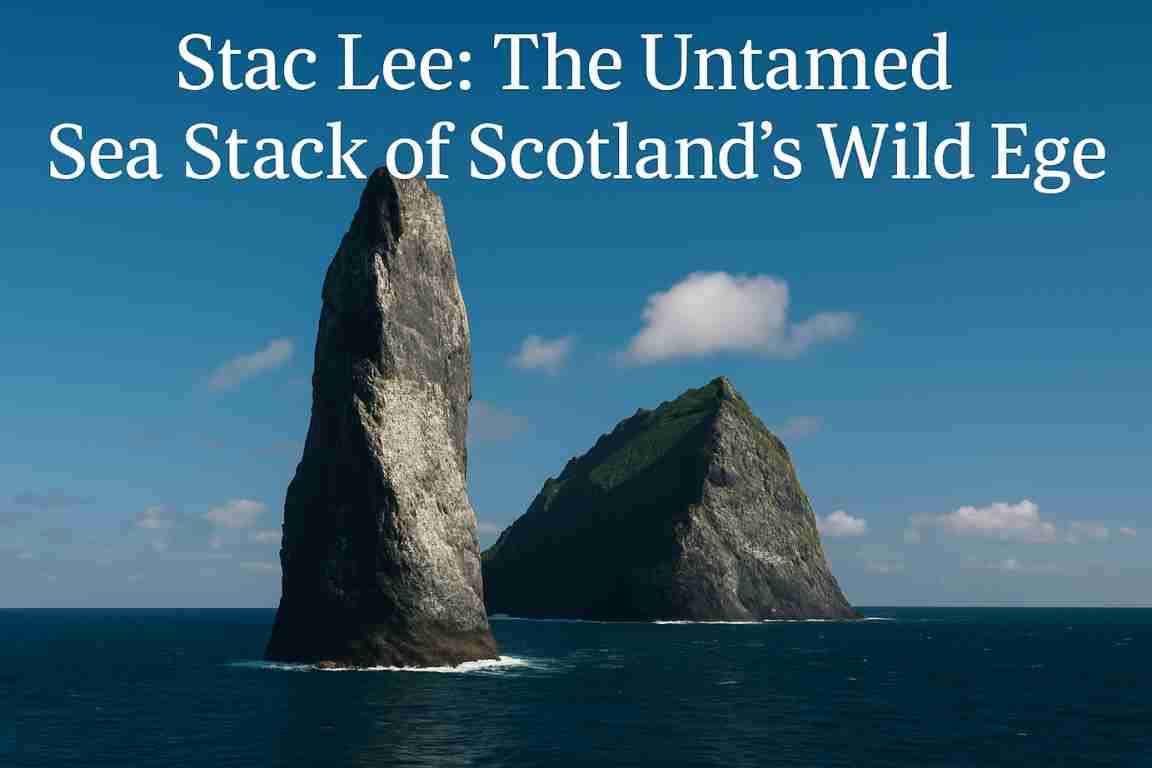
Stac Lee is one of the most striking and dramatic natural wonders found off the coast of Scotland. Rising sharply from the Atlantic Ocean as part of the remote St Kilda archipelago, this immense sea stack is a symbol of nature’s power and isolation. It is rarely visited, often surrounded by raging waves, and stands as a testament to the forces of wind, water, and time. Stac Lee is not merely a rock formation; it is a place layered with history, mythology, geography, and ecology. Its rugged cliffs have attracted explorers, naturalists, climbers and historians, who have tried to understand its origins and significance. Despite its remoteness and difficulty of access, Stac Lee has become a subject of fascination for adventurers and travellers from across the world.
The Geological Origin of Stac Lee
To understand Stac Lee is to understand a piece of Scotland’s ancient past. The stack is formed from the volcanic remains of a much larger landmass created millions of years ago during periods of heavy volcanic activity. Its appearance is harsh and vertical, shaped by centuries of erosion, storms, and the relentless pressure of the sea. The rock has endured the constant battering of waves, salt and weather conditions that would wear down weaker formations. Stac Lee’s tall structure demonstrates how nature can refine landscapes in conditions where humans cannot survive. Its form is dramatic from every angle. Seen from the sea, it rises like a giant pillar of stone, seemingly unattainable and completely disconnected from civilisation. Despite its small footprint, it has a commanding presence greater than many mountains or hills on the mainland.
The Location and Isolation of Stac Lee
Stac Lee is situated in the North Atlantic Ocean, several miles west of the Outer Hebrides. It belongs to the uninhabited St Kilda archipelago, a world-renowned UNESCO World Heritage Site. This region has long been considered one of the most remote areas in the United Kingdom. The nearest settlements are many miles away, and the weather around Stac Lee is unpredictable and often severe. Reaching this sea stack requires careful planning and is only possible when sea conditions are calm, which is rare. The sense of isolation is unmatched. There are no signs of everyday life, no roads, no buildings, and no technology. It stands completely untouched by modern development. Travellers and researchers who have visited often describe an overwhelming silence, broken only by the wind and the sounds of thousands of birds. The stack gives an intense feeling of stepping into another world.
Wildlife, Birds and Natural Habitats
One of the most extraordinary and important aspects of Stac Lee is its wildlife. The sea stack is famous for its enormous seabird population, especially Northern Gannets. The quantity of birds nesting on the steep rock surfaces is astonishing and makes Stac Lee one of the world’s most significant sites for seabird conservation. The environment is ideal for sea birds because it provides safety from predators and proximity to rich ocean feeding grounds. Each year, thousands of birds return to breed, hatch eggs, and raise young. The stack becomes alive with movement and noise, creating one of nature’s most powerful displays. Many marine biologists have described Stac Lee as a sanctuary where birds and ocean coexist in perfect balance. The appearance of the rock is largely affected by the birds, whose presence has shaped the surface over centuries. At a distance, the stack often seems white due to bird droppings that cover the rock.
Early Human Experiences and Local Heritage
Stac Lee has a connection to the history of the people of St Kilda. For hundreds of years, locals made dangerous and difficult journeys to the sea stacks to collect birds and eggs for food. These expeditions were incredibly risky. The waves around Stac Lee are powerful, and landings were often attempted in small boats. Once the boats were near the rock, men had to jump directly onto the surface at the moment the sea lifted their vessels high enough. They climbed using ropes and held on to rock formations for support. The bravery of these people is remarkable. They had no modern climbing equipment, weather forecasting technology, or safety nets. Yet, they continued to travel to Stac Lee because the resources collected were essential for survival. A small stone shelter was built on the rock so that workers could rest during stays. This tradition shows both the importance of the sea stack and the hard life of people who lived in isolation.
The Challenge of Climbing Stac Lee
Modern adventurers and climbers are still drawn to this sea stack. Stac Lee is considered one of the most difficult and dangerous summits in Scotland. The journey involves navigating strong ocean currents, unpredictable tides, and steep rock faces. Unlike other peaks, climbers must deal not just with height but with the harsh marine conditions that surround the rock. Reaching the summit is a rare achievement. The climb does not only require physical strength and technical skill; it also demands patience, knowledge of weather patterns and a perfect moment to land the boat. Only a small number of climbers have ever successfully reached the top. Many regard the experience as the ultimate test of determination. The challenge itself reflects the character of Stac Lee: wild, untamed and unforgiving.
Environmental Protection and Conservation
Stac Lee is protected due to its vital role in the ecosystem and its rich natural beauty. Conservation rules restrict climbing and human access because the wildlife must not be disturbed. The region is monitored and maintained to preserve its condition for the future. Environmental organisations closely study the health of the seabird populations and the impact of climate change. Rising sea levels, storms and shifting weather patterns pose long-term concerns. Despite these challenges, Stac Lee remains resilient. Conservation efforts focus on education, awareness and sustainable practices. Respect for nature is essential when dealing with such an untouched place. Visitors who are fortunate enough to come near Stac Lee must follow strict guidelines to protect the fragile ecosystem.
The Symbolic Meaning of Stac Lee
Beyond its geographical and ecological importance, Stac Lee carries symbolic weight. Many people see it as a representation of nature’s raw strength and mystery. Its steep sides and lonely presence remind us of the immense forces that shape the planet. It reflects endurance, fearlessness and the power of landscapes untouched by human hands. Stac Lee’s image is often used in art, photography and travel writing to portray remote beauty. Its existence challenges our understanding of isolation and survival. Whether viewed from a boat or from a distance, it inspires a sense of awe. It invites questions about the world before human civilisation and the changes that continue to shape the environment today. The stack is monumental not because of size but because of its ability to capture imagination.
Tourism and Modern Interest
Although only a few people visit Stac Lee each year, its reputation continues to grow. It has become an attraction for wildlife photographers, environmental researchers and adventurous travellers. Travel companies occasionally offer carefully managed boat tours around the area. However, the number of visitors is controlled to protect wildlife and prevent disruption. Even those who cannot physically visit Stac Lee still admire it from stories, images and documentaries. It serves as an example of Scotland’s extraordinary natural heritage. People from around the world are fascinated by its appearance and history. It remains one of the most remote natural landmarks in the country.
The Cultural Legacy of Stac Lee
Stories and folklore surrounding Stac Lee add another layer of interest. Local tradition speaks of spirits, legends and supernatural forces. The remote landscape often inspired tales because the sea stacks seemed impossible to reach. Fishermen, sailors and villagers described the rock with respect and sometimes fear. While many legends are symbolic, they reflect the deep connection between communities and the sea. The rock has always held meaning beyond its physical structure. In many ways, Stac Lee represents a bridge between nature, history, the spiritual world and human endurance.
Conclusion
Stac Lee is far more than a remote sea stack in the Atlantic. It is a place where nature has shaped a remarkable geological masterpiece. It has played an important role in the lives of seabirds, adventurers, local communities and historians. Its steep cliffs and isolation continue to inspire wonder. Stac Lee stands as a symbol of wild beauty and the enduring power of the natural world. Its historical significance, ecological value and dramatic landscape make it one of Scotland’s most extraordinary and unforgettable locations. Through its presence, Stac Lee reminds us of the importance of protecting remote and fragile environments. It demonstrates how nature continues to thrive in places where humans rarely set foot and offers a glimpse into an ancient past that survives today.