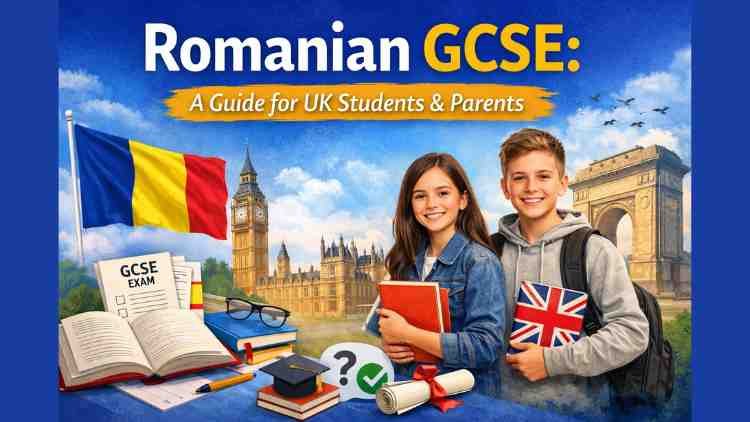
The phrase Romanian GCSE has gained increasing attention in recent years, especially among Romanian families living in the United Kingdom and educators working with multilingual students. As communities grow and educational needs evolve, many parents and students naturally ask whether Romanian can be studied or formally recognised at GCSE level, how it compares to other language qualifications, and what pathways exist for academic progression.
Understanding GCSEs in the UK Education System
Before focusing specifically on Romanian GCSE, it is essential to understand what GCSEs are and why they matter so much within the British education framework.
What Is a GCSE?
GCSE stands for General Certificate of Secondary Education. It is a nationally recognised qualification taken by students in England, Wales, and Northern Ireland, usually at the age of 15–16, at the end of Year 11. Students typically study between eight and ten subjects, including compulsory ones such as English and Mathematics, alongside optional subjects like sciences, humanities, and languages.
GCSE results play a crucial role in shaping a student’s future. They influence access to further education, such as A-levels, vocational qualifications, apprenticeships, and in some cases employment opportunities.
The Role of Languages in GCSEs
Modern foreign languages have long been a valued part of the GCSE curriculum. Subjects such as French, Spanish, and German are widely available, while other languages are offered depending on demand, teaching resources, and examination support. Language GCSEs assess reading, writing, listening, and speaking skills, focusing on both practical communication and cultural understanding.
For students with a heritage language, taking a GCSE in that language can be a powerful way to formalise existing skills, achieve high grades, and strengthen academic profiles.
What Does “Romanian GCSE” Actually Mean?
The term romanian gcse is often used in searches and conversations, but it can be misunderstood. It does not always refer to an officially available GCSE subject in the same way as French or Spanish.
Is Romanian Offered as an Official GCSE Subject?
At present, Romanian is not widely available as a standard GCSE subject offered by mainstream UK exam boards. This means that most secondary schools do not list Romanian among their regular language options.
However, this does not mean Romanian has no place within the GCSE framework. In the UK, the availability of language GCSEs depends largely on demand, examiner availability, and curriculum development. Several heritage languages that were once uncommon have gradually gained recognition through similar processes.
Why Romanian GCSE Is Sought After
There are several reasons why families search for Romanian GCSE options:
A growing Romanian population in the UK
Desire to maintain cultural and linguistic identity
Strong existing language skills among heritage speakers
Academic advantage of achieving an additional GCSE
Preparation for further language study or international careers
For many students, Romanian is spoken fluently at home, making the idea of formal recognition through a GCSE both logical and appealing.
Romanian Language Education in the UK Context
To fully understand the place of Romanian GCSE, it is useful to look at how Romanian is currently taught and recognised in the UK.
Community and Supplementary Schools
Many Romanian children in the UK attend community-run weekend or after-school programmes. These schools focus on Romanian language, literature, history, and culture. While they do not usually lead directly to GCSE qualifications, they provide a strong foundation in reading, writing, and grammar.
Such programmes often play a vital role in maintaining language proficiency beyond conversational use, which is essential for exam-level study.
Home Language Use and Bilingualism
A significant number of Romanian students grow up bilingual, using Romanian at home and English at school. While this offers cognitive and cultural benefits, it can also create challenges, particularly in formal writing and advanced grammar in Romanian.
A structured qualification such as a GCSE can help bridge this gap by encouraging academic-level language skills rather than everyday speech alone.
Alternatives to a Formal Romanian GCSE
Although a standard Romanian GCSE is not widely available, students still have several viable alternatives to gain formal recognition of their Romanian language ability.
Private and External Exam Routes
In some cases, students may enter for language exams as private candidates. This typically involves studying independently or with a tutor and sitting exams at an approved centre. Availability depends on exam board policies and examiner resources, so it requires careful planning.
International Language Qualifications
Some families explore internationally recognised Romanian language qualifications that assess proficiency levels. While these are not GCSEs, they may still be valuable for personal development, employment, or international study.
GCSEs in Other Subjects
Many Romanian students in the UK focus on achieving strong GCSE results in core subjects such as Mathematics, Sciences, and English, while maintaining Romanian language skills informally. For university or career progression, these GCSEs often carry greater immediate weight.
How Romanian Qualifications Compare to GCSE Level
Another common question linked to the search term romanian gcse is how Romanian national qualifications compare to GCSEs.
Romanian Education Structure
In Romania, compulsory education typically continues until around the age of 16, similar to the UK. Students then progress to upper secondary education and may sit national examinations later in their schooling.
The level of study completed by Romanian students at age 15–16 is often broadly comparable to GCSE level in terms of age and academic development, though the curriculum structure differs.
Recognition in the UK
When Romanian students move to the UK, their previous qualifications are usually assessed individually by schools, colleges, or universities. There is no automatic one-to-one replacement for GCSEs, but equivalency assessments help determine appropriate placement.
For this reason, many Romanian students still choose to sit UK GCSEs to ensure smooth academic progression.
The Academic Benefits of Studying Romanian at GCSE Level
Even without a formal GCSE option, the concept of Romanian GCSE highlights broader educational advantages.
Strengthening Literacy Skills
Formal study of Romanian improves spelling, grammar, and structured writing. These skills often transfer positively to English and other subjects, enhancing overall academic performance.
Cultural Identity and Confidence
For heritage speakers, studying their mother tongue formally can boost confidence and reinforce a sense of identity. This is particularly important for young people navigating multiple cultures.
University and Career Advantages
Language skills are highly valued by universities and employers. Fluency in Romanian, combined with strong English skills, can open doors in international business, translation, education, diplomacy, and community services.
Challenges Facing the Introduction of Romanian GCSE
Despite clear demand, several challenges affect the widespread introduction of Romanian GCSE.
Curriculum Development
Creating a GCSE subject requires a detailed syllabus, assessment criteria, and alignment with national standards. This process takes time and resources.
Examiner and Teacher Availability
Language GCSEs require trained examiners and qualified teachers. For less common languages, recruiting and training these professionals can be difficult.
Demand Thresholds
Exam boards typically require a certain level of national demand before introducing a new subject. While interest in Romanian GCSE is growing, it may not yet meet these thresholds across the country.
The Future Outlook for Romanian GCSE
Looking ahead, the future of Romanian GCSE is cautiously optimistic.
Growing Community Influence
As the Romanian community in the UK continues to grow, so does advocacy for language recognition. History shows that sustained demand can eventually lead to curriculum expansion.
Increasing Awareness of Heritage Languages
There is a broader educational shift towards valuing multilingualism and heritage languages. This cultural change may support the eventual inclusion of Romanian in formal examination systems.
Parental and Community Action
Community organisations, parents, and educators play a crucial role in raising awareness, supporting language education, and engaging with policymakers and exam boards.
Practical Advice for Students and Parents
For those currently searching for romanian gcse options, practical planning is essential.
Focus on Strong Core GCSEs
Ensure students achieve solid results in compulsory and widely recognised GCSE subjects. These form the foundation for further education.
Maintain Romanian Language Skills
Encourage regular reading, writing, and conversation in Romanian at home. Exposure to literature, media, and formal writing is particularly valuable.
Seek Academic Guidance
Speak with school advisors about language options, private exam entry possibilities, and long-term academic goals. Early planning can make a significant difference.
Conclusion
The topic of Romanian GCSE reflects a broader conversation about language, identity, and education in a multicultural UK. While Romanian is not yet widely available as an official GCSE subject, its growing visibility highlights the importance of heritage languages and the desire for formal recognition.
For now, students and families can focus on strong GCSE performance in existing subjects while continuing to nurture Romanian language skills through community, home, and supplementary education. With continued advocacy and demand, Romanian may one day find its place alongside other recognised language GCSEs, offering future generations the opportunity to celebrate both academic achievement and cultural heritage.
FAQs
Is Romanian officially available as a GCSE subject in the UK?
At present, Romanian is not widely offered as a standard GCSE subject by mainstream exam boards. Availability may vary in limited or private contexts.
Can Romanian students still benefit academically without a Romanian GCSE?
Yes. Strong GCSE results in other subjects, combined with bilingual skills, are highly valuable for further education and careers.
Are there alternative qualifications to demonstrate Romanian language ability?
There are international language certificates and community-based programmes that assess Romanian proficiency, though they are not the same as GCSEs.
Does speaking Romanian at home help with GCSE success overall?
Bilingualism often enhances cognitive skills, literacy, and adaptability, which can positively influence performance across many GCSE subjects.
Is Romanian GCSE likely to be introduced in the future?
While there is growing interest and demand, any formal introduction depends on curriculum development, resources, and national examination policies.