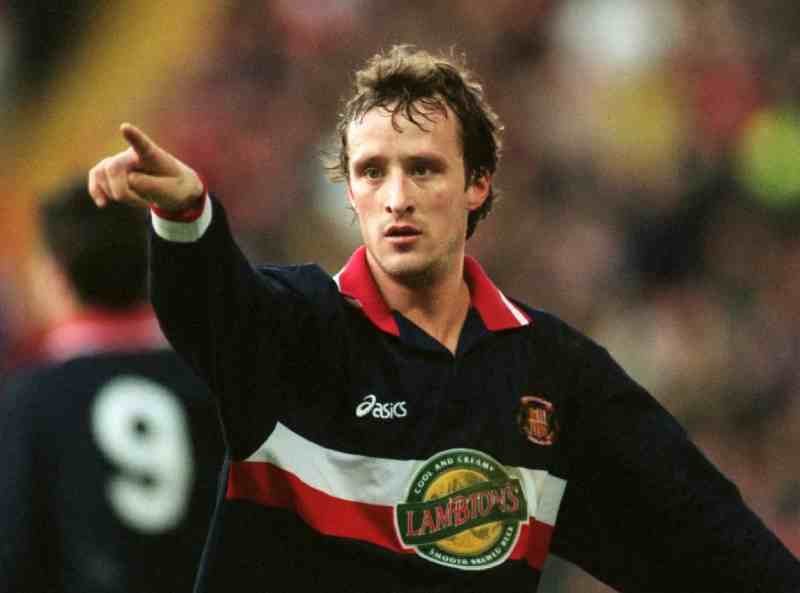
Few English footballers of the 1990s carried both the weight of a famous surname and the expectation of top-flight consistency quite like Nicky Summerbee. A hardworking winger and midfielder known for his direct running and accurate crossing, he carved out a substantial professional career during one of English football’s most competitive eras. From promotion battles to Premier League survival fights, his journey reflects the grit and determination that defined British football at the time.
Early Life and Footballing Heritage
Born on 26 August 1971 in Altrincham, Greater Manchester, Nicky Summerbee grew up immersed in football culture. He is the son of former England international Mike Summerbee, a celebrated Manchester City winger of the 1960s and 1970s. His grandfather, George Summerbee, was also a professional footballer, making the family name synonymous with dedication to the game.
Growing up in such an environment brought both privilege and pressure. Having a father who had already represented England and won major honours meant expectations were naturally high. Yet rather than shrinking under that spotlight, Nicky Summerbee developed a playing style rooted in determination rather than glamour. While comparisons with his father were inevitable, he worked to build his own reputation.
From a young age, he demonstrated natural pace and stamina. Coaches often noted his willingness to track back defensively as much as he attacked, a trait that would later define his role in professional football.
Breaking Through at Swindon Town
The Early Professional Years
The professional journey of Nicky Summerbee began at Swindon Town. It was here that he took his first real steps in senior football during the early 1990s. Swindon were a club on the rise, and the competitive nature of the squad demanded resilience from young players.
He made his league debut in 1990 and steadily grew in confidence. Playing primarily as a right-sided midfielder or winger, he quickly became known for his energetic performances. While not the most prolific goal scorer, he contributed with assists and tireless work rate.
Learning the Game the Hard Way
Swindon provided invaluable experience. Lower-division football in England at that time was physical and unforgiving. Matches were often tight affairs played on heavy pitches, demanding stamina and mental toughness. It was the perfect training ground for a player determined to prove himself.
These formative years helped Nicky Summerbee mature both technically and psychologically. He learned to handle rough challenges, hostile away crowds, and the relentless fixture schedule that characterises English football.
Manchester City: A Defining Chapter
Arrival at Maine Road
In 1994, Manchester City signed him, marking a significant step forward in his career. Returning to the club where his father had once starred carried symbolic importance. However, the club itself was entering a turbulent period.
During his time at Maine Road, Manchester City experienced instability, including relegation from the Premier League. Despite the club’s struggles, Nicky Summerbee remained a consistent performer.
Consistency Amid Turmoil
Over several seasons, he made more than 130 league appearances for City. He provided width, crosses and defensive cover, often being one of the side’s most reliable outlets on the flank. Fans appreciated his commitment, particularly during seasons when results were inconsistent.
City’s decline into the lower divisions in the late 1990s was painful for supporters. Yet even in difficult campaigns, Nicky Summerbee was recognised for maintaining professional standards. His work ethic and willingness to take responsibility earned respect in a dressing room often under pressure.
Sunderland and Promotion Glory
A New Challenge
In 1997, he moved to Sunderland, a club determined to return to the Premier League. This proved to be one of the most significant chapters of his career.
Under strong management and with a competitive squad, Sunderland pushed for promotion. The team’s style combined physical strength with disciplined organisation.
Division One Champions
The 1998–99 season stands out as a major highlight. Sunderland won the Football League Division One title, securing promotion to the Premier League. Nicky Summerbee played an important supporting role, contributing valuable experience and composure.
Promotion campaigns demand squad unity and mental resilience. His experience from previous relegation battles likely helped steady the group during tense moments. Lifting the title cemented his reputation as a dependable professional capable of contributing to successful sides.
Later Career and Adaptation
Moves Across English Clubs
Following his time at Sunderland, he had spells with Bolton Wanderers, Nottingham Forest, Leicester City, Bradford City and others. Some moves were permanent, others on loan. These transitions reflected the realities of professional football: competition for places, managerial changes and evolving tactical systems.
While he was no longer a young prospect, Nicky Summerbee remained valued for his professionalism and understanding of the game. Managers often rely on experienced players to guide younger teammates, and his presence in dressing rooms provided stability.
Adjusting to Changing Football
The late 1990s and early 2000s saw rapid transformation in English football. The Premier League became more global, tactical approaches evolved, and the physical demands increased. Wingers were expected to combine creativity with defensive responsibility.
Throughout this shift, Nicky Summerbee adapted. Although not a headline-grabbing star, he fulfilled tactical instructions diligently. His versatility allowed him to play in different midfield roles depending on team needs.
He eventually finished his playing career in the lower leagues, demonstrating a willingness to continue competing rather than stepping away prematurely.
International Recognition
While he did not earn a full senior England cap, Nicky Summerbee represented England at Under-21 and England B levels. International selection at youth level signified recognition of his ability during a competitive era for English midfielders.
The 1990s featured fierce competition for national team places, with numerous high-profile wingers and midfielders emerging. Even so, being part of England’s wider setup reflected his standing within the professional game.
Playing Style and Strengths
Work Rate and Reliability
The defining characteristic of Nicky Summerbee was work rate. Managers valued his ability to contribute defensively while still providing attacking width. He rarely shied away from physical contests and covered significant ground over 90 minutes.
Crossing and Directness
As a winger, he specialised in delivering early crosses into the box. This direct approach suited the traditional English style of play prevalent during much of his career. Strikers relied on service from wide areas, and his crossing ability became an important tactical asset.
Mental Toughness
Playing through relegation battles, promotions and club transitions requires psychological resilience. His longevity in professional football speaks to mental strength as much as physical conditioning.
Life After Retirement
Following his retirement from playing, Nicky Summerbee transitioned into media work and punditry. Former professionals often bring valuable insight to commentary roles, particularly those who have experienced multiple tiers of English football.
He has contributed as a radio co-commentator and football analyst, particularly covering Manchester City and other English fixtures. His understanding of the pressures faced by players adds credibility to his analysis.
Remaining connected to the sport allowed him to stay close to the environment he had known since childhood. For many ex-players, punditry offers both continuity and a new platform for influence.
The Weight of a Footballing Surname
Being the son of a club legend is rarely straightforward. Expectations can be overwhelming, especially when supporters naturally draw comparisons.
Yet Nicky Summerbee carved his own path. Rather than attempting to replicate his father’s style or achievements, he developed his own identity. While Mike Summerbee’s era was marked by major trophies and European success, Nicky’s career unfolded during a different football landscape, shaped by financial change and heightened competition.
That he sustained a lengthy professional career in this environment speaks to character and commitment.
Cultural Context: English Football in the 1990s
To fully appreciate Nicky Summerbee, it is important to understand the era in which he played. The 1990s were transformative years. The formation of the Premier League in 1992 changed broadcasting revenue, player recruitment and tactical sophistication.
Clubs were increasingly influenced by foreign managers and players. Physical endurance remained crucial, but technical standards were rising. Domestic professionals had to compete with an expanding international talent pool.
Surviving and contributing consistently during this period required adaptability. Players could no longer rely solely on traditional strengths; they had to evolve. His career reflects that evolution.
Reputation Among Supporters
While he may not be remembered as a superstar, many fans recall Nicky Summerbee fondly. Supporters often appreciate players who give maximum effort regardless of circumstances.
At Manchester City, especially during difficult seasons, he was seen as a committed professional. At Sunderland, he is associated with a promotion-winning campaign that restored pride to the club.
Football history is shaped not only by icons but by dependable squad members who form the backbone of competitive teams. He fits firmly into that category.
FAQs
Who is Nicky Summerbee?
Nicky Summerbee is a former English professional footballer who played primarily as a midfielder and winger during the 1990s and early 2000s.
Which clubs did Nicky Summerbee play for?
He represented several clubs, including Swindon Town, Manchester City and Sunderland, along with spells at Bolton Wanderers, Nottingham Forest, Leicester City and others.
Did Nicky Summerbee play for England?
He represented England at Under-21 and England B level but did not earn a full senior international cap.
What position did Nicky Summerbee play?
He mainly played as a right-sided midfielder or winger, known for his crossing ability and work rate.
What does Nicky Summerbee do now?
After retiring from professional football, he moved into media work and punditry, offering analysis and commentary on English football.
Conclusion
Nicky Summerbee represents the archetype of a committed English professional: hardworking, adaptable and resilient. While he may not have dominated headlines, his career spanned numerous clubs and competitive campaigns, including a memorable promotion triumph with Sunderland.
In an era defined by rapid transformation within English football, he remained steady and dependable. His journey illustrates that footballing success is not measured solely by trophies or international caps, but also by perseverance, professionalism and the respect of teammates and supporters.