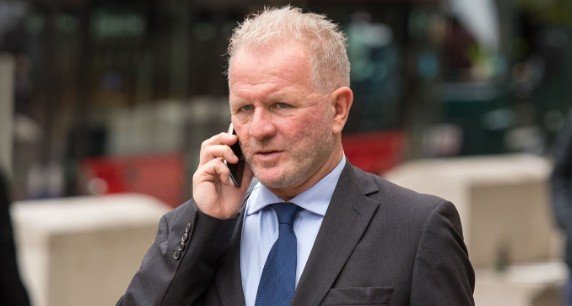
Andy Ruhan, a name that once symbolised success, luxury, and strategic genius in the British business world, has since become synonymous with one of the most fascinating sagas of ambition, wealth, and controversy. Known formally as Andrew Joseph Ruhan, he carved a reputation as a property developer, investor, entrepreneur, and motorsport enthusiast. His ventures have spanned industries — from hospitality and data centres to Formula 1 racing — showcasing a career built on bold deals and complex financial manoeuvres. Yet, behind the shine of business success lies a turbulent narrative marked by legal disputes, financial allegations, and questions surrounding his fortune and integrity.
Early Life and Business Foundations
Born in September 1962, Andy Ruhan grew up during a period when Britain’s business landscape was rapidly evolving. He developed an early interest in property, finance, and technology, realising that the most successful ventures often stemmed from spotting undervalued assets and transforming them into high-yield businesses.
By the 1990s, Ruhan had established himself as a sharp negotiator and investor. His earliest achievements came from property investments and hospitality ventures that quickly grew in scale. His business philosophy was simple yet aggressive: identify distressed or undervalued assets, inject capital and strategic vision, and sell for substantial profit.
Rise in the Property and Hotel Sector
Ruhan’s most prominent early breakthrough came through the Atlantic Hotels and Bridgehouse Group, where he acquired a significant portfolio of hotels. In 2003, his group led the acquisition of 37 Thistle Hotels in a deal valued at around £800 million — a move that placed him among the top property players in the United Kingdom.
He had a knack for restructuring large-scale assets, often through intricate corporate arrangements. His ventures were usually financed through complex joint ventures and offshore structures, a common approach among high-net-worth property investors. The success of these hotel acquisitions propelled him into the circle of elite British businessmen, earning him a reputation as a risk-taker who could turn struggling ventures into multi-million-pound empires.
Expansion into Technology and Infrastructure
While many property developers remained confined to real estate, Andy Ruhan took a bold leap into technology infrastructure. He became one of the driving forces behind Global Switch, a major data-centre business that hosted IT and networking services for some of the world’s largest corporations and investment banks.
Global Switch symbolised the transition from traditional property to digital infrastructure — an early recognition by Ruhan that data would become the new form of real estate. His involvement in this venture brought him international recognition and partnerships with global investors.
In 2004, Ruhan added another major asset to his portfolio: he acquired Global Marine Systems, a company specialising in undersea cable installation and maintenance, for around £8 million. Remarkably, this company had previously been valued at more than £550 million, proving Ruhan’s ability to strike deals at extraordinary discounts.
The Formula 1 Chapter
Beyond boardrooms and property portfolios, Andy Ruhan had a passion for speed and luxury. His business success naturally extended into motorsports, where he joined the board of the Lotus F1 Team in 2013. His role was primarily strategic, helping to manage finances and attract investors at a time when the team was facing operational challenges.
His involvement in Formula 1 showcased another side of his personality — ambitious, competitive, and driven by prestige. For Ruhan, Formula 1 represented not only a sport but also a global stage for networking with the world’s wealthiest individuals and corporations.
However, his time in the sport was short-lived. By late 2015, the Lotus F1 Team was sold, and Ruhan quietly exited the scene, turning his focus back to managing his corporate and legal affairs.
The Financial Empire and Hidden Complexities
At the peak of his success, media reports suggested that Andy Ruhan’s wealth reached over £200 million, fuelled by real estate, hotels, and data-centre holdings. Yet, beneath this image of prosperity lay a complex financial structure involving multiple companies, offshore entities, and nominee arrangements.
Many of these structures later became central to legal disputes, as business partners and former associates alleged that Ruhan had concealed assets and diverted profits. Such allegations would eventually drag him into one of the most significant corporate court cases in recent UK history.
The Hotel Portfolio II (HPII) Case
One of the defining moments of Ruhan’s later career was the Hotel Portfolio II UK Ltd (HPII) case. This dispute centred on profits derived from the sale of hotels originally owned by HPII. Ruhan was accused of breaching fiduciary duties by failing to disclose his ownership interest in a company called Cambulo Madeira, which allegedly made over £100 million in profits from these hotel sales.
The court determined that these profits were held on constructive trust for HPII — meaning that the gains rightfully belonged to the company rather than to Ruhan personally. The judgement also found that his associate, Anthony Stevens, had dishonestly assisted in these transactions, making both men liable for vast sums.
This landmark decision not only exposed questionable dealings but also set a significant legal precedent in corporate governance and fiduciary responsibility.
Personal Life and High-Profile Divorce
While Ruhan’s business ventures were making headlines, his personal life was undergoing immense turmoil. His marriage breakdown led to one of the most publicised divorce battles in British legal history. During these proceedings, he claimed to have far fewer assets than previously believed — reporting only about £8 million in assets and debts exceeding £4 million.
This declaration sharply contrasted with his prior reputation as a multi-millionaire tycoon. Critics and legal representatives questioned the accuracy of his financial disclosures, suspecting that vast portions of his wealth had been transferred or hidden through trusts and overseas entities.
The divorce case further fuelled speculation about Ruhan’s true net worth and transparency, adding to his already controversial reputation.
The Public Image: Genius or Manipulator?
Andy Ruhan’s career remains a story of contrasts. On one hand, he is undeniably intelligent, resourceful, and entrepreneurial. He identified emerging trends before many of his peers — from property development to data infrastructure — and successfully built businesses worth hundreds of millions.
On the other hand, his name became associated with secrecy, deception, and questionable ethics. Courts have found that he acted dishonestly in some of his dealings, and former business partners have accused him of exploiting trust structures for personal gain.
His supporters argue that Ruhan is simply a shrewd businessman navigating the cut-throat world of corporate finance, while critics view him as a cautionary tale of greed and moral compromise.
Lessons from the Andy Ruhan Saga
Andy Ruhan’s story offers several lessons for entrepreneurs, investors, and business leaders:
- Transparency is Non-Negotiable:
Success built on secrecy and complex financial structures may provide short-term gain but often leads to long-term reputational damage. - Ethics Outweigh Strategy:
Even the most sophisticated business models collapse when ethical foundations are weak. Ruhan’s case demonstrates that breaching trust, especially fiduciary duties, can erase decades of achievement. - Wealth Management Requires Accountability:
Managing vast assets through offshore entities can easily create the perception — or reality — of concealment. Open governance and legal compliance are essential for maintaining credibility. - Public Image Matters:
In today’s transparent world, public reputation can be as valuable as financial success. Ruhan’s fall from grace highlights how quickly public perception can shift from admiration to distrust.
Current Status and Legacy
Despite years of legal battles, Ruhan continues to attract public curiosity. Once considered a man of immense influence, his business empire has significantly diminished. The findings in the HPII case and his divorce proceedings have placed him under intense scrutiny from both the media and financial authorities.
Yet, some believe that Ruhan still holds influence behind the scenes. His deep understanding of asset structuring, international finance, and real-estate strategy suggests he remains a figure of interest within certain investment circles. Whether he chooses to rebuild his image or remain in the shadows is a question only time will answer.
A Symbol of Britain’s Entrepreneurial Complexity
Andy Ruhan’s story is more than a biography of a businessman — it is a reflection of modern British capitalism. It illustrates the thin line between innovation and manipulation, ambition and greed, and the unpredictable nature of power in global markets.
In a world where success often depends on risk-taking and strategic concealment, Ruhan represents both the brilliance and the danger of pushing boundaries too far. His journey from luxury hotels to legal courts reveals how quickly fortunes can shift in a landscape governed by trust, regulation, and public scrutiny.
Conclusion
Andy Ruhan remains one of the most compelling figures in Britain’s corporate history — a man who built empires, influenced global industries, and ultimately faced the consequences of ambition unchecked by transparency. His rise demonstrates the limitless potential of strategic entrepreneurship, while his fall serves as a cautionary tale about integrity, responsibility, and the hidden cost of excessive ambition.
For readers, entrepreneurs, and investors alike, the story of Andy Ruhan is a reminder that in business, as in life, true success lies not just in wealth accumulation but in the enduring power of honesty and accountability.