Few coastal landscapes in Britain capture the imagination quite like the Arbroath Cliffs. Stretching along the rugged eastern edge of Scotland, these dramatic formations offer a powerful combination of geological wonder, natural beauty, and raw coastal energy. The Arbroath Cliffs are not merely a scenic attraction—they are a living, evolving landscape shaped over hundreds of millions of years.
Located near the historic town of Arbroath, this stretch of coastline has become one of the most captivating walking destinations in the United Kingdom. Visitors are drawn not only by the views but by the sense of scale and time embedded in every layer of red sandstone.
The Geographic Setting of Arbroath Cliffs
The Arbroath Cliffs lie along the North Sea coast in the Angus region, forming part of the wider Seaton Cliffs Nature Reserve. This coastline runs northwards from Arbroath towards the small fishing village of Auchmithie, offering a continuous ribbon of elevated paths overlooking the sea.
Unlike many coastal areas that gradually slope towards the water, the Arbroath Cliffs rise sharply from the sea, creating a striking vertical drop. This dramatic elevation gives visitors uninterrupted views of the horizon and an ever-changing seascape below.
The location itself plays a crucial role in shaping the experience. The North Sea is known for its powerful waves and unpredictable weather, both of which contribute to the rugged character of the cliffs. On a calm day, the sea shimmers peacefully beneath the rocks. On stormy days, waves crash violently against the base, sending spray high into the air.
The Geological Story Behind Arbroath Cliffs


To truly appreciate the Arbroath Cliffs, one must understand their geological origins. These cliffs are composed primarily of Old Red Sandstone, formed during the Devonian period roughly 370 to 410 million years ago. At that time, this part of the world was vastly different—situated in a semi-arid environment with rivers depositing sediments that would eventually harden into rock.
Over millions of years, tectonic forces uplifted these formations, while erosion began to shape them into the cliffs we see today. The North Sea, relentless and powerful, has played the most significant role in carving the landscape.
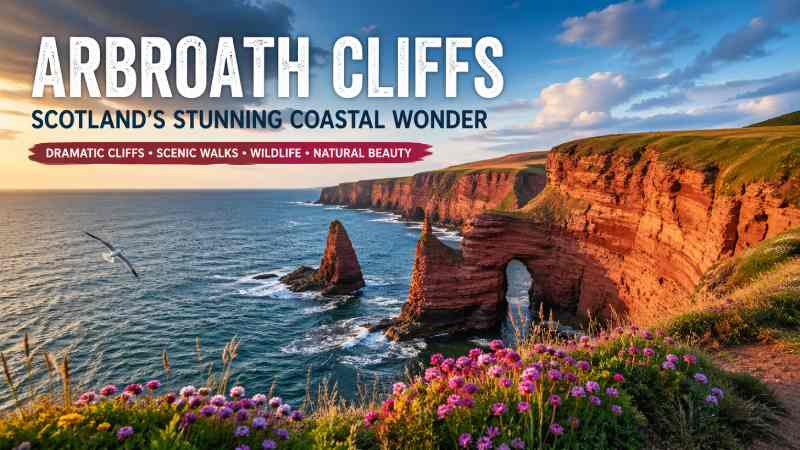
Wave action exploits weaknesses in the rock, gradually widening cracks into caves. As erosion continues, these caves may collapse, forming arches, stacks, and deep inlets known as geos. The Arbroath Cliffs are essentially a textbook example of coastal erosion in action.
One of the most fascinating aspects of the geology here is its visibility. The layers of sediment are clearly exposed, allowing visitors to literally see the passage of geological time etched into the rock face.
Iconic Rock Formations Along the Cliffs
The Arbroath Cliffs are famous for their distinctive formations, each with its own character and story. These features are not only visually striking but also scientifically significant.
The Needle’s Eye
Perhaps the most photographed feature of the Arbroath Cliffs, the Needle’s Eye is a natural rock arch formed through years of erosion. It stands as a symbol of the coastline’s dynamic nature, showcasing how the sea can sculpt even the hardest rock into delicate shapes.
Dickmont Den
Dickmont Den is a dramatic collapsed sea cave that forms a deep, narrow inlet. It is a powerful reminder of the constant changes occurring along the coastline. What was once a hidden cavern has become an open chasm, exposing the inner structure of the cliff.
Deil’s Heid
Also known as the Devil’s Head, this sea stack rises boldly from the water. It was once part of the mainland cliff but has been isolated by erosion. These stacks are temporary features in geological terms, destined eventually to collapse under the forces of nature.
Mermaid’s Kirk
This enchanting cave, accessible at low tide, adds a touch of mystery to the cliffs. Its name evokes folklore and imagination, reminding visitors that landscapes often inspire stories as well as scientific curiosity.
The Arbroath Cliff Walk Experience
One of the best ways to experience the Arbroath Cliffs is by walking along the cliff-top path. This route is widely regarded as one of the finest coastal walks in Scotland, offering a blend of accessibility and adventure.
The full walk typically stretches around 5 kilometres from Arbroath to Auchmithie. It can take between three to four hours, depending on pace and how often one stops to admire the views.
The path itself is relatively well-maintained, though it includes uneven terrain and occasional steep sections. Along the way, walkers are treated to a constantly changing landscape—one moment overlooking towering cliffs, the next passing through grassy fields dotted with wildflowers.
What makes the walk truly special is the sense of immersion. There are no barriers between the visitor and the natural environment. The wind, the sound of waves, and the vastness of the sea create an experience that feels both grounding and exhilarating.
Wildlife Along the Arbroath Cliffs
The Arbroath Cliffs are not just a geological marvel—they are also a thriving habitat for wildlife. The cliffs provide ideal nesting grounds for seabirds, while the surrounding vegetation supports a variety of insects and plant species.
During the warmer months, visitors can observe colonies of gulls, kittiwakes, and other seabirds nesting along the cliff faces. Their calls echo across the coastline, adding to the atmosphere of the place.
Out at sea, there is always the possibility of spotting dolphins. These intelligent creatures are known to frequent the waters off the coast, delighting those lucky enough to catch a glimpse.
The cliff-top areas bloom with wildflowers in spring and summer, creating a striking contrast against the red rock and blue sea. Butterflies and bees can often be seen moving between the flowers, contributing to the area’s ecological richness.
The Cultural and Historical Significance
The Arbroath Cliffs are closely tied to the history and culture of the surrounding region. The nearby town of Arbroath has a long maritime heritage, with fishing playing a central role in its development.
Auchmithie, at the northern end of the cliff walk, is a traditional fishing village with roots stretching back centuries. Its connection to the sea is evident in its layout, architecture, and local traditions.
The cliffs themselves have long been part of local folklore. Names such as Mermaid’s Kirk and Deil’s Heid reflect the stories and beliefs of past generations. These narratives add a human dimension to the landscape, reminding visitors that natural features often become intertwined with cultural identity.
Seasonal Changes at Arbroath Cliffs
One of the most appealing aspects of the Arbroath Cliffs is how they change throughout the year. Each season brings a different character to the coastline.
In spring, the cliffs come alive with fresh greenery and blooming wildflowers. The air feels crisp, and the increasing daylight makes it an ideal time for walking.
Summer offers the warmest conditions and the greatest chance of clear skies. This is also when wildlife activity is at its peak, making it a popular time for visitors.
Autumn introduces richer colours, with golden grasses and dramatic skies. The sea often appears more turbulent, adding to the sense of drama.
Winter transforms the cliffs into a stark and powerful landscape. Strong winds and crashing waves create an atmosphere that is both awe-inspiring and humbling.
Photography Opportunities
The Arbroath Cliffs are a paradise for photographers. The combination of dramatic geology, shifting light, and dynamic weather conditions creates endless opportunities for striking images.
Sunrise and sunset are particularly rewarding times to visit. The red sandstone takes on a warm glow, contrasting beautifully with the cool tones of the sea and sky.
Long-exposure photography can capture the movement of waves, while wide-angle shots emphasise the scale of the cliffs. Wildlife photography is also possible, particularly during the breeding season for seabirds.
Safety Considerations
While the Arbroath Cliffs are undeniably beautiful, they also demand respect. The same forces that have shaped the cliffs continue to act upon them, making certain areas unstable.
Visitors should always stay on marked paths and avoid getting too close to the edge. Weather conditions can change rapidly, particularly along the coast, so it is important to be prepared.
Proper footwear is essential, as the terrain can be uneven and slippery. Those exploring caves or lower areas should be mindful of tide times to avoid becoming stranded.
Accessibility and Visitor Experience
The Arbroath Cliffs are relatively accessible compared to many other rugged coastal areas. There are multiple entry points along the route, allowing visitors to tailor their experience.
Shorter walks are available for those who prefer a less demanding outing, while the full route offers a more immersive experience for keen walkers.
Facilities in nearby Arbroath provide opportunities for refreshments, accommodation, and further exploration. The combination of natural beauty and accessibility makes the cliffs suitable for a wide range of visitors.
Why Arbroath Cliffs Stand Out
What sets the Arbroath Cliffs apart from other coastal destinations is their unique blend of features. The red sandstone creates a distinctive visual identity, while the variety of formations adds complexity and interest.
The cliffs are not static—they are constantly changing, shaped by the forces of nature. This sense of movement and evolution gives the landscape a dynamic quality that few places can match.
Moreover, the combination of geology, wildlife, history, and accessibility makes the Arbroath Cliffs a well-rounded destination. They appeal to scientists, photographers, walkers, and casual visitors alike.
FAQs
1. What is the best time to visit Arbroath Cliffs?
The best time to visit Arbroath Cliffs is between May and September when the weather is milder, wildlife is active, and the coastal views are at their most vibrant.
2. How long does it take to walk the Arbroath Cliffs trail?
The full Arbroath Cliffs walk from Arbroath to Auchmithie typically takes around 3 to 4 hours, depending on your pace and stops.
3. Are Arbroath Cliffs suitable for beginners?
Yes, most parts of the Arbroath Cliffs trail are suitable for beginners, but care is needed due to uneven paths and steep cliff edges.
4. Can you see wildlife at Arbroath Cliffs?
Yes, Arbroath Cliffs are home to seabirds, butterflies, and occasionally dolphins, making them a great spot for nature lovers.
5. Is there an entry fee for Arbroath Cliffs?
No, visiting Arbroath Cliffs is completely free, as it is an open natural coastal area.
Conclusion
The Arbroath Cliffs represent one of Scotland’s most compelling natural landscapes. From their ancient geological origins to their modern-day appeal as a walking and wildlife destination, they offer a rich and layered experience.
Whether one is drawn by the science of their formation, the beauty of their views, or the simple pleasure of walking along the coast, the Arbroath Cliffs deliver something truly memorable. They stand as a testament to the power of nature and the passage of time—a place where every rock, wave, and breeze tells a story.