Scotland is a land of dramatic landscapes and ancient ruins, where history often lives in the bones of weathered stone. Among these relics stands auldhame castle, a ruined 16th-century tower house perched above the rugged coastline near North Berwick in East Lothian. Though time has softened its walls and nature has reclaimed parts of its structure, the castle remains a powerful reminder of Scotland’s feudal past, its religious heritage, and even its folklore of lighthouse-less shipwrecked shores. For travellers, historians, and curious minds alike, auldhame castle offers a story not simply of stone and architecture but of people, place, belief, and the sea.
The Location: A Castle on a Coastal Ridge
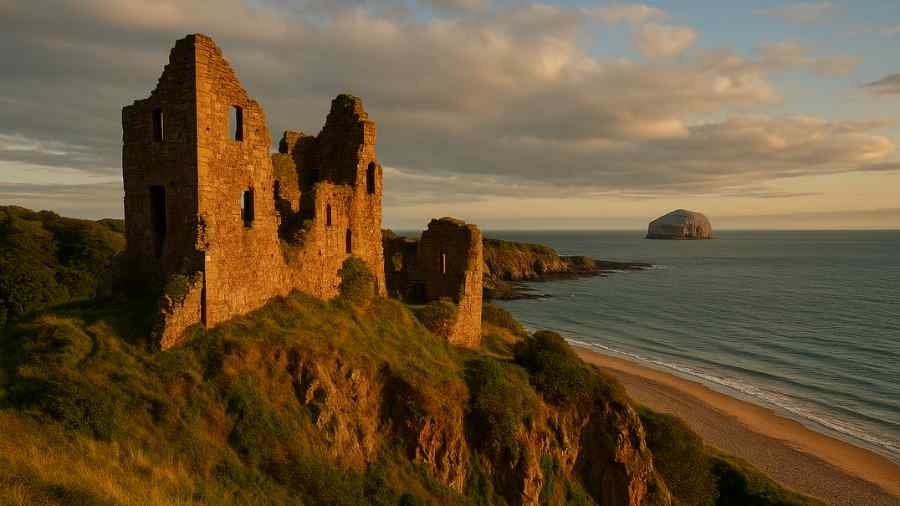
auldhame castle stands on a natural rise above Seacliff Beach, overlooking the North Sea. The nearby Bass Rock, a famous volcanic island populated by thousands of gannets, sits clearly in view. This dramatic coastal backdrop is part of what makes the castle so striking. The builders did not choose the location by accident. In medieval Scotland, height meant both visibility and defence.
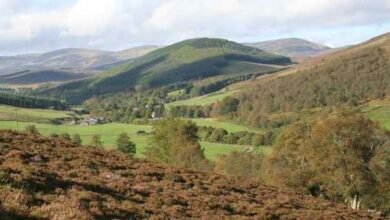
From this elevated spot, one could watch the sea routes, monitor local farmland, and detect approaching threats before they reached the estate. The surrounding land is green and rolling, typical of East Lothian’s rich farmland, but the cliffs and waves below offer a reminder that nature holds the final judgement on every human structure.
Origins and Ownership
The origins of auldhame castle date largely to the 16th century, though the land itself was historically linked to the Church. It is believed that the estate passed into the hands of Sir Adam Otterburn of Reidhall, a prominent lawyer and diplomat during the reigns of James V and Mary, Queen of Scots. Otterburn is widely thought to have commissioned the construction of the tower house.
The castle later came under the ownership of the Colt family, who held it for several generations. During this time, Scotland was facing political instability, clan disputes, and the rippling effects of religious reformation. Castles like auldhame were not merely homes; they were defensive strongholds, symbols of authority, and statements of wealth and influence.
Architectural Style and Features
auldhame castle was built in the L-plan layout common during the 16th century in Scotland. This design included:
- A main rectangular block
- A projecting stair-tower that formed the distinctive ‘L’ shape
- Thick stone walls to resist attack and coastal storms
- A vaulted basement used for storage and essential domestic work
- Living quarters above, including a hall used for gatherings, administration, and meals
Although today the structure stands largely in ruin, one can still trace the internal divisions, the arched basement vault, and the remnants of a large fireplace. The careful shaping of stones and the strategic alignment of walls show a mastery of both practicality and craft.
The castle would once have been plastered and whitewashed, making it visible from afar. Now, its bare stone merges with the cliffs, as if slowly returning to the earth.
Historical Turbulence and Decline
The 17th century brought turmoil across Scotland. Civil wars, shifting allegiances, and military campaigns shook the stability of many estates. It is thought that auldhame castle sustained damage during this period, particularly around the same time neighbouring Tantallon Castle faced siege.
After the 18th century, as political structures evolved and fortified tower houses lost their defensive role, many such castles were abandoned. In the case of auldhame castle, stone was reportedly quarried from its structure for nearby building projects. Little by little, walls fell, and roofs collapsed. Weather, especially coastal wind and rain, accelerated the decay.
Today, what remains is not just ruin, but memory.
A Place of Burials and Sacred Tradition
Near the castle is a site of deeper historical and spiritual significance. In 2008, archaeologists uncovered a Christian cemetery containing hundreds of burials. These date back to early medieval times and reflect a lasting religious settlement in the area.
Tradition also links this site to Saint Baldred, a revered monk of the 8th century. Some accounts suggest he died in the nearby region, and three communities claimed his body. According to legend, three identical bodies appeared, allowing each community to bury a saint. Whether taken literally or symbolically, the tale reflects the powerful role that spiritual devotion held in shaping identity and belonging in medieval Scotland.
Legends of the Coast: The Wreckers of Scoughall
The coastline near auldhame castle carries stories of far darker human behaviour. Local folklore speaks of “wreckers” who allegedly used lanterns to lure passing ships into dangerous shallows. Once the ships struck rocks and splintered, the men would seize cargo from the wreckage.
This tale is often connected to nearby Scoughall, and some believe these accounts helped inspire elements of Robert Louis Stevenson’s story The Wrecker. Whether the stories are truth, exaggeration, or cautionary myth, they show how deeply intertwined survival, danger, and the sea have always been in coastal life.
Visiting the Castle Today
auldhame castle can still be visited, though it must be approached with care. The site is open, unenclosed, and partially eroded by the cliff edge. Visitors should respect both the ruins and the landscape.
The setting is exceptionally atmospheric. The castle stands quiet, surrounded by grass and wild growth, with the wind carrying the sound of the sea from below. Photographers, hikers, and history enthusiasts often describe the location as peaceful yet powerful. No guiding plaques or souvenir stalls interrupt the experience. It is history as it exists in nature, unfiltered and unpolished.
Why auldhame castle Matters Today
Though ruined, auldhame castle holds value that extends beyond architecture:
- It represents Scotland’s feudal evolution, illustrating the shift from fortified living to modern domestic structures.
- It preserves memory, not only of a family estate but of religious tradition and community identity.
- It invites reflection, encouraging visitors to consider how landscapes shape people and how people shape landscapes.
- It connects past and present, reminding us that grandeur can fade, yet meaning can remain.
Historical sites like this often do not survive as full, restored monuments. Instead, they endure as traces. Yet these traces speak strongly to imagination, heritage, and belonging.
Conclusion
auldhame castle is more than a ruin on a ridge. It is an echo of Scotland’s architectural heritage, a witness to centuries of conflict and devotion, and a symbol of how human stories can be shaped by landscape. While its walls may crumble, its presence remains deeply rooted in the history of East Lothian and the identity of the region. Visitors who walk its grounds today find not only stone and moss but a sense of connection to the lives that once filled its halls. The castle stands as a reminder that time changes all things, yet history continues to breathe in every place where memory endures.