Ben Tirran is one of those rare Scottish peaks that remains deeply beautiful yet blissfully uncrowded. While many travellers and hikers rush towards the more famous Munros, Ben Tirran sits quietly above Glen Clova in Angus, offering a landscape brimming with drama, solitude, and natural Scottish character.
Understanding Ben Tirran
Ben Tirran rises to an elevation of roughly 896 metres, making it classed as a Corbett and a Marilyn. These classifications are important in Scottish hill culture: a Corbett is a mountain between 2,500 and 3,000 feet, while a Marilyn is a hill with a prominence of at least 150 metres. This dual classification gives Ben Tirran a distinct appeal to walkers who enjoy collecting summits or exploring peaks beyond the traditional Munro lists.
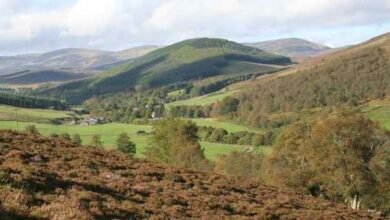
Geographically, the mountain stands on the north side of Glen Clova, one of Scotland’s most striking glens within the Angus region. The surrounding landscape forms part of the Grampian Mountain range, an area shaped by ancient geological processes, glaciation, and the distinctive climate of the eastern Highlands. Its plateau-like summit and broad shoulders create a sense of spaciousness, offering sweeping views that stretch across corries, lochans, and rolling high-level moorlands.
The Character of the Mountain
Ben Tirran is often described as a mountain of contrasts. The lower slopes are scenic, with heather, grasses, and scattered rocky outcrops, while the higher sections reveal a wide and subtly undulating plateau. This openness can be both peaceful and challenging. On clear days, the plateau provides a breath-taking 360-degree panorama, yet in cloud or mist it can become disorienting due to its flat and featureless nature. For this reason, experienced walkers often emphasise the importance of solid navigation skills.
One of the mountain’s most charming features is the presence of hidden lochans. Loch Brandy, a dramatic corrie loch perched below the plateau, is among the most visited. Its steep sides, dramatic cliffs, and clear waters offer one of the finest natural scenes in Angus. Loch Wharral, another lochan on the opposite side, adds to the mountain’s beauty and creates opportunities for varied circular walking routes. These two lochs give Ben Tirran a special identity, distinguishing it from other Corbetts in the region.
Historical Background
While Ben Tirran is primarily known today for hiking and outdoor recreation, the broader Glen Clova region has a rich history. Evidence of early settlements and land use can be traced back centuries. Shepherding, hunting, and hill farming shaped the landscape and livelihoods of local communities. The glen itself has long been admired for its rugged beauty and strategic significance as a route through the eastern Highlands.
In earlier centuries, the surrounding areas were influenced by clan activity, agriculture, and traditional practices like peat-cutting. Although Ben Tirran may not have been a central location for clan gatherings or battles, it forms part of a geographical tapestry that has witnessed the ebb and flow of Scottish rural life. Today, it stands as a quiet reminder of a long relationship between people and landscape.
Wildlife and Ecology
Ben Tirran and the lands around Glen Clova are home to a variety of wildlife. Red deer are commonly spotted, especially during the rutting season when stags can be heard echoing across the glen. Mountain hares, grouse, and various bird species thrive in the upland environment. In spring and summer, the hills come alive with wildflowers and upland vegetation, attracting insects and birds that contribute to a vibrant ecosystem.
Birdwatchers find the area particularly rewarding. Species such as golden eagles, kestrels, red grouse, and sometimes even peregrine falcons can be seen in the wider region. The lochans at the foot of the corries also support aquatic and semi-aquatic life, adding further ecological interest. For nature lovers, Ben Tirran embodies the raw and authentic beauty of the Highlands.
Walking Routes and Outdoor Experience
Ben Tirran can be reached by several routes, each offering a unique experience. The most popular approach begins in Glen Clova, often starting near the hotel or car parks in the area. Many walkers choose to climb via Loch Brandy, following a well-trodden path that leads steeply up the side of the corrie. The reward is immediate: Loch Brandy is a natural amphitheatre of rock and water, with a dramatic cliff face that inspires countless photographs.
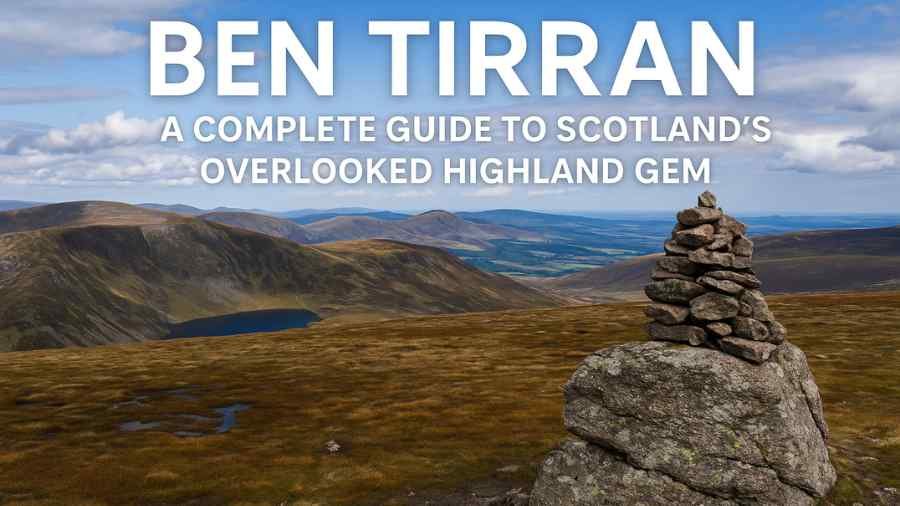
From the loch, the route continues upwards onto the plateau. Once on the high ground, walkers must navigate carefully, as the terrain widens and paths become faint. The summit cairn of Ben Tirran is modest, yet the achievement of reaching it is matched by expansive views towards the Angus uplands, the Cairngorms, and even the North Sea on exceptionally clear days.
A popular circular route involves descending towards Loch Wharral, allowing walkers to experience a full sweep of the mountain’s features. This variation offers diversity in terrain, visual interest, and a sense of completing a well-balanced Highland journey.
Less common but equally rewarding routes involve approaching from the northern side, tackling the more remote expanses of moorland. These routes are best suited to experienced hillwalkers comfortable with off-path walking and navigation.
Weather and Safety Considerations
Scottish weather is famously unpredictable, and Ben Tirran is no exception. Clear skies can change to mist within minutes, especially on the plateau. Strong winds are common, and winter conditions can be harsh, with snow and ice transforming the mountain entirely.
For a safe and enjoyable walk, hikers should prepare properly:
- Carry a detailed map and compass.
- Bring waterproof clothing and adequate layers.
- Ensure navigation devices are charged, but never rely on them entirely.
- Inform someone of your route and expected return time.
- Carry snacks, water, and emergency equipment.
The boggy patches across the plateau also demand sturdy footwear. Although the mountain is not technically difficult, the softer ground areas can be tiring, especially after periods of rainfall.
Why Ben Tirran is Worth Visiting
Beyond its visual beauty, Ben Tirran offers an authentic Highland experience. It remains less commercial, less crowded, and more peaceful than many popular Scottish mountains. This sense of solitude appeals strongly to hikers seeking to escape busy trails.
Its lochs, plateau, and setting within Glen Clova give it a special charm. The walk combines dramatic ascents with gentle expanses, encouraging both adventure and reflection. For a Corbett, it is surprisingly rich in features, making it ideal for those who appreciate varied landscapes within a single outing.
The region is also accessible. Many walkers from Dundee, Aberdeen, or the wider east coast can reach Glen Clova within a reasonable time. This makes Ben Tirran a practical yet rewarding destination for day trips or weekend adventures.
Local Culture and Surroundings
The Glen Clova area itself is worth exploring. Traditional inns, local hospitality, and historic cottages give the glen a warm Scottish atmosphere. Many walkers choose to combine their Ben Tirran visit with other walks in the Mounth area or with drives through neighbouring glens.
The wider Angus region contains a blend of farmland, coastal scenery, and mountain terrain. This mixture creates a strong sense of place, where old traditions meet modern outdoor tourism. Visitors often extend their stay to experience local food, wildlife spotting, or gentle rambles along lower-level paths.
Conclusion
Ben Tirran stands as a testament to the rugged beauty of the Angus Highlands. Its combination of sweeping plateaus, dramatic corries, hidden lochans, and quiet isolation makes it a perfect destination for those who appreciate Scotland’s natural landscapes. With proper preparation, a sense of adventure, and respect for the environment, a visit to Ben Tirran becomes not just a walk, but a memorable encounter with the authentic spirit of the Scottish outdoors.