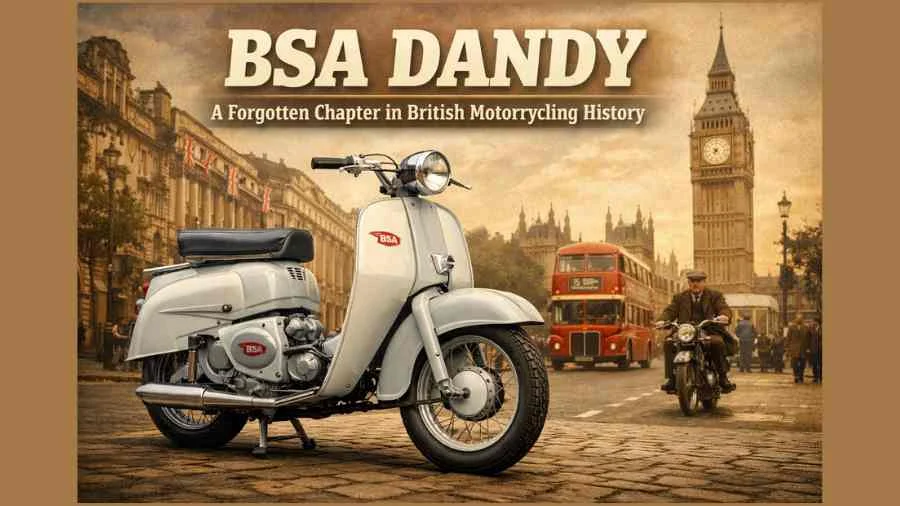
The bsa dandy occupies a small but fascinating place in Britain’s rich motorcycling heritage. While it never achieved the fame of larger and more powerful British machines, the BSA Dandy represents a moment in time when manufacturers were experimenting with lightweight, affordable transport for everyday people. Designed during a period of economic change and shifting consumer needs, this modest machine tells a wider story about post-war Britain, urban mobility, and the challenges faced by even the most established motorcycle brands.
The Background of BSA and the Era of the Dandy
To understand the BSA Dandy, it is essential to appreciate the company behind it. Birmingham Small Arms Company, commonly known as BSA, was once the largest motorcycle producer in the world. By the mid-twentieth century, BSA motorcycles were synonymous with British engineering, reliability, and traditional craftsmanship.
The 1950s, however, brought significant changes. Britain was recovering from the Second World War, and consumer priorities were shifting. Many people wanted simple, economical transport for short journeys rather than large touring motorcycles. Scooters and mopeds were becoming increasingly popular, particularly among young riders and city commuters. European manufacturers were capitalising on this demand, and Japanese brands were preparing to enter the market with lighter, more affordable machines.
In response, BSA sought to diversify its range. The BSA Dandy was born from this environment as an attempt to appeal to riders who wanted convenience, ease of use, and low running costs rather than speed or prestige.
The Concept Behind the BSA Dandy
The bsa dandy was conceived as a practical, approachable machine. It was not intended to compete with powerful motorcycles, nor was it meant to replace traditional scooters entirely. Instead, it sat somewhere between the two categories.
The idea was simple: provide a lightweight vehicle that was easy to ride, inexpensive to maintain, and suitable for short-distance travel. It was aimed at commuters, younger riders, and those who might otherwise have chosen a scooter or even a bicycle.
At the time, this concept made sense. Petrol prices, licensing rules, and insurance costs all encouraged people to look for smaller-capacity machines. The BSA Dandy was designed to fit neatly into this niche.
Design and Styling
Visually, the BSA Dandy stood apart from the classic British motorcycles that most people associate with the BSA name. Instead of a tubular frame and exposed engine, the Dandy featured a pressed-steel body that gave it a more enclosed, scooter-like appearance.
The styling was functional rather than flamboyant. Clean lines, minimal chrome, and practical panels defined its look. The riding position was upright and relaxed, allowing riders to sit comfortably and maintain good visibility in traffic.
The wheels were smaller than those found on conventional motorcycles, contributing to the Dandy’s compact proportions. This made it easier to manoeuvre in tight urban spaces, although it also affected ride quality on uneven road surfaces.
Overall, the design reflected the Dandy’s purpose: straightforward, unpretentious transport rather than a statement of performance or luxury.
Engine and Mechanical Layout
At the heart of the bsa dandy was a small-capacity two-stroke engine. With modest power output, it was designed for efficiency and simplicity rather than excitement. Two-stroke engines were common in lightweight machines of the era, valued for their simplicity and relatively low manufacturing costs.
Starting the engine was uncomplicated, and maintenance requirements were minimal by the standards of the time. Routine tasks such as spark plug replacement and basic adjustments could be carried out by owners with limited mechanical experience.
One of the more unusual aspects of the Dandy was its transmission system. Instead of a conventional foot-operated gearbox, it used a twist-grip pre-selector mechanism. While innovative, this system divided opinion. Some riders appreciated the novelty and ease of use, while others found it less intuitive and slower to operate than traditional gear changes.
This mechanical quirk contributed to the Dandy’s reputation as an oddity within the BSA range.
Performance and Riding Experience
In terms of outright performance, the BSA Dandy was modest. Acceleration was gentle, and top speed was limited, making it best suited to urban roads and quiet lanes rather than open highways.
The riding experience was calm and unhurried. The lightweight construction made the Dandy easy to control at low speeds, which was particularly appealing to new riders. The upright seating position reduced fatigue, and the machine felt approachable rather than intimidating.
Suspension was basic, reflecting the Dandy’s budget-conscious design. While adequate for smooth roads, it struggled on rougher surfaces, where bumps and imperfections were more noticeable. Braking performance was similarly modest but acceptable for the speeds the machine was designed to handle.
Overall, the Dandy delivered what it promised: simple, accessible mobility rather than thrills.
Practicality and Everyday Use
Practicality was central to the appeal of the bsa dandy. Its small engine consumed little fuel, making it economical to run at a time when many households were watching their spending carefully. Insurance and licensing costs were also relatively low, further enhancing its appeal.
The enclosed bodywork helped protect mechanical components from dirt and weather, while also keeping the rider cleaner than on a traditional open-frame motorcycle. This made the Dandy particularly suitable for commuting to work in everyday clothing.
Storage options were limited, but the lightweight frame allowed riders to add simple accessories if needed. For short trips to shops or workplaces, the Dandy fulfilled its role effectively.
Market Reception and Challenges
Despite its sensible design and intentions, the BSA Dandy struggled to find widespread success. British riders were often conservative in their tastes, and many preferred traditional motorcycles or fully-fledged scooters from established European brands.
The Dandy’s unconventional gearbox and limited performance did not help its cause. Some potential buyers viewed it as neither a proper motorcycle nor a true scooter, leaving it stuck in an awkward middle ground.
Additionally, competition was increasing. Lightweight machines from abroad were becoming more refined, and within a few years, Japanese manufacturers would redefine expectations for reliability and value.
As a result, the production run of the BSA Dandy was relatively short, and it never became a common sight on British roads.
The BSA Dandy in Today’s Classic Scene
Today, the bsa dandy enjoys a second life as a curiosity among classic motorcycle enthusiasts. Its rarity and unusual design make it an interesting talking point at shows and gatherings.
Collectors are often drawn to machines that represent unusual chapters in a manufacturer’s history, and the Dandy fits this description perfectly. While it may not command the high prices of more iconic British motorcycles, it has a loyal following among those who appreciate its character and historical significance.
Restoration projects can be challenging due to limited parts availability, but dedicated specialists and enthusiasts continue to keep these machines alive. When restored properly, a BSA Dandy offers a charming glimpse into a bygone era of British transport.
Cultural and Historical Significance
The importance of the BSA Dandy lies not in its commercial success, but in what it represents. It highlights a moment when British manufacturers were attempting to adapt to changing social and economic conditions.
The Dandy reflects the post-war desire for affordable mobility and the experimentation that took place as companies searched for new markets. It also serves as a reminder that even industry leaders can struggle to predict consumer preferences.
In this sense, the BSA Dandy is a valuable historical artefact, offering insight into the challenges faced by British industry during a period of transition.
Conclusion
The bsa dandy may never have been a headline-grabbing motorcycle, but its story is an important one. As a practical, lightweight machine designed for everyday use, it captured the spirit of post-war Britain and the evolving needs of ordinary riders.
Though commercially limited, the Dandy stands today as a symbol of experimentation and adaptation. For collectors and historians alike, it offers a unique perspective on British motorcycling history, reminding us that innovation often involves risk and that even lesser-known machines can leave a lasting legacy.