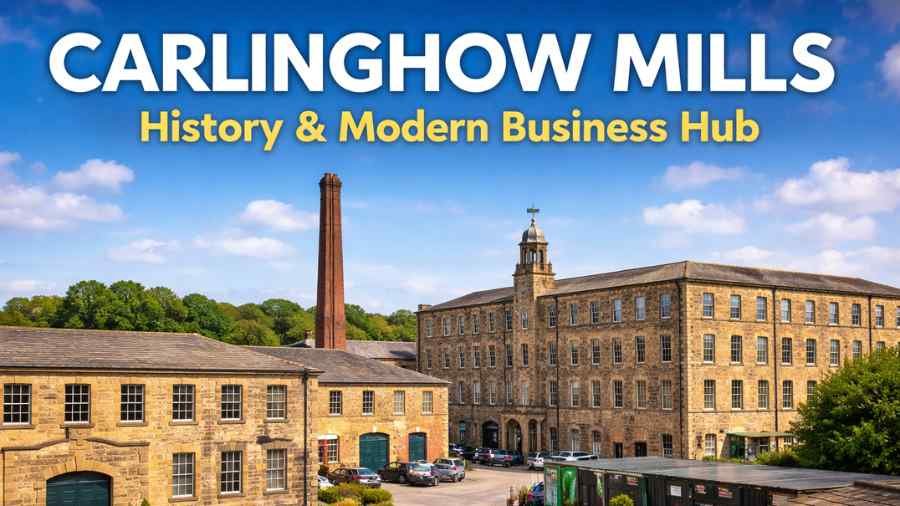
Carlinghow Mills stands as a remarkable example of how Britain’s industrial heritage can evolve without losing its identity. Situated in the Carlinghow area of Batley, West Yorkshire, this historic mill complex reflects nearly two centuries of industrial progress, community development, and architectural resilience. From its origins in the heart of the Yorkshire woollen industry to its present role as a flexible commercial and industrial estate, Carlinghow Mills continues to play an important role in the local economy.
The Origins of Carlinghow Mills
The roots of Carlinghow Mills can be traced back to the early nineteenth century, a time when West Yorkshire was rapidly becoming one of the most important textile-producing regions in the world. The availability of water power, skilled labour, and access to transport routes made areas like Batley ideal for woollen manufacturing.
Carlinghow Mills was originally developed as part of this booming textile economy. The earliest mill buildings were constructed in the first half of the 1800s, designed to accommodate spinning, weaving, and finishing processes. At the time, mills were not just workplaces; they were centres of innovation, employment, and economic growth that shaped entire communities.
The mill’s location along Bradford Road allowed easy movement of raw materials and finished goods, connecting Carlinghow Mills to nearby towns and wider regional markets. This strategic positioning helped the site expand steadily throughout the nineteenth century.
Carlinghow Mills and the Yorkshire Textile Industry
To understand the importance of Carlinghow Mills, it is essential to consider its place within the wider Yorkshire textile industry. Batley and its surrounding areas were especially known for the production of shoddy and mungo, recycled woollen materials made from old rags. These innovations allowed manufacturers to produce affordable textiles at scale and played a key role in Britain’s industrial success.
Carlinghow Mills contributed to this tradition by housing processes linked to wool sorting, spinning, and storage. The mills provided employment to generations of local families, with skills often passed down through households. For many residents, work at the mills defined daily life, social identity, and economic stability.
As demand for textiles grew, the complex expanded. Additional buildings, weaving sheds, and storage areas were added over time, creating the multi-structure site that still characterises Carlinghow Mills today.
Architectural Character and Industrial Design
One of the most striking features of Carlinghow Mills is its architecture. Like many nineteenth-century mills, the buildings were designed with both functionality and durability in mind. Thick stone walls, large windows, and multi-storey layouts allowed for maximum use of natural light and space, essential for textile production before the widespread use of electric lighting.
The mill buildings display classic industrial Yorkshire design, combining solid masonry with practical internal layouts. High ceilings, wide floor spans, and robust structural elements made the site adaptable, which later proved crucial to its survival when the textile industry declined.
Even today, these architectural qualities make Carlinghow Mills attractive for modern commercial use. The blend of historic character and adaptable space is a key reason the site has remained viable while many similar mills have been demolished or fallen into disrepair.
Social Impact on the Local Community
Carlinghow Mills was more than an industrial site; it was a cornerstone of the local community. At its peak, the mill provided livelihoods for large numbers of people from Carlinghow, Batley, and surrounding districts. Employment at the mills influenced housing patterns, with rows of terraced homes built nearby to accommodate workers and their families.
The rhythms of mill life shaped daily routines, from early morning shifts to long working hours that were typical of the era. While conditions could be demanding, the mills also fostered a sense of shared purpose and community identity.
Over time, as working practices improved and industrial reforms were introduced, life for mill workers gradually changed. Carlinghow Mills adapted to these changes, reflecting broader social and economic developments across Britain.
Decline of Traditional Manufacturing
Like many textile mills across the UK, Carlinghow Mills faced significant challenges during the twentieth century. Global competition, changing consumer demand, and advances in manufacturing technology led to a gradual decline in domestic textile production.
As traditional woollen manufacturing became less profitable, parts of the mill were repurposed for alternative industrial uses. Storage, rag sorting, and other related activities replaced large-scale textile production. Although employment levels fell, this adaptability allowed the site to remain in use rather than being abandoned entirely.
The decline of manufacturing marked a turning point, forcing owners and local stakeholders to consider new futures for Carlinghow Mills. This period of transition ultimately laid the groundwork for the site’s modern redevelopment.
Transformation into a Modern Commercial Estate
In recent decades, Carlinghow Mills has undergone a significant transformation. Rather than erasing its industrial past, redevelopment efforts focused on retaining the character of the original buildings while adapting them for contemporary business needs.
Today, Carlinghow Mills operates as a mixed-use commercial and industrial estate. The site offers a variety of spaces, including workshops, storage units, offices, studios, and light industrial premises. This flexibility makes it suitable for a wide range of businesses, from small local enterprises to larger operations requiring substantial floor space.
Modern infrastructure has been integrated into the historic setting, ensuring that tenants benefit from essential services while working within a unique architectural environment. This balance between old and new is one of the defining strengths of Carlinghow Mills.
Business Advantages of Carlinghow Mills
Carlinghow Mills offers several practical advantages for businesses. Its location in West Yorkshire provides good access to regional transport links, connecting tenants to nearby towns and cities. This accessibility is particularly valuable for logistics, distribution, and service-based companies.
The layout of the site allows for flexible leasing options, catering to businesses at different stages of growth. Units vary in size and configuration, enabling organisations to scale up or adapt as their needs change. For many businesses, the character of the mill buildings also adds intangible value, creating a distinctive working environment that stands out from modern industrial parks.
Security, connectivity, and on-site management further enhance the appeal of Carlinghow Mills as a commercial destination.
Preservation of Industrial Heritage
An important aspect of Carlinghow Mills’ continued success is its respect for heritage. The preservation of original structures and architectural features helps maintain a tangible link to the area’s industrial past. This approach aligns with broader efforts across the UK to protect historic industrial sites while giving them new economic purpose.
By retaining and repurposing existing buildings, Carlinghow Mills contributes to sustainable development. Reuse of historic structures reduces the environmental impact associated with demolition and new construction, while also preserving local identity.
This careful balance ensures that Carlinghow Mills remains both functional and culturally significant.
Carlinghow Mills in the Context of Batley Today
Batley has undergone considerable change since the height of the textile industry. Like many towns in the region, it has diversified its economy, with growth in services, small manufacturing, and creative industries. Carlinghow Mills reflects this broader transition.
The site now supports a diverse range of tenants, creating employment opportunities and contributing to the local economy in new ways. Its continued operation demonstrates how historic industrial sites can adapt to modern realities without losing their sense of place.
For residents and businesses alike, Carlinghow Mills remains a familiar landmark, symbolising both the town’s heritage and its ongoing evolution.
The Future of Carlinghow Mills
Looking ahead, Carlinghow Mills is well positioned to continue its role as a valuable commercial and cultural asset. Demand for flexible workspace, especially in characterful settings, remains strong. As businesses increasingly value adaptability and identity, sites like Carlinghow Mills are likely to become even more attractive.
Ongoing maintenance and sensitive development will be key to ensuring the site’s long-term success. By building on its strengths, Carlinghow Mills can continue to support economic activity while preserving the history that makes it unique.
The story of Carlinghow Mills is ultimately one of resilience. From its origins in the industrial revolution to its modern incarnation, the site has continually adapted to changing times.
Conclusion
Carlinghow Mills stands as a powerful reminder of Yorkshire’s industrial heritage and its capacity for renewal. What began as a nineteenth-century textile mill has evolved into a modern commercial estate that continues to serve the local community and economy. Through thoughtful adaptation, strong architectural character, and practical business offerings, Carlinghow Mills bridges the past and the present.
Its enduring presence in Batley highlights the value of preserving historic industrial sites while allowing them to meet contemporary needs. As both a landmark and a working space, Carlinghow Mills remains an important part of West Yorkshire’s story, proving that heritage and progress can coexist successfully.