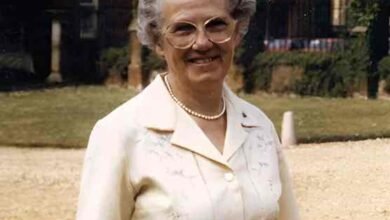
Carolyn Steedman stands among the most original and influential historians of modern Britain. Her work reshaped how historians think about class, gender, labour, childhood, and the writing of history itself. Rather than treating history as a distant chronicle of events, she brought lived experience, memory, and everyday life into the centre of scholarly inquiry. Through decades of research, teaching, and writing, she challenged established assumptions about whose stories matter and how the past should be understood.
Early Life and Intellectual Formation
Carolyn Steedman was born in Britain in the aftermath of the Second World War, a period marked by social change, reconstruction, and debates about class and opportunity. Growing up in a working-class environment shaped her later intellectual concerns, particularly her sensitivity to inequality, aspiration, and the emotional texture of everyday life. These early experiences did not simply provide background colour to her work; they became an essential part of her historical thinking.
Her academic education exposed her to the emerging field of social history, which sought to move beyond kings, parliaments, and wars to explore the lives of ordinary people. At the same time, she encountered literature, psychology, and political theory, all of which influenced her interdisciplinary approach. From the outset, she showed an unusual willingness to question how historical knowledge is produced and whose voices are allowed to speak within it.
Academic Career and Teaching
Carolyn Steedman’s academic career is closely associated with British higher education, particularly the University of Warwick, where she spent many years teaching and researching. Warwick became known as a centre for innovative historical scholarship, and Steedman played a major role in shaping its intellectual culture. As a lecturer and later professor, she taught generations of students to think critically about sources, archives, and historical narratives.
Her teaching style reflected her scholarly values. She encouraged students to treat historical documents not merely as repositories of facts but as traces of human lives shaped by power, emotion, and circumstance. She also emphasised careful reading, precise language, and intellectual honesty. Many of her former students have gone on to become historians themselves, carrying forward her influence into new areas of research.
Rethinking Class and Experience
One of Carolyn Steedman’s most significant contributions lies in her rethinking of class. Rather than treating class solely as an economic category, she explored it as a lived and felt experience. She examined how class is expressed through language, aspiration, family relationships, and memory. In doing so, she challenged simplified narratives that reduce working-class life to either heroic struggle or passive deprivation.
Her writing demonstrates that class identity is complex and sometimes contradictory. Individuals may internalise social hierarchies even as they resist them. Desires for education, respectability, and recognition often sit alongside anger and frustration. By paying attention to these emotional dimensions, Steedman broadened the scope of social history and made it more attentive to human complexity.
Landscape for a Good Woman and Autobiographical History
Among Carolyn Steedman’s most widely discussed works is Landscape for a Good Woman. This book stands out for its bold combination of autobiography and historical analysis. Drawing on her own family history, Steedman examined the lives of working-class women in twentieth-century Britain, including her mother. She used personal memory not as an end in itself, but as a starting point for analysing broader social structures.
The book challenged conventional boundaries between personal writing and academic history. Some critics initially questioned whether autobiography belonged in serious historical scholarship. Yet the work ultimately proved transformative. It demonstrated that personal experience, when handled with critical care, can illuminate historical processes that remain invisible in official records. Landscape for a Good Woman remains a touchstone for scholars interested in life writing, feminism, and class analysis.
Childhood, Psychology, and Inner Life
Another central theme in Carolyn Steedman’s work is childhood. She explored how ideas about childhood, development, and inner life have changed over time. Drawing on psychology, literature, and historical sources, she examined how children came to be understood as possessing complex emotional worlds.
Her research into childhood questioned the assumption that emotional depth and interiority are timeless or universal. Instead, she showed that ways of thinking about children are historically produced, shaped by social expectations and scientific theories. This work had a significant impact on both historians and scholars in related fields, encouraging more historically grounded approaches to the study of childhood and emotion.
Labour, Service, and Everyday Work
Carolyn Steedman also made major contributions to the history of labour, particularly domestic service and everyday work. She examined forms of labour often overlooked by traditional labour history, which tended to focus on industrial workers and organised movements. By studying servants, cleaners, and other workers whose labour was intimate and personal, she expanded understanding of how work structures social relationships.
Her research highlighted the emotional and moral dimensions of labour. Domestic service, for example, involved close physical proximity and complex power dynamics between employers and servants. These relationships were shaped not only by wages and contracts but also by expectations of loyalty, care, and obedience. By analysing such work, Steedman revealed the hidden foundations of middle-class comfort and respectability.
The Archive and Historical Method
Perhaps one of Carolyn Steedman’s most distinctive contributions is her reflection on the archive. In her writing, the archive is not a neutral storehouse of information but a site of absence, loss, and desire. She examined what survives in archives and what is excluded, asking why certain lives leave traces while others vanish.
Her reflections encouraged historians to think more carefully about their own practices. Working with archives involves imagination as well as analysis. It requires acknowledging gaps and silences, rather than pretending that the historical record is complete. This perspective influenced a generation of scholars who became more attentive to the ethics and limits of historical knowledge.
Writing Style and Intellectual Voice
Carolyn Steedman’s writing style is widely admired for its clarity, precision, and emotional resonance. She writes with intellectual rigour while remaining accessible to non-specialist readers. Her prose avoids unnecessary jargon, yet it engages deeply with complex ideas.
What distinguishes her voice is its combination of analytical sharpness and moral seriousness. She does not write history as detached observation. Instead, she acknowledges her own position as a historian and the emotional stakes involved in studying the past. This honesty lends her work a distinctive authority and has contributed to its lasting appeal.
Influence on Feminist and Cultural History
Steedman’s work has had a profound influence on feminist history and cultural studies. By foregrounding women’s experiences, domestic labour, and emotional life, she helped broaden the scope of historical inquiry. Her refusal to separate private life from public structures resonated with feminist scholars seeking to challenge male-dominated narratives.
At the same time, she resisted simplistic forms of identity politics. Her work insists on complexity and contradiction, recognising that gender, class, and power interact in unpredictable ways. This nuanced approach continues to inspire scholars who seek to avoid rigid categories and instead attend to lived experience.
Recognition and Legacy
Over the course of her career, Carolyn Steedman received significant recognition for her scholarship. Her election as a Fellow of the British Academy reflected her standing within the academic community. Yet her influence extends far beyond formal honours. Her books continue to be read, taught, and debated across disciplines.
Perhaps her greatest legacy lies in how she changed historical practice. She showed that history can be intellectually rigorous while remaining attentive to emotion, memory, and moral complexity. She expanded the range of subjects considered worthy of study and challenged historians to reflect on their own methods and assumptions.
Conclusion
Carolyn Steedman’s work transformed the landscape of British social and cultural history. Through her innovative use of autobiography, her rethinking of class and labour, and her reflections on archives and method, she opened new ways of understanding the past. Her writing demonstrates that history is not merely about events long gone, but about lives lived, emotions felt, and meanings made.
By insisting on the importance of everyday experience and by writing with clarity and compassion, Carolyn Steedman helped make history more inclusive and more honest. Her influence endures in the work of countless historians and in the continued relevance of her books. As debates about class, inequality, and memory continue to shape contemporary Britain, her insights remain as valuable as ever.