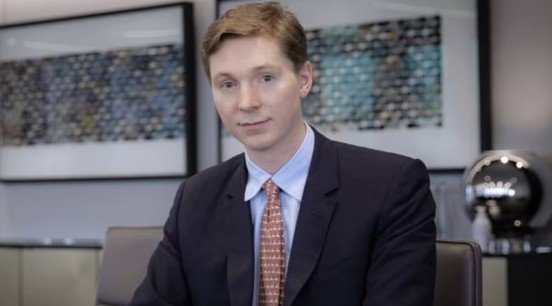
In the world of global finance and sustainable investment, Felix Odey has quickly emerged as one of the most promising and forward-thinking portfolio managers of his generation. His innovative approach to environmental, social, and governance (ESG) investment strategies has helped reshape how institutional and individual investors perceive sustainability, energy transition, and the broader concept of responsible capitalism. As a key figure at Schroders, a globally recognised asset management company, Felix Odey has not only managed high-profile funds but has also become a thought leader in redefining what sustainable investment truly means in the 21st century.
Early Life and Education
Felix Odey was born in the United Kingdom in 1994 into a family with deep financial roots. While his professional achievements stand on their own merit, it is worth noting that he comes from a lineage familiar with the complexities of financial markets and business management. This early exposure likely inspired his passion for economics and long-term value creation.
He pursued his higher education at the University of Edinburgh, one of the UK’s most prestigious institutions. During his academic years, Felix developed a keen interest in global economics, environmental policy, and the intersection between sustainability and profitability. His education provided him with a solid foundation to analyse global resource systems — from agriculture and energy to food and water — with a holistic and environmentally aware mindset.
Career Journey at Schroders
Felix Odey joined Schroders in 2016, one of the world’s leading asset management firms known for its strategic investment capabilities and strong focus on long-term sustainability. He started his career in the firm’s ESG (Environmental, Social, and Governance) team, where he gained practical exposure to the rising trend of sustainable investment.
During his early years, Felix was instrumental in helping Schroders identify and evaluate companies that aligned with ESG principles. His ability to connect financial performance with sustainability outcomes quickly set him apart as a forward-thinking analyst. Recognising his potential, Schroders promoted him to more senior roles, eventually entrusting him with portfolio management responsibilities.
He later became a Portfolio Manager in the Global Resource Equities team, where he co-managed several key strategies, including the Global Energy Transition and Global Sustainable Food and Water funds. These funds aim to support businesses driving the shift towards cleaner energy, efficient food systems, and sustainable resource management.
The Vision Behind Sustainable Investing
For Felix Odey, sustainable investing is not a passing trend — it is the foundation for future economic resilience. His approach challenges the traditional perception that sustainability compromises profitability. Instead, he argues that companies with strong environmental and social practices tend to outperform their peers in the long run.
Felix believes that the transition to a low-carbon economy is both an environmental necessity and a massive financial opportunity. Under his management, the funds he oversees focus on industries such as renewable energy, agricultural technology, water management, and sustainable food production. Each investment is carefully evaluated not only for its potential returns but also for its long-term contribution to global sustainability.
His work embodies the concept that financial growth and ecological balance are not mutually exclusive. In his view, sustainability should be deeply integrated into business models rather than treated as a separate objective or compliance requirement.
Key Areas of Focus
Felix Odey’s expertise covers a wide range of sectors related to resource efficiency and sustainable development. His primary focus areas include:
1. Agricultural Innovation
Felix believes that the agricultural sector holds the key to solving many global challenges, including food security and climate change. He invests in companies developing smart farming technologies, irrigation systems, precision agriculture, and sustainable packaging solutions. His goal is to encourage innovation that reduces waste, increases yield, and ensures fair resource distribution.
2. Clean Energy and Decarbonisation
The Global Energy Transition fund, one of the flagship strategies under Felix’s management, focuses on accelerating the shift from fossil fuels to renewable energy sources such as solar, wind, and hydro power. His portfolio also includes investments in battery storage, electric mobility, and hydrogen technology — all vital components of a cleaner future.
3. Water Management
Recognising that access to clean water is a growing global concern, Felix has been an advocate for investments in water purification, distribution, and conservation technologies. Through the Sustainable Food and Water Fund, he ensures that investors’ money supports businesses developing efficient water management systems.
4. Circular Economy and Waste Reduction
Felix Odey strongly supports the circular economy — an economic model that prioritises reusability, recyclability, and minimal waste. His fund strategies often include companies working on biodegradable packaging, waste-to-energy technology, and sustainable logistics.
Contribution to the Energy Transition Movement
One of Felix Odey’s most significant contributions to the financial world is his role in promoting the energy transition. He was actively involved in launching Schroders’ Global Energy Transition strategy in 2019. This initiative came at a time when many traditional investors were still hesitant about the economic viability of renewables.
By presenting data-driven analysis and emphasising long-term growth potential, Felix convinced many institutional investors that transitioning towards renewable energy was not only ethical but also financially prudent. His research-based insights have influenced the way financial institutions perceive the renewable energy sector.
Leadership Style and Philosophy
Felix Odey’s leadership style can be described as analytical, collaborative, and visionary. He believes that successful fund management is not only about financial performance but also about responsibility, transparency, and social impact. Within Schroders, he is known for fostering teamwork and knowledge sharing, encouraging analysts to challenge assumptions and bring fresh ideas to the table.
His philosophy revolves around three key principles:
- Long-Term Thinking – Felix discourages short-term speculation and advocates for investments that deliver sustainable value over decades.
- Data-Driven Decisions – Every decision is backed by deep research, market data, and ESG metrics.
- Active Ownership – He believes investors should not be passive observers but active participants who engage with companies to encourage sustainable change.
Influence and Recognition
Although relatively young, Felix Odey’s influence in sustainable finance has grown rapidly. His work is often cited in discussions on responsible investing, and he has spoken at major international conferences focused on ESG, renewable energy, and sustainable growth.
His insights have contributed to shaping Schroders’ overall sustainability framework, helping the firm enhance its reputation as a leader in responsible asset management. Felix’s ability to merge financial acumen with ethical investing has earned him respect from peers and investors alike.
He represents a new generation of finance professionals who understand that profitability and purpose can coexist harmoniously.
Family and Personal Background
Felix comes from a notable British family associated with the financial industry. His surname is shared with Crispin Odey, a well-known hedge fund manager, which often leads to public curiosity. However, Felix has established his own identity and reputation, separate from any familial associations. His career trajectory reflects independent achievements based on hard work, innovation, and a commitment to sustainability rather than inherited influence.
The Future of Sustainable Investment
Felix Odey envisions a world where sustainability becomes a standard part of all investment decisions rather than a specialised niche. He believes that in the coming decades, businesses that fail to adapt to environmental and social expectations will lose investor confidence and market share.
Under his leadership, funds like Global Sustainable Food and Water continue to attract growing interest from environmentally conscious investors. His strategic foresight ensures that Schroders remains ahead of competitors in identifying sectors that balance growth with responsibility.
Felix’s broader mission is to create awareness that sustainable investing is not charity — it is smart economics. The companies that will thrive in the future are those that innovate responsibly, use resources efficiently, and operate transparently.
Legacy and Impact
Even though his career is still unfolding, Felix Odey’s influence on sustainable finance is undeniable. His work bridges the gap between environmental advocacy and financial pragmatism. Through his portfolios and leadership, he has contributed to accelerating the transition towards a greener economy while ensuring investors continue to benefit from strong returns.
By combining ethical responsibility with intelligent financial strategy, he is shaping a future where sustainability is both a moral and economic imperative. His achievements highlight the potential of young leaders to drive meaningful change in global finance.
Conclusion
Felix Odey stands at the forefront of a financial revolution — one that prioritises sustainability, responsibility, and long-term value over short-term profit. His contributions to sustainable investment and the global energy transition reflect his deep understanding of the relationship between financial systems and the planet’s wellbeing.
As the world continues to face climate challenges and resource constraints, leaders like Felix Odey are redefining how capital is allocated and how companies are evaluated. His vision, discipline, and ethical commitment have already left an indelible mark on modern investing, positioning him as a key figure in the global movement towards a cleaner, more sustainable economic future.