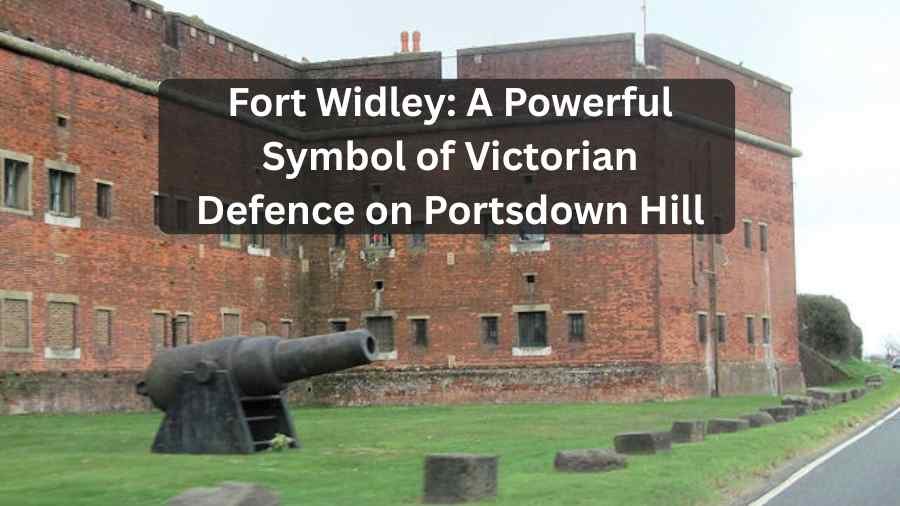
Fort Widley stands as one of the most striking reminders of Britain’s Victorian military ambition. Perched high on Portsdown Hill overlooking Portsmouth, this formidable fortification reflects a period when national defence, engineering skill, and imperial confidence shaped the landscape. Although never tested in a full-scale battle, Fort Widley has endured for more than a century and a half, evolving from a strategic stronghold into a heritage landmark with continuing relevance today.
The Strategic Importance of Portsdown Hill
Portsdown Hill has long been recognised as a commanding vantage point above Portsmouth Harbour. From its crest, sweeping views stretch across the Solent, the naval dockyard, and surrounding countryside. During the 19th century, this elevated position made the ridge a natural choice for inland defence.
As Britain expanded its global influence, Portsmouth remained one of the most important naval bases in the world. Any successful landward assault could have threatened ships, dockyards, and national security. Fort Widley was therefore positioned to form part of a continuous defensive barrier guarding the northern approaches to the city.
The Origins of Fort Widley
A Response to Fear and Uncertainty
Fort Widley was conceived during a period of international tension. In the mid-1800s, concerns over potential invasion led the British government to commission an extensive review of national defences. The result was an ambitious programme of fort construction, particularly around key ports.
Victorian Britain feared that technological advances in artillery and transport could allow an enemy to land troops rapidly and march inland. Fort Widley was built to counter this very possibility, forming a critical link in a chain of defensive sites designed to deter and delay hostile forces.
Construction and Timeline
Work on Fort Widley began in the early 1860s and continued for nearly a decade. Like many structures of its era, the fort was built with immense care, using thick brick walls, earth ramparts, and carefully planned defensive angles. By the time it was completed, military thinking had already begun to change, yet the fort remained an imposing presence on the landscape.
Architectural Design and Layout
Victorian Military Engineering
Fort Widley is a classic example of Victorian military architecture. Rather than tall stone towers, the design favoured low-profile structures covered with earth. This reduced visibility from a distance and offered greater resistance to artillery fire.
Key architectural features include:
Massive ramparts designed to absorb bombardment
Dry moats surrounding the fort to slow attacking forces
Caponiers, projecting structures that allowed defenders to fire along the moat
Casemates used for accommodation, storage, and artillery positions
Every element served a clear defensive purpose, reflecting the disciplined logic of 19th-century military planning.
Underground Spaces
One of the most fascinating aspects of Fort Widley lies beneath the surface. A network of tunnels and magazines was constructed to store ammunition safely and move troops under cover. These underground areas later played a crucial role during the 20th century, adapting to new forms of warfare and civil defence.
Fort Widley and the Palmerston Forts
A National Defence Network
Fort Widley belongs to a wider group commonly referred to as the Palmerston Forts, named after the prime minister who approved their construction. These forts encircled Portsmouth and other strategic locations, forming a ring of defensive positions intended to protect Britain’s naval power.
Although critics later dismissed the programme as excessive, the scale of the undertaking was remarkable. Fort Widley, along with neighbouring forts on Portsdown Hill, demonstrated Britain’s willingness to invest heavily in national security.
Changing Perceptions
As military technology advanced, the threat of invasion diminished, and many forts saw limited active use. However, their existence alone may have served as a deterrent. Fort Widley thus represents not failure, but a snapshot of how seriously defence was taken during the Victorian era.
Military Use Through the Decades
Late 19th Century Role
In its early years, Fort Widley functioned primarily as a garrison and artillery platform. While large-scale conflict never arrived at its gates, the fort remained operational and maintained readiness.
The First World War
During the First World War, Fort Widley was repurposed to support logistical and administrative needs. It served as a transit and training location rather than a frontline installation, adapting to the realities of modern warfare.
The Second World War
Once again, the fort found new relevance during the Second World War. With aerial bombardment and communication becoming central to conflict, Fort Widley’s solid construction and underground spaces proved valuable for troop accommodation and support services.
Cold War Adaptation
Perhaps the most striking transformation came during the Cold War. Sections of Fort Widley’s underground areas were converted into a civil defence control centre. In the event of a nuclear emergency, these spaces were intended to coordinate local response efforts, giving the fort a renewed sense of purpose in an age of unprecedented threat.
Life Inside the Fort
Daily Routine of Soldiers
Life at Fort Widley was disciplined and demanding. Soldiers lived within the fort’s walls, trained regularly, and maintained equipment. Accommodation was basic but functional, reflecting the expectations of Victorian military life.
Community and Isolation
Despite its proximity to Portsmouth, the fort could feel isolated, especially during harsh weather. Yet this separation also fostered a strong sense of camaraderie among those stationed there, a shared experience shaped by duty and routine.
Fort Widley in the Modern Era
Transition from Military to Civil Use
By the mid-20th century, Fort Widley’s military role had come to an end. Ownership eventually passed to local authorities, ensuring the site’s preservation for future generations.
Community and Recreational Functions
Today, Fort Widley serves a variety of purposes. Parts of the site have been adapted for recreational and educational activities, including equestrian facilities. These modern uses have allowed the fort to remain active and relevant rather than falling into complete disrepair.
Heritage and Preservation
As a protected historic site, Fort Widley benefits from conservation efforts aimed at stabilising its structures and raising awareness of its significance. Guided visits and special events occasionally open sections of the fort to the public, offering rare glimpses into its layered history.
Cultural and Historical Significance
Fort Widley is more than bricks and earthworks. It embodies a particular mindset, one shaped by empire, innovation, and fear of vulnerability. Its presence on Portsdown Hill serves as a tangible reminder of how Britain once prepared for the worst while hoping for peace.
For historians, architects, and local residents alike, the fort stands as a symbol of resilience and adaptation, evolving alongside the society it was built to protect.
Conclusion
Fort Widley remains one of the most compelling historic structures overlooking Portsmouth. From its origins in Victorian defence planning to its varied roles across two World Wars and the Cold War, the fort tells a story of preparedness, adaptation, and endurance. Today, preserved and repurposed, it continues to watch over the city it was built to protect, standing as a powerful monument to Britain’s military and architectural heritage.
FAQs
What is Fort Widley best known for?
Fort Widley is best known as a Victorian defensive fort forming part of the Palmerston Forts, designed to protect Portsmouth from inland attack.
Was Fort Widley ever used in battle?
No major battle ever took place at Fort Widley. However, it played supportive roles during both World Wars and the Cold War.
Can the public visit Fort Widley?
Access is limited, but certain areas may be opened during organised events or guided heritage activities.
Why was Fort Widley built on Portsdown Hill?
Portsdown Hill offers a commanding view over Portsmouth Harbour, making it an ideal defensive position against landward threats.
Does Fort Widley still have underground tunnels?
Yes, the fort contains extensive underground tunnels, some of which were adapted for civil defence use during the Cold War.