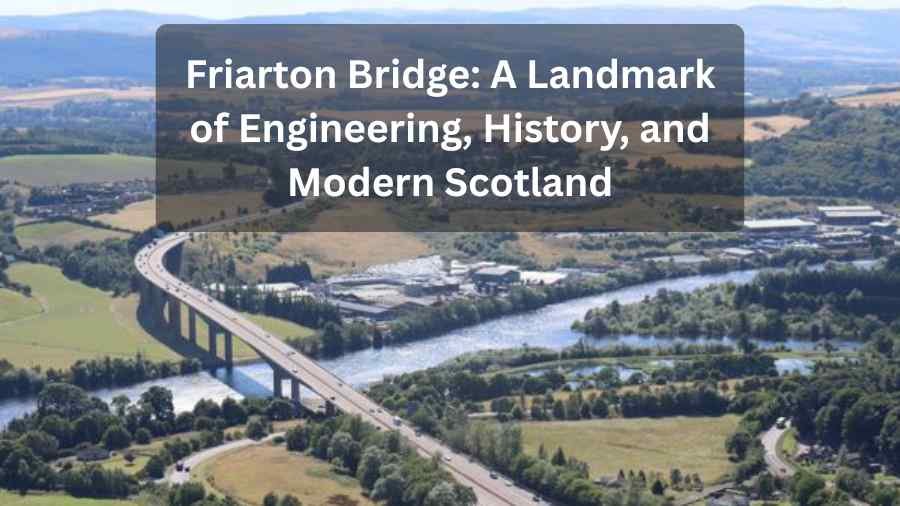
The Friarton Bridge stands as one of Scotland’s most important modern engineering achievements. Rising gracefully over the River Tay on the eastern edge of Perth, this bridge is far more than a stretch of road suspended above water. It represents decades of planning, innovation, and national ambition, combining practical transport needs with advanced structural design. For thousands of drivers each day, the crossing is routine. Yet behind that everyday experience lies a rich story of engineering progress, regional development, and the evolving relationship between Scotland’s landscapes and its infrastructure.
The Location and Setting of Friarton Bridge
A Strategic Crossing of the River Tay
The bridge spans the River Tay, Scotland’s longest river, at a point where the waterway widens and curves gently near Perth. This location was chosen not only for its suitability as a crossing point, but also for its ability to link the Lowlands with the eastern Highlands efficiently. The surrounding landscape includes rolling countryside, transport corridors, and the outskirts of Perth itself, making the bridge a prominent visual feature of the area.
Connection to Perth and Eastern Scotland
Friarton Bridge sits on the southeastern approach to Perth, carrying motorway traffic past the city rather than directly through it. This positioning helps reduce congestion in the urban centre while maintaining strong transport links. It forms a vital part of the M90 route, which connects central Scotland with Fife, Dundee, and beyond.
Historical Background and the Need for the Bridge
Transport Pressures in the Mid-20th Century
By the 1960s and early 1970s, road traffic in Scotland was increasing rapidly. Existing river crossings over the Tay were insufficient to handle the growing volume of vehicles, particularly heavy goods traffic travelling between Edinburgh, Dundee, and northern regions. Perth, as a historic hub, was experiencing congestion that threatened economic growth and road safety.
Planning a Modern Solution
Transport planners recognised that a high-capacity bridge, designed specifically for motorway traffic, was essential. The goal was to create a crossing that could accommodate future growth while meeting new safety expectations. This vision led to the development of Friarton Bridge as part of a broader modernisation of Scotland’s road network.
Design and Engineering Excellence
Advanced Structural Concepts
Friarton Bridge is a steel box girder bridge with a concrete deck, a design that was innovative at the time of construction. Steel box girders offer strength, rigidity, and efficiency, allowing long spans with fewer supports in the river. This was especially important for maintaining river navigation and minimising environmental disruption.
Safety Standards and Innovation
The bridge was designed under updated engineering rules introduced after earlier bridge failures elsewhere in the UK. These standards emphasised redundancy, structural monitoring, and conservative safety margins. As a result, Friarton Bridge became a model for how large bridges could be built with improved reliability and resilience.
Dimensions and Scale
With a total length of over 800 metres, the bridge was among the longest of its type in Britain when it opened. Its central span stretches impressively across the River Tay, creating a sense of openness and continuity for drivers while maintaining structural stability.
Construction and Opening
Challenges During Construction
Building a bridge of this size over a major river was no small task. Engineers had to contend with water flow, weather conditions, and the logistics of transporting large steel components. Precision was essential, as each segment of the structure had to fit perfectly into place.
Completion and Public Use
When Friarton Bridge opened in the late 1970s, it was widely recognised as a milestone in Scottish infrastructure. It immediately transformed travel patterns, offering a faster and safer route for long-distance traffic and relieving pressure on older crossings.
Role in Scotland’s Motorway Network
Part of the M90 Corridor
The bridge carries the M90 motorway, a key route linking Edinburgh with northern and eastern Scotland. This connection supports commuter travel, tourism, and commercial transport, making the bridge an essential component of national mobility.
Supporting Economic Activity
Reliable road infrastructure underpins economic development. Friarton Bridge facilitates the movement of goods between ports, industrial centres, and rural areas. For businesses in and around Perth, the bridge enhances accessibility and competitiveness.
Daily Use and Traffic Characteristics
High Traffic Volumes
Each day, thousands of vehicles cross Friarton Bridge, ranging from private cars to heavy lorries. Despite lacking hard shoulders, the bridge has proven capable of handling sustained traffic levels due to careful design and ongoing maintenance.
Driver Experience
From a driver’s perspective, the crossing is smooth and direct, offering expansive views of the River Tay and surrounding countryside. While drivers may not consciously reflect on the bridge’s engineering, the sense of openness and stability contributes to confidence and comfort.
Maintenance and Monitoring
Ongoing Inspection Regimes
Like all major bridges, Friarton Bridge is subject to regular inspections. Engineers monitor the condition of steel components, bearings, and the concrete deck to ensure long-term safety. These inspections help identify minor issues before they become serious problems.
Adaptation Over Time
As traffic loads and vehicle characteristics have changed, maintenance strategies have evolved. Improvements in materials and monitoring technology have allowed engineers to extend the bridge’s lifespan while maintaining high safety standards.
Environmental and Visual Impact
Integration with the Landscape
Despite its size, Friarton Bridge blends surprisingly well with its surroundings. The slender profile of the steel structure and the gentle curve of the deck complement the natural flow of the River Tay.
Environmental Considerations
Construction and maintenance have always taken the river’s ecological importance into account. Measures were implemented to minimise disruption to water quality and wildlife, reflecting a growing awareness of environmental responsibility in infrastructure projects.
Cultural and Regional Significance
A Modern Landmark
Over time, Friarton Bridge has become a recognisable feature of the Perth area. While it may not have the historic charm of older stone bridges, it represents a different kind of heritage: the story of modern engineering and progress.
Symbol of Connectivity
For many people, the bridge symbolises connection between regions, communities, and economies. It enables travel that would otherwise be slower and more difficult, reinforcing Scotland’s sense of cohesion.
Challenges and Notable Events
Weather and Operational Issues
Like any exposed structure, the bridge occasionally faces challenges from severe weather. High winds, ice, or nearby incidents can lead to temporary restrictions or closures, reminding users of the bridge’s importance and vulnerability.
Public Awareness
When disruptions occur, they often highlight just how critical Friarton Bridge is to everyday life. Detours and delays quickly demonstrate the value of this single piece of infrastructure.
Looking Ahead
Future-Proofing the Structure
With continued maintenance and monitoring, Friarton Bridge is expected to remain in service for decades to come. Advances in engineering assessment allow authorities to plan upgrades and repairs well in advance.
Role in Sustainable Transport
As transport policy evolves, the bridge may play a role in supporting more efficient vehicle use and reduced congestion. While designed for motor traffic, its contribution to smoother journeys can help lower emissions by reducing stop-start travel.
Conclusion
The Friarton Bridge is far more than a functional motorway crossing. It is a testament to thoughtful planning, engineering innovation, and the importance of infrastructure in shaping regional life. From easing traffic pressures and supporting economic growth to standing as a modern landmark over the River Tay, the bridge continues to play a vital role in Scotland’s transport network. As it carries vehicles smoothly across one of the country’s most significant rivers, Friarton Bridge quietly fulfils its purpose, linking past ambition with present-day reliability and future potential.
FAQs
What is Friarton Bridge used for?
Friarton Bridge carries motorway traffic across the River Tay, forming part of a major route linking central Scotland with eastern and northern regions.
When was Friarton Bridge opened?
The bridge opened in the late 1970s and was considered a major engineering achievement at the time.
Why is Friarton Bridge important?
It reduces congestion around Perth, supports economic activity, and provides a reliable high-capacity river crossing.
Is Friarton Bridge accessible to pedestrians?
No, the bridge is designed exclusively for vehicular traffic and does not include pedestrian or cycling access.
What makes Friarton Bridge special from an engineering point of view?
Its steel box girder design, long span, and adherence to advanced safety standards set it apart as a model of modern bridge engineering.