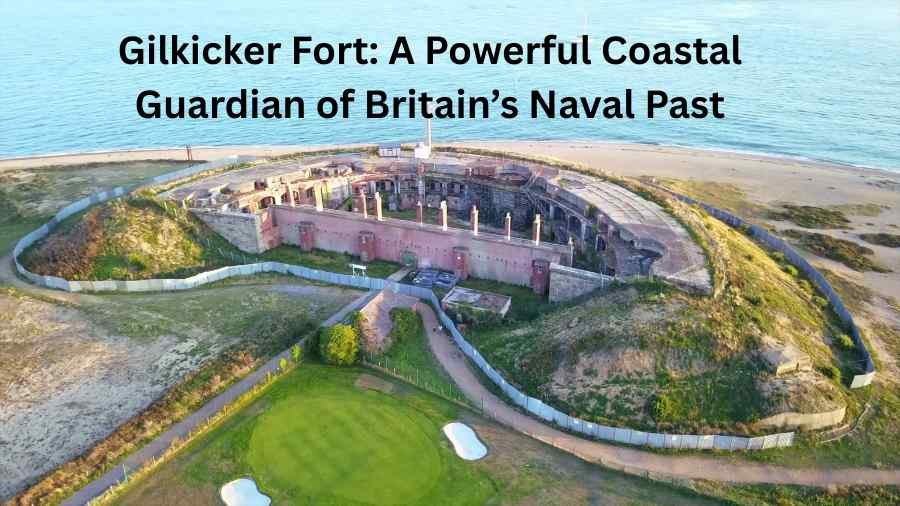
Standing with quiet authority on the Hampshire coastline, gilkicker fort is one of the most impressive survivors of Britain’s Victorian coastal defence system. Overlooking the Solent and guarding the western approaches to Portsmouth Harbour, this vast stone structure tells a story of military ambition, technological change, and enduring architectural strength. Built during a period of national anxiety about invasion, the fort reflects how seriously Britain once took the defence of its naval heartland.
What Is Gilkicker Fort?
Gilkicker Fort is a large 19th-century coastal artillery fort located at Gilkicker Point, on the eastern edge of Stokes Bay in Gosport. It was constructed to defend the strategic anchorage of Spithead and the western entrance to Portsmouth Harbour.
The fort is one of the most substantial examples of a Victorian sea fort, designed to mount heavy artillery capable of engaging enemy warships attempting to approach Britain’s most important naval base. Its curved stone frontage, massive casemates, and commanding seaward views underline its original defensive purpose.
The Strategic Importance of the Location
Why Gilkicker Point Mattered
Gilkicker Point occupies a naturally advantageous position. From this low headland, artillery could sweep across the Solent, creating overlapping fields of fire with other coastal batteries. Any hostile fleet approaching Portsmouth from the west would have been exposed to concentrated bombardment.
During the 19th century, naval warfare was changing rapidly. Steam-powered ships and ironclad warships meant that traditional harbour defences were no longer sufficient. Gilkicker fort was part of a broader network of modernised defences designed to meet these new threats.
Origins and Construction
The Palmerston Era of Defence
The construction of gilkicker fort followed the recommendations of the Royal Commission on the Defence of the United Kingdom. This commission warned that Britain’s coastal defences were outdated and vulnerable to foreign attack.
As a result, a series of forts were authorised under the government of Henry John Temple. These structures later became known collectively as the Palmerston Forts.
Building the Fort
Gilkicker fort was built between 1863 and 1871, replacing an earlier and less capable battery on the same site. Constructed primarily of stone and brick, the fort was designed to absorb heavy naval gunfire while providing secure, enclosed positions for its own artillery.
Architectural Design and Layout
Curved Casemated Front
One of the defining features of gilkicker fort is its sweeping curved seaward face. This design allowed multiple guns to be positioned in stone-vaulted casemates, each protected from direct hits and capable of firing through narrow embrasures.
Internal Arrangement
Behind the gun line, the fort contained:
Ammunition magazines
Shell stores
Barrack accommodation
Workshops and stores
The layout was highly functional, designed to support a garrison for extended periods during wartime.
Roof Battery
In addition to the casemates, the roof of gilkicker fort was intended to carry additional guns. These open-air emplacements provided higher firing angles and extended range, increasing the fort’s overall effectiveness.
Armament and Firepower
Heavy Coastal Guns
Originally, gilkicker fort was armed with large rifled muzzle-loading guns capable of firing heavy shells at enemy vessels. These guns represented the cutting edge of mid-Victorian artillery technology.
Defensive Role
The fort’s firepower was integrated with neighbouring batteries, creating a defensive barrier across the Solent. This coordination ensured that no single fort bore responsibility alone, reflecting a sophisticated understanding of coastal defence strategy.
Life at Gilkicker Fort
The Garrison Experience
Soldiers stationed at gilkicker fort lived a disciplined and often monotonous life. Daily routines included gun drills, maintenance work, and watch duties. While the fort was never involved in a major naval engagement, readiness was constant.
Isolation and Community
Although close to Gosport, life inside the fort could feel isolated. Thick walls and narrow windows limited views inland, reinforcing the sense of separation between military life and civilian society.
Gilkicker Fort in the World Wars
Decline of Coastal Artillery
By the early 20th century, advances in naval and air warfare reduced the effectiveness of fixed coastal guns. As a result, gilkicker fort’s original purpose began to fade.
World War II Use
During the Second World War, the fort found a secondary role as a communications and observation post. Its solid construction and commanding views made it suitable for monitoring maritime activity during a period of heightened invasion fears.
Post-Military Years and Abandonment
Decommissioning
After 1956, Britain formally abandoned most fixed coastal defences. Gilkicker fort was decommissioned and later used for storage, but without regular maintenance, the structure slowly deteriorated.
Years of Neglect
For decades, the fort stood largely unused, exposed to harsh coastal weather. Despite its neglect, the strength of its construction ensured that much of the original fabric survived.
Heritage Status and Preservation
Grade II* Listing
Gilkicker fort is protected as a Grade II* listed building, recognising its exceptional historical and architectural importance. This status ensures that any alterations must respect the fort’s character and significance.
Modern Redevelopment
In recent years, plans have emerged to convert the fort into residential accommodation. This approach aims to preserve the structure by giving it a sustainable new use, while retaining key historical features.
Cultural and Historical Significance
A Monument to Victorian Confidence
Gilkicker fort reflects the confidence and anxiety of Victorian Britain. Its sheer scale demonstrates how seriously the nation regarded the defence of its naval power.
Educational Value
Today, the fort offers valuable insights into:
19th-century military engineering
Coastal defence strategy
The evolution of naval warfare
Its survival allows historians and visitors alike to engage directly with this formative period of British history.
Conclusion
Gilkicker fort stands as a powerful reminder of a time when Britain’s security depended on stone, iron, and disciplined garrisons watching the sea. From its strategic position on the Solent to its imposing casemated walls, the fort embodies Victorian determination to defend the nation’s naval lifeline. Although its guns are long silent, the legacy of gilkicker fort endures through preservation, adaptation, and continued public interest. As history and modern life converge within its walls, gilkicker fort remains an enduring symbol of Britain’s coastal heritage.
FAQs
What was the main purpose of gilkicker fort?
Gilkicker fort was built to defend the western approaches to Portsmouth Harbour and protect the vital naval anchorage at Spithead from enemy warships.
Is gilkicker fort open to the public?
Access has been limited due to redevelopment works, but the exterior can still be viewed from surrounding coastal paths and Stokes Bay.
Why is gilkicker fort historically important?
The fort is a well-preserved example of Victorian coastal defence architecture and forms part of Britain’s wider Palmerston Fort network.
Was gilkicker fort ever used in battle?
The fort never fired its guns in a major naval engagement, but it played a deterrent role and later supported wartime communications.
What is happening to gilkicker fort today?
The fort is undergoing redevelopment aimed at preserving the structure while adapting it for modern residential use.