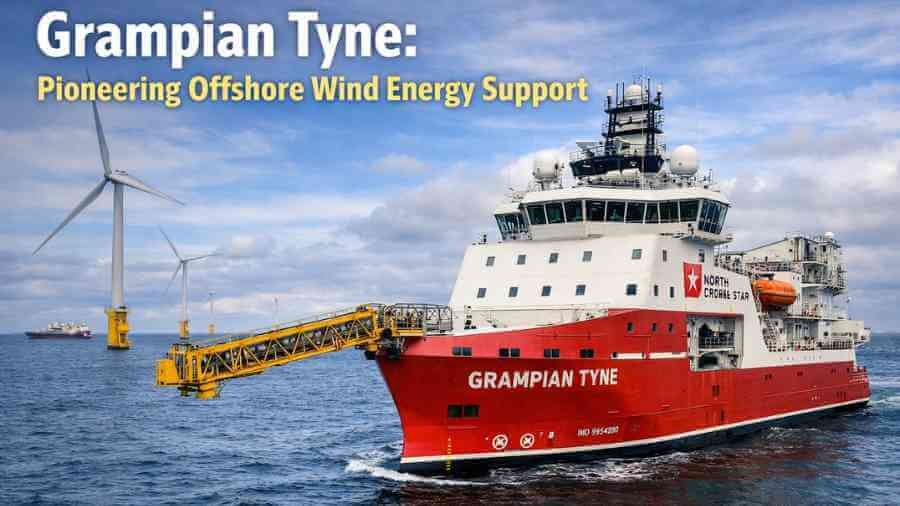
The offshore wind sector has entered a new phase of maturity, where scale, reliability, and sustainability are no longer aspirations but firm requirements. At the heart of this transformation are specialised vessels designed to keep offshore wind farms operating safely and efficiently. One such vessel is Grampian Tyne, a modern service operations vessel that represents a decisive step forward in offshore wind logistics. Purpose-built, technologically advanced, and designed around the needs of technicians working far from shore, Grampian Tyne is now widely recognised as a benchmark for contemporary offshore support operations in the United Kingdom and beyond.
The Meaning Behind the Name Grampian Tyne
The name “Grampian Tyne” reflects a proud maritime tradition while also signalling a modern mission. “Grampian” is historically associated with the North Sea energy sector, particularly offshore operations originating from Scotland, while “Tyne” references the River Tyne and the wider maritime heritage of north-east England. Together, the name symbolises collaboration across regions that have long powered the UK’s energy economy.
This naming approach is common among offshore support fleets, where vessels are not only technical assets but also ambassadors of regional expertise and continuity. In the case of Grampian Tyne, the name neatly connects past offshore oil and gas experience with the present and future of renewable energy.
Ownership and Operational Background
Grampian Tyne is operated by North Star Renewables, a company with deep roots in offshore support services. Over decades, North Star built its reputation in the oil and gas sector before strategically expanding into renewables. This transition mirrors the wider shift occurring across the North Sea, where skills, vessels, and infrastructure are being redeployed to support offshore wind.
The company’s approach emphasises long-term contracts, high crew standards, and vessels designed for specific operational roles rather than generic use. Grampian Tyne exemplifies this philosophy, having been designed from the outset to serve offshore wind farms with demanding operational profiles and extended periods at sea.
Role as a Service Operations Vessel
At its core, Grampian Tyne is a service operations vessel, often referred to as an SOV. Unlike smaller crew transfer vessels that shuttle technicians daily between port and turbines, an SOV acts as a floating base. It remains offshore for extended periods, allowing technicians to live and work close to the turbines they service.
This role is particularly important for large offshore wind farms located far from shore, where daily transits would be inefficient or impractical. By hosting technicians on board, Grampian Tyne reduces travel time, improves safety, and increases productive working hours. The vessel effectively becomes an extension of the wind farm’s onshore operations centre, but positioned directly within the operational area.
Design Philosophy and Construction
The design of Grampian Tyne reflects lessons learned from earlier generations of offshore vessels. Rather than adapting existing designs, the vessel was purpose-built to meet the unique requirements of offshore wind support. Stability, fuel efficiency, and crew comfort were prioritised alongside operational capability.
The hull form is optimised for the often harsh conditions of the North Sea, reducing motion and improving station-keeping performance. This is essential when technicians are transferred to and from turbines, a task that demands precision and minimal vessel movement. Advanced dynamic positioning systems allow Grampian Tyne to maintain its position accurately without the need for anchoring, further enhancing safety and efficiency.
Accommodation and Crew Welfare
One of the most significant evolutions in offshore support vessels is the emphasis on crew welfare. Grampian Tyne reflects this shift clearly. Accommodation standards are comparable to those found in high-quality offshore installations, with comfortable cabins, communal areas, and dedicated spaces for rest and recreation.
Technicians working offshore often face long rotations and physically demanding tasks. By providing a comfortable living environment, Grampian Tyne helps reduce fatigue and improve morale, which in turn enhances safety and productivity. This focus on welfare also makes offshore wind careers more attractive, supporting the industry’s need to recruit and retain skilled personnel.
Technological Features and Onboard Systems
Grampian Tyne incorporates a range of modern technologies designed to support offshore wind operations. These include advanced navigation and communication systems, allowing seamless coordination with wind farm control centres and onshore bases. High-capacity data links ensure that operational information can be shared in real time, supporting rapid decision-making.
The vessel is also equipped with systems to support maintenance activities, such as workshops, storage areas for tools and spare parts, and safe transfer systems for moving personnel to turbine platforms. These features transform Grampian Tyne into a fully integrated support hub rather than simply a transport vessel.
Environmental Performance and Sustainability
Sustainability is central to the offshore wind sector, and it would be contradictory for support vessels to neglect environmental performance. Grampian Tyne addresses this challenge through efficient engines, optimised fuel consumption, and reduced emissions compared with older vessels.
While offshore vessels inevitably consume fuel, improvements in efficiency can significantly lower their environmental footprint over time. Grampian Tyne represents a step towards aligning offshore logistics with the low-carbon objectives of the renewable energy industry it serves. This alignment is increasingly important as regulators, investors, and the public scrutinise the full lifecycle impacts of renewable energy projects.
Operations at Major Offshore Wind Projects
Grampian Tyne is closely associated with work at the Dogger Bank Wind Farm, one of the most ambitious renewable energy projects ever undertaken. Located far out in the North Sea, Dogger Bank’s scale and distance from shore make it an ideal candidate for SOV-based operations.
By supporting technicians directly at the site, Grampian Tyne contributes to maintaining turbine availability and maximising energy output. In large offshore wind farms, even small improvements in operational efficiency can translate into substantial gains in power generation, making the role of vessels like Grampian Tyne strategically important.
Connection to the Port of Tyne
The vessel’s operational life is closely linked to the Port of Tyne, which serves as a key base for offshore wind activities in north-east England. The port provides the infrastructure needed to support large vessels, including quayside facilities, logistics services, and access to skilled maritime labour.
This connection highlights the wider economic impact of offshore wind support vessels. Beyond their immediate operational role, they contribute to regional development by supporting ports, shipyards, and supply chains. Grampian Tyne thus plays a part in sustaining maritime communities while advancing the UK’s renewable energy objectives.
Safety Standards and Operational Culture
Safety is paramount in offshore operations, and Grampian Tyne is designed to operate within a robust safety framework. From vessel design to crew training, every aspect of its operation reflects a commitment to risk reduction. Advanced monitoring systems help identify potential issues before they escalate, while clear procedures govern all aspects of offshore work.
Equally important is the safety culture promoted on board. Crew members and technicians are encouraged to communicate openly about risks and to follow established procedures rigorously. This culture is essential in the offshore environment, where conditions can change rapidly and the margin for error is small.
Economic and Strategic Importance
The significance of Grampian Tyne extends beyond its immediate operational role. As offshore wind farms grow larger and move further offshore, the demand for capable SOVs will continue to rise. Vessels like Grampian Tyne represent substantial investments, reflecting confidence in the long-term growth of renewable energy.
From a strategic perspective, such vessels help ensure that the UK retains control over critical offshore capabilities. By developing and operating advanced support vessels domestically, the UK strengthens its position as a global leader in offshore wind and reduces reliance on external providers.
The Human Element in Offshore Wind
While technology and engineering often dominate discussions about offshore wind, the human element remains central. Grampian Tyne is, above all, a workplace and a temporary home for the people who keep wind turbines running. Its design acknowledges this reality, balancing operational efficiency with humane working conditions.
This focus reflects a broader shift in the industry, recognising that sustainable energy production depends not only on low-carbon technology but also on sustainable employment practices. By investing in vessels that support the wellbeing of offshore workers, the industry builds a more resilient and responsible future.
Looking Ahead for Grampian Tyne
As offshore wind capacity continues to expand, the role of vessels like Grampian Tyne is likely to evolve further. Future developments may include alternative fuels, greater automation, and even more sophisticated support systems. Grampian Tyne provides a strong foundation on which such innovations can be built.
Its operational experience will also inform the design of future vessels, helping refine best practices and set new standards across the sector. In this way, Grampian Tyne is not only serving today’s wind farms but also shaping the next generation of offshore support solutions.
Conclusion
Grampian Tyne stands as a clear example of how modern offshore support vessels are redefining renewable energy operations. Purpose-built for offshore wind, designed with both efficiency and human welfare in mind, and integrated into a wider network of ports and projects, the vessel plays a vital role in the success of large-scale wind farms.
More than just a ship, Grampian Tyne represents a convergence of maritime heritage, technological progress, and environmental responsibility. As offshore wind continues to grow in scale and importance, vessels like Grampian Tyne will remain indispensable, quietly ensuring that clean energy reaches homes and businesses across the United Kingdom.