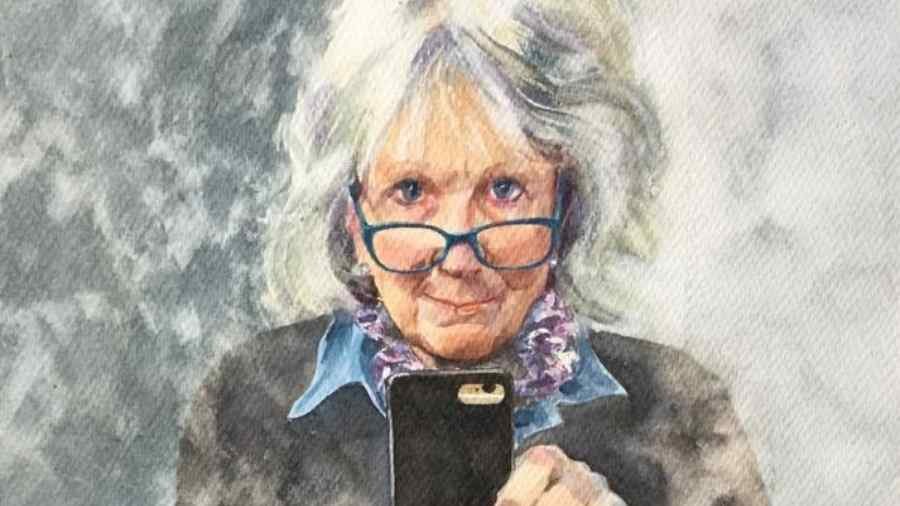
The world of art is shaped not only by grand gestures and bold colours, but also by gentle, thoughtful hands that understand the quiet power of emotion. Among such artists is Helen Lycett, a British painter whose work in watercolour has earned admiration for its softness, sincerity, and deep sensitivity. Her artistic identity is rooted in careful observation, emotional connection, and a refined visual language that invites viewers to pause and reflect. Although she began her professional life in the structured field of graphic design, her shift into fine art opened a new space for expressive creativity. The story of Helen Lycett is not only about artistic talent, but also about personal growth, courage, and the search for a creative voice that feels true.
Early Life and Creative Beginnings
Before she became known as an artist, Helen Lycett worked in the field of graphic design. This early stage of her professional life was shaped by deadlines, briefs, typography, layout, and client expectations. While this career demanded discipline and creativity, it also left little room for personal artistic exploration. The images she produced in graphic design were purposeful and structured, created to communicate messages for others rather than express her own experiences or emotional world.
However, this foundation was far from irrelevant to her later work. The principles of balance, composition, controlled detail, and visual harmony that define her paintings today are rooted in her years of design. It was this foundation that prepared her for the slower, more interpretive language of watercolour painting. The shift toward fine art happened gradually, as she began experimenting with painting in her personal time. The softness of watercolour offered her something entirely different: freedom. It allowed colour to behave naturally, to flow, blend, and transform independently of strict design rules. In watercolour, she discovered a space where imperfection could be meaningful, and where emotion could shape form.
Transition into Watercolour Painting
Watercolour is often considered a challenging medium. It does not allow easy correction, and it requires a balance between control and release. For Helen Lycett, this quality became one of its greatest strengths. Instead of forcing the medium to behave, she embraced its fluidity. This approach is visible in the way her portraits and floral pieces unfold across the paper. Edges soften, tones shift, and the viewer experiences a sense of gentle movement.
Her decision to work with watercolour reflects her interest in subtlety. Unlike oil or acrylic, which can be heavy and bold, watercolour allows her to create images that appear light, thoughtful, and atmospheric. Many of her pieces convey a quiet emotional presence. This emotional tone is intentional, as her work often focuses on capturing the essence of a subject rather than recreating it with precise realism.
Subjects and Themes in Her Work
Two major subjects appear repeatedly in Helen Lycett’s paintings: human faces and natural forms such as flowers and botanical elements.
Portraits
Her portraits are notable not because they aim for photographic accuracy, but because they express personality and presence. She paints faces in a way that respects individuality, making the viewer feel a sense of closeness to the subject. The use of soft shading, diffused edges, and understated detail allows emotion to come forward. Her portraits often seem as though they are in the middle of a quiet thought.
Florals and Nature
Nature, particularly flowers, plays a meaningful role in her visual storytelling. Flowers in her paintings are not simply decorative. They are objects of reflection. They suggest growth, fragility, memory, and the passing of time. A single flower leaning gently to one side can convey calmness, tenderness, or even grief, depending on the colours and forms she chooses. Nature in her art feels deeply personal rather than merely botanical.
Together, these subjects show a sensitivity to human experience and the world around us. Her work invites viewers to slow down and appreciate small details in life that might otherwise be overlooked.
The Artistic Journey of Reinvention
One of the most inspiring aspects of Helen Lycett’s story is the decision to allow her career to evolve. Leaving a structured profession such as graphic design to pursue fine art requires confidence and inner motivation. It is a path that many dream of but few follow, often out of fear of uncertainty. Helen chose to embrace change not in a dramatic, sudden step, but through steady growth. As she continued to paint, her confidence grew, her technique developed, and her artworks began to reach wider audiences.
Her journey is an example of how creative identity is not fixed. It develops and reshapes itself at different stages of life. For people interested in personal transformation, her story carries an important message: it is never too late to explore a more authentic artistic path.
Collaboration and Family Connection
A particularly notable chapter in Helen Lycett’s public artistic presence is her collaboration with her son, the well-known British comedian and artist Joe Lycett. Their joint exhibitions have attracted attention not just because of Joe’s public profile, but because of the way their artistic voices complement each other. Helen’s delicate watercolour work contrasts beautifully with Joe’s often bolder and more graphic style. When displayed together, the differences highlight the unique creative identities of both artists while also showing the warmth of their relationship.
Their collaboration demonstrates that art can be a shared experience. It shows how creativity can bring family members together in meaningful ways, and how different artistic approaches can coexist within the same exhibition space.
Style and Technical Characteristics
Helen Lycett’s technique can be described through several defining features:
- Subtle and intentional colour choices
Her palette often leans toward gentle tones rather than harsh contrasts. - Fluid brushwork
Her paintings suggest motion, atmosphere, or emotional presence. - Focus on mood
Instead of heavily detailed backgrounds, she often leaves space around the subject to draw attention to emotional content. - Calm visual composition
Nothing feels rushed or overly emphasised; the artwork appears to breathe.
This combination creates work that appears simple at first glance, but reveals depth on closer observation. Her paintings communicate through feeling rather than force.
Influence on Contemporary Art Appreciation
In an art world that often celebrates loud, bold statements, Helen Lycett’s work offers something gentler yet equally profound. Her paintings remind viewers of the beauty of quietness. They encourage stillness, reflection, and presence. This style resonates strongly in a time when many people seek calm and emotional grounding.
Moreover, her journey from graphic design to painting provides an example of how creativity can evolve over time. It challenges the idea that artistic identity must be set early or remain the same.
Conclusion
Helen Lycett represents an artist whose work carries emotional sincerity, technical refinement, and thoughtful expression. Her transition from graphic design to watercolour painting reflects a journey of personal rediscovery and artistic growth. Through gentle portraits and contemplative floral studies, she captures the subtle beauty of human emotion and natural presence.
Her art does not demand attention through boldness. Instead, it invites quiet connection. It encourages viewers to feel, reflect, and remember the delicate details that shape our inner world. Her life and work demonstrate that creativity is a lifelong evolution, guided by curiosity, courage, and the desire to express truth in visual form.