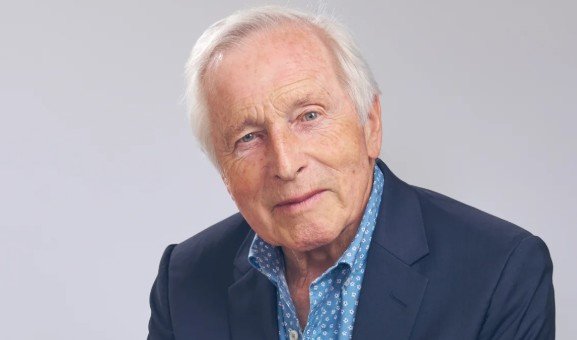
Jonathan Dimbleby stands among Britain’s most respected broadcasters, historians, and authors. His name carries weight in political commentary, documentary reporting, and historical interpretation. Over five decades, Jonathan has remained a powerful presence across radio, television, and literary platforms, shaping national debates and bringing complex stories from around the world to public attention. His career reflects not only journalistic excellence but also intellectual depth, compassion, and a lifelong dedication to public discourse.
Early Life and Family Background
Jonathan Dimbleby was born on 31 July 1944 in Aylesbury, Buckinghamshire, into a family that was already woven into the fabric of British broadcasting. His father, Richard Dimbleby, was one of the most iconic BBC figures of his time, widely respected for his wartime reporting and his authoritative yet comforting voice. Jonathan’s elder brother, David Dimbleby, would later become a household name as well, leading election coverage and national discussions for many years.
Growing up in such an environment placed Jonathan close to journalism from an early age. While some might assume this guaranteed an automatic entry into broadcasting, his journey tells a different story. Jonathan did not rely on his surname to secure status. Instead, he shaped his own identity through curiosity, academic study, and a willingness to tackle challenging stories many preferred to avoid.
Education and Foundation of His Worldview
Jonathan attended Charterhouse School, one of Britain’s well-established independent schools. Later, he studied agricultural management at the Royal Agricultural College and eventually pursued philosophy at University College London. This blend of practical training, humanities, and analytical thinking became a foundation for his later work. It also contributed to his ability to interpret conflicts, politics, and history not merely through facts but through human consequences and moral dimensions.
During his youth, Jonathan developed an interest in farming and rural life. He would later manage his own organic farm for more than a decade, linking him closely to environmental and agricultural issues that shaped later phases of his activism and commentary. While his professional path led to journalism, the connection to land and rural economy stayed with him, reappearing in broadcasts, campaigns, and his leadership in organisations focused on ecological health and sustainable farming.
Entry into Broadcasting
Jonathan Dimbleby entered the world of media near the end of the 1960s, beginning work with the BBC in Bristol. The late 1960s and early 1970s were turbulent times in global politics, marked by social change, post-colonial transitions, and humanitarian crises. Rather than staying within comfortable studio spaces, Jonathan began to travel, report, and immerse himself in conflicts and human stories.
His work documenting the Ethiopian famine in 1973 remains one of his most memorable early achievements. Instead of distant reporting, he captured pain, starvation, and the scale of suffering through storytelling that touched the heart of the British public. This coverage inspired one of the earliest televised appeals for African famine relief and demonstrated Jonathan’s commitment to journalism that serves humanity rather than spectacle.
Rise in Radio and Television
Throughout the following decades, Jonathan Dimbleby established himself as one of the United Kingdom’s strongest voices in public broadcasting. For years, he presented Any Questions? on BBC Radio 4, a programme that brought politicians, thinkers, and public figures into direct conversation with citizens. Listeners valued not only the debate itself but Jonathan’s moderation style — firm yet fair, assertive yet respectful.
His television presence expanded through Jonathan Dimbleby, a current-affairs programme on ITV that ran for more than a decade. In this role, he interviewed leaders, questioned governments, and analysed global events with clarity and depth. Viewers admired his ability to challenge guests without hostility, encouraging thoughtful discussion rather than aggressive debate.
Jonathan also anchored ITV’s coverage of several general elections. Election night in Britain is an event that demands credibility, composure, and deep political understanding. Jonathan delivered all three, guiding millions of viewers through results, implications, and historical comparisons in real time.
Journalism Beyond the Studio
What makes Jonathan Dimbleby particularly remarkable is that he never confined himself to comfortable reporting. He travelled extensively, documenting wars, social shifts, and global transitions. He explored Russia not only as a geopolitical entity but as a living society made up of individuals whose experiences often remain unseen in Western media. His documentaries on Russia blended travelogue, history, personal testimony, and political reflection. They helped audiences engage with a nation too frequently reduced to headlines and stereotypes.
His work in the Middle East, especially his writing on Palestinians, demonstrated similar depth. Rather than offering surface commentary, Jonathan sought voices on the ground, listened to their experiences, and presented them with honesty.
A Distinguished Author and Historian
Alongside broadcasting, Jonathan Dimbleby built a respected career as an author. His writing covers biographies, war history, political analysis, and socio-cultural narratives. Books such as The Prince of Wales: A Biography offered insights into royal life beyond public perception, while later works on the Second World War — including Destiny in the Desert, The Battle of the Atlantic, and Barbarossa — positioned him as a historian capable of making war narratives vivid and accessible.
His historical writing combines rigorous research with storytelling that respects human lives affected by war. Rather than glorifying battles, he highlights consequences, strategy, leadership decisions, and the fragility of human survival.
Humanitarian and Public Work
Beyond journalism and writing, Jonathan has actively participated in charitable and civic organisations. His leadership roles in the Soil Association and the Campaign to Protect Rural England reflect long-standing environmental interest. Dimbleby Cancer Care, named for his father, stands as a reminder of the family’s commitment to public wellbeing, awareness, and research support.
Jonathan has also spoken openly on ethical issues, including freedom of speech, press responsibility, and debates surrounding assisted dying. His stance is not driven by sensationalism but by thoughtful moral inquiry rooted in lived experience.
Influence on British Media and Public Thought
Jonathan Dimbleby has shaped generations of journalists by modelling integrity, curiosity, and responsibility. He represents a tradition where journalism seeks truth rather than popularity. At a time when misinformation and sensational news dominate digital platforms, Jonathan’s work demonstrates why responsible journalism remains vital for democracy.
His interviewing style has been studied by students of media and political communication. He listens, questions, analyses, and redirects conversations with intelligence rather than aggression. Many viewers and listeners consider him a voice of reason, especially during politically divided times.
Legacy and Continuing Presence
Even after decades of service, Jonathan Dimbleby remains an active commentator, writer, and thinker. He continues to publish, speak on public platforms, contribute to discussions about media ethics, and engage with historical subjects. His later work focuses heavily on the Second World War from fresh angles, written not merely as chronology but as a reflection on power, leadership, suffering, and strategy.
His legacy is not limited to fame. It lies in the trust he built with audiences, the humanitarian exposure he brought to global crises, and the enduring value of his historical interpretations.
Why Jonathan Dimbleby Matters Today
In our era of rapid news and information overload, Jonathan Dimbleby reminds us that journalism should illuminate, not overwhelm. His voice represents patience, research, humanity, and truth. For younger journalists, his career stands as proof that credibility is earned through commitment to integrity rather than speed or popularity.
For readers of history, his books renew interest in World War II by showing how decisions shaped the world we live in today. For listeners of radio and viewers of current affairs, he remains a symbol of thoughtful communication.
Conclusion
Jonathan Dimbleby’s life story is not simply a biography — it is a reflection of British media history, intellectual curiosity, and humanitarian conscience. From famine reporting to election night broadcasts, from philosophy studies to war history authorship, he has consistently used his voice and pen to serve public understanding. His contributions continue to influence journalism, historical scholarship, and public dialogue, making him one of the most distinguished communicators of his generation.