Little Glemham is a small yet remarkable village in the county of Suffolk in eastern England. Though modest in size and population, Little Glemham carries a deep historical character, scenic rural atmosphere, and a strong sense of continuity with its past. Surrounded by natural landscapes, traditional English architecture, and centuries-old cultural heritage, the village stands as a living reminder of the quieter and simpler ways of life that once shaped much of rural England. Through its historic parish church, its enduring village layout, and the nearby Glemham Hall estate, Little Glemham offers stories of noble families, agricultural traditions, social change, and the evolution of English countryside living.
The Historical Background of Little Glemham
The origins of Little Glemham go back many centuries. The name “Glemham” is generally believed to come from Old English roots, possibly describing a settlement associated with gatherings, music, or joyful gatherings. Such names often reflected the social habits or natural features of a place at the time when early settlers first named it. This suggests that the village may have once been known as a place of communal life, festivities, or open land where villagers and travellers interacted freely.
Like many villages in East Anglia, Little Glemham was shaped through the medieval period by farming traditions and the establishment of parish structures. The fields, lanes, and boundaries of the village reflect a long history of agricultural labour, land tenancy, and evolving inheritance patterns. By the Tudor and Elizabethan eras, the area became home to notable families and landed estates, the largest and most significant being Glemham Hall. This estate played a major role in shaping the cultural and social life of the village, influencing everything from employment to local identity.
Glemham Hall and the Legacy of the Estate
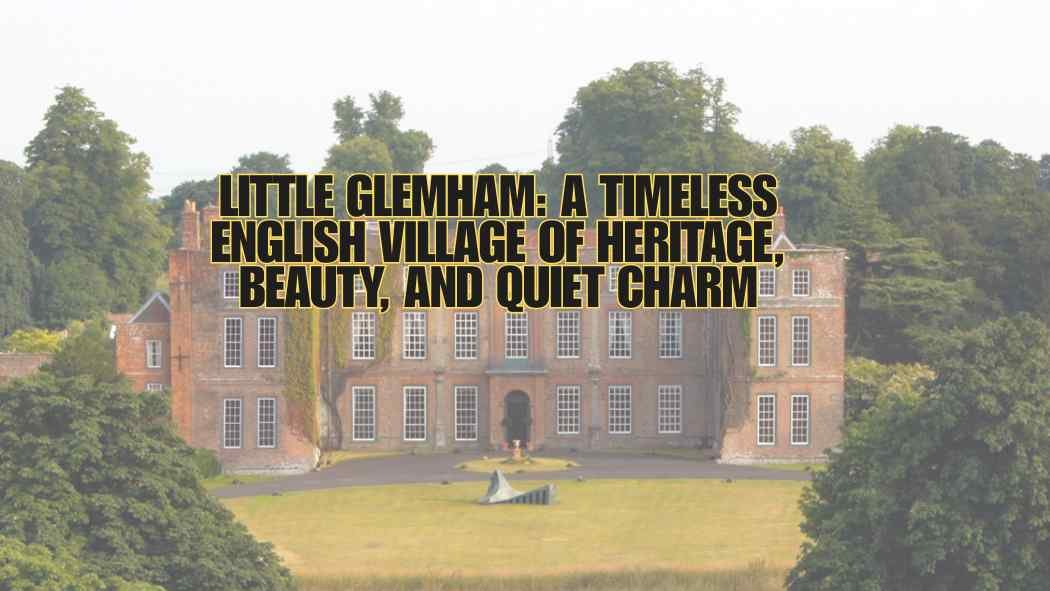
One of the most prominent landmarks associated with Little Glemham is Glemham Hall, an impressive country house that stands just outside the village. Built in the 16th century, the hall represents an architectural blend of Elizabethan foundations and Georgian alterations. Its tall brick walls, classic symmetrical façade, impressive gardens, and surrounding parkland reflect the tastes and values of English aristocracy over several centuries.
The hall was associated with various prominent families who contributed both to regional affairs and occasional national matters. The landscaped grounds surrounding the estate once served as demonstration of status and refinement. The parkland, with its avenues of trees and gently rolling fields, still captures the sweeping beauty of Suffolk’s countryside. While the hall has changed ownership over time, and its role has evolved, the historical connection between estate and village continues to be a defining feature of the identity of Little Glemham.
The Parish Church of St Andrew
At the centre of the village stands the parish church of St Andrew, a grade-listed historic building that summarises centuries of religious and social continuity. Churches in rural English villages have traditionally served as the anchor for education, celebration, record-keeping, and collective life. St Andrew’s is no exception. Its stone architecture, stained glass features, and carefully maintained churchyard tell the story of countless baptisms, marriages, and burials that have shaped the memory of generations.
The churchyard, with its old gravestones and peaceful surroundings, gives insight into the families who lived, worked, and passed through the village across time. The interior, with its wooden pews and atmospheric quiet, reflects both the simplicity and the dignity of English ecclesiastical design. It serves not only as a place of worship but also as a symbol of the historical permanence of Little Glemham.
Traditional Rural Life and Community Identity
Little Glemham today remains a small village with a peaceful, community-oriented lifestyle. Villages of this scale typically share strong neighbourly bonds, where residents know one another and where communal spaces hold deep importance. The pub, the church, and local meeting points are often central to social rhythms. Although the village does not have extensive commercial services, its rural charm lies in its tranquillity and in the authenticity of its landscapes and buildings.
Typical of East Anglian village life, the surrounding countryside is characterised by open farmland, hedgerows, woodland edges, and quiet country roads. Walking, cycling, local events, and seasonal celebrations form a natural part of community life. The village’s pace is slower, its atmosphere more reflective, and its daily life quieter than in urban areas. For many, this peaceful quality is precisely what makes Little Glemham valuable.
Architecture and Landscape Character
One of the most compelling features of Little Glemham is the visual harmony of its environment. Many of the older houses in the village show the traditional Suffolk building style, including timber framing, red brick, thatched or tiled roofs, and soft colour palettes that blend naturally into the countryside. These architectural details give the village an elegant yet modest character.
The fields around the village display patterns built over centuries of agriculture. Crops rotate through the seasons, hedgerows provide natural habitats for birds and wildlife, and old footpaths mark routes that villagers and farmers have walked for generations. The combination of heritage houses, historical estates, and well-preserved farmland creates a scenic landscape that feels both lived-in and timeless.
Cultural Heritage and Local Memory
Villages like Little Glemham carry layers of memory that are not written only in history books but also remembered through local storytelling, family traditions, and community identity. The names carved on church monuments, the layout of fields, and the preservation of traditional houses all hint at stories of families who lived through the agricultural revolutions, the impact of wars, the rise of mechanised farming, and the slow changes of rural social structures.
Even though the modern world brings change in technology, communication, and transportation, Little Glemham remains a place where the past is always visible. This connection to heritage is treasured not only by residents but also by visitors who come seeking a genuine experience of rural England.
Little Glemham in the Present Day
In the modern era, Little Glemham has retained its rural identity while also adapting to contemporary needs. Although not heavily populated, the village attracts those who appreciate quiet living, countryside beauty, and historical authenticity. People come to walk the lanes, visit the church, attend events at Glemham Hall, or simply enjoy the atmosphere of a village that has kept its character intact.
The village’s location also allows easy access to other notable Suffolk attractions, including coastal towns, market towns, nature reserves, and historic houses. This makes Little Glemham a comfortable anchor point for exploring the broader region while still offering a peaceful retreat at its heart.
Conclusion
Little Glemham is much more than a small village on the Suffolk map. It is a place where English history is preserved in architecture, land, and community memory. With its ancient church, its historic estate, and its timeless landscape, the village reflects the beauty of continuity through centuries of cultural change. Quiet yet rich in identity, modest yet deeply rooted in heritage, Little Glemham stands as a reminder of the enduring spirit of rural England.