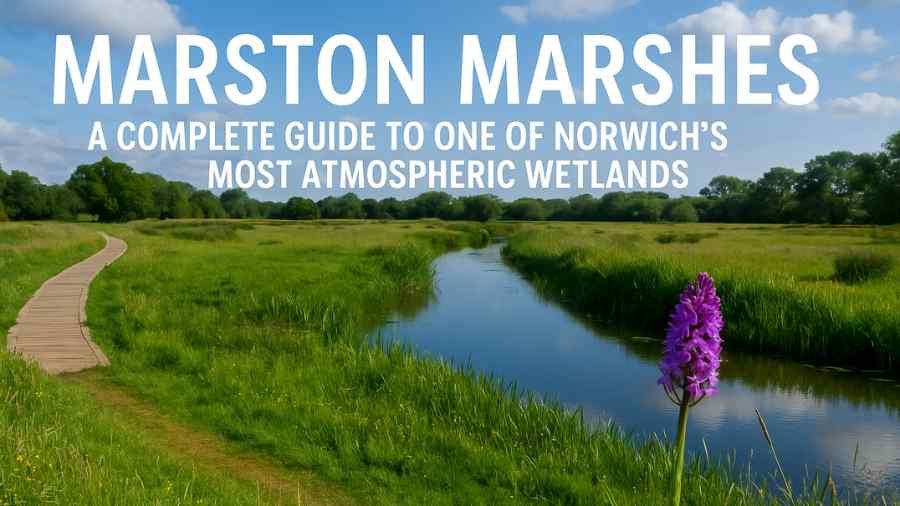
Marston Marshes is one of Norwich’s most treasured natural landscapes, admired by walkers, nature enthusiasts, and anyone who appreciates the quiet beauty of England’s wetland habitats. Situated on the southern edge of the city, this serene reserve blends marshland, wet woodland, meadows, and winding water channels, creating a rich ecological sanctuary. The area offers an escape from urban noise, replacing it with rustling reeds, birdsong, and the gentle flow of the River Yare.
The Landscape and Setting of Marston Marshes
Marston Marshes lies in the broad floodplain of the River Yare, which gives the area its defining character. Floodplains are known for nutrient-rich soils and fluctuating water levels, and this marsh is no exception. Whether you visit on a sunny summer afternoon or a misty October morning, the wetlands consistently offer a sense of openness and natural tranquillity.
The reserve is composed of several interconnected habitats. These include traditional marshland, fen, freshwater dykes, grassland fields, and patches of wet woodland dominated by alder and willow. This mosaic of landscapes means the site always feels dynamic—sometimes damp underfoot, sometimes filled with bright wildflowers, sometimes alive with dragonflies skimming over open pools. The variation in terrain is one of the main reasons the marshes attract such a range of wildlife.
Historical Background
Marston Marshes, like many wetland areas in Norfolk, has a history shaped by human and natural intervention. In earlier centuries, much of the surrounding landscape was used for grazing cattle, producing hay, and managing water channels for agriculture. Although modern conservation approaches are different, many traditional methods still influence today’s management. For instance, controlled grazing remains a crucial part of maintaining biodiversity.
Over time, the marshes evolved into a protected area with ecological significance. Local authorities recognised that these wetlands were not merely unused land but an essential habitat for plants, insects, amphibians, birds, and mammals. Today, Marston Marshes stands as a Local Nature Reserve, carefully managed to ensure that both wildlife and visitors can enjoy the environment in harmony.
Wildlife and Biodiversity
The marsh is home to an impressive variety of species, reflecting the health of its ecosystems. Birds, amphibians, small mammals, and invertebrates thrive in the wet conditions.
Flora
The plant life is particularly diverse. Southern marsh orchids often bloom in early summer, creating bursts of purple across the landscape. Ragged robin, with its delicate frayed petals, thrives in the wetter meadows. You’ll also find sedges, rushes, meadowsweet, yellow flag iris, and various native grasses contributing to the marsh’s vibrant seasonal palette.
In the fen and marshy areas, sphagnum moss and water plants shape the ground conditions. The dyke edges are lined with reeds, which offer breeding grounds for waterbirds and shelter for insects.
Fauna
Among the mammals found here, water voles are perhaps the most iconic. They require clean, slow-moving water and bankside vegetation—both of which Marston Marshes provides. Otters occasionally roam the waterways too, although sightings are less common and often fleeting.
The ponds support frogs, toads, and newts during breeding seasons. In summer, dragonflies and damselflies swirl around the water, catching the light in iridescent flashes of blue, green, and red. Butterflies such as the common blue and meadow brown can be seen throughout the grasslands.
Birdlife includes reed buntings, warblers, herons, buzzards, and various duck species. During migration periods, the marshes often host visiting species passing through East Anglia’s wetland corridors.
Conservation and Maintenance
Preserving Marston Marshes requires active management. Conservation teams employ methods that mirror traditional practices while also using modern ecological insights.
Grazing
Cattle grazing is essential for keeping the grassland in good condition. Without grazing, many areas would quickly become overgrown with tall grasses and scrub, reducing biodiversity. Grazing opens up ground for wildflowers and prevents the marsh from turning into woodland.
Dyke Management
The dykes and water channels must be maintained to support aquatic life. Regular clearing ensures that the water remains oxygenated and navigable for wildlife. This helps sustain populations of water voles, amphibians, and wetland plants.
Meadow Cutting
Some parts of the marsh are mown after flowering seasons to control dominant species. This allows more delicate wildflowers to thrive and prevents the buildup of dense vegetation.
Walking Through Marston Marshes: What to Expect
A walk through Marston Marshes is a sensory experience shaped by seasons and weather conditions.
Spring
Spring brings lush greenery, the earliest wildflowers, and the return of resident birds to nesting areas. The marsh feels fresh and alive, with frogs croaking near the ponds and bees hovering over new blooms.
Summer
Summer is the most colourful season. Orchids, ragged robin, and other meadow plants fill the fields with vibrancy. Dragonflies dart over the pools, and the grasslands hum with insects. Warm evenings are particularly peaceful.
Autumn
Autumn brings golden tones and a quieter atmosphere. Migratory birds stop over, and the trees in the wet woodland begin to change colour. Morning visits are often accompanied by mist rising from the marsh, giving it an otherworldly quality.
Winter
Winter is stark but beautiful. The marsh takes on a monochrome palette, and waterbirds become more noticeable against the subdued landscape. Flooding is more common, creating reflective pools that transform the scenery entirely.
Accessibility and Visitor Information
Marston Marshes is accessible to a wide range of visitors. Paths are mostly level, though some can be uneven or muddy in wet weather. A harder-surfaced route provides an option for pushchairs or individuals who prefer safer footing.
The paths wind through grassland, over small bridges, and along the edges of the dykes. It’s not a large reserve, but its layout encourages slow exploration rather than quick walking. Visitors often stop to watch birds, take photographs, or simply enjoy the stillness.
Because cattle graze from late spring until autumn, visitors should be comfortable walking through fields with livestock. These cattle are usually calm and accustomed to people, but caution is always sensible.
Why Marston Marshes Matters
Marston Marshes holds ecological, educational, and recreational value. Wetlands like these are increasingly rare, and they support species that cannot thrive elsewhere. Without such habitats, water voles and certain wetland birds would face even greater pressure.
For Norwich residents and visitors, the marshes offer an accessible green space where one can learn about nature, practice photography, or walk in peace. The reserve promotes well-being, encourages outdoor activity, and increases awareness of conservation.
It also serves an important environmental function: the floodplain absorbs excess water, reducing the risk of flooding in nearby urban areas during heavy rainfall. This natural buffer makes the marsh not only beautiful but vital.
Tips for Visiting
- Wear waterproof or sturdy footwear, especially after rain.
- Keep dogs on leads around grazing cattle and wildlife.
- Bring binoculars for bird-watching.
- Visit during early morning or late afternoon for the best photography light.
- Respect the wildlife by keeping to the paths.
Conclusion
Marston Marshes is much more than a patch of wetland on the edge of Norwich. It is a living, breathing ecosystem where nature unfolds in subtle and striking ways throughout the year. With its diverse habitats, rich wildlife, and soothing landscape, it stands as a testament to the value of conserving natural spaces within reach of urban life. Whether you visit for a reflective walk, a wildlife-spotting adventure, or a family outing, Marston Marshes offers a memorable experience that deepens your appreciation for Britain’s precious wetlands.