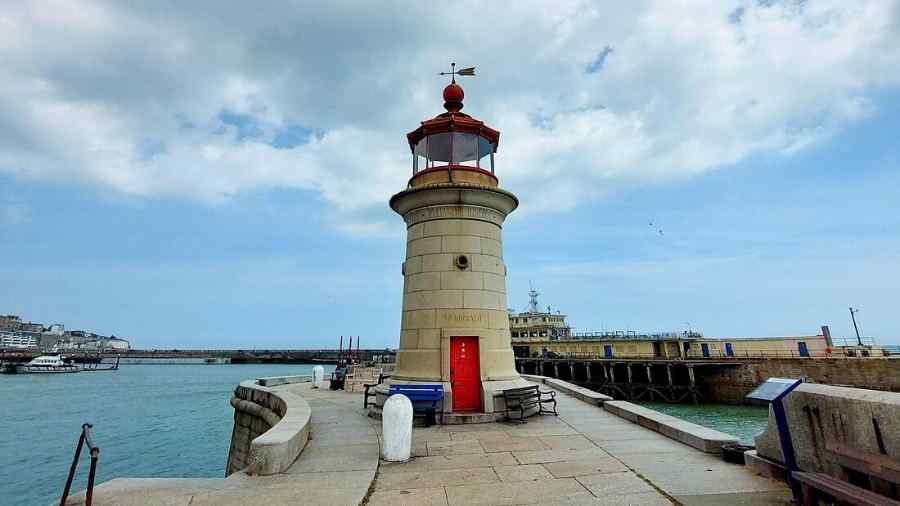
Standing proudly at the edge of the West Pier, Ramsgate Lighthouse is far more than a navigational structure. It is a symbol of maritime safety, local pride, and coastal heritage that has guided ships and inspired visitors for generations. Overlooking the Royal Harbour of Ramsgate, this compact yet striking lighthouse represents centuries of seafaring history, architectural craftsmanship, and the enduring relationship between the town and the sea.
The Setting: Ramsgate and Its Royal Harbour
Ramsgate lies on the eastern edge of Kent, facing the narrow waters that separate Britain from continental Europe. Its harbour is unique in England for holding the title of a Royal Harbour, a distinction that reflects its historic importance to the nation. Sheltered by curved stone piers, the harbour has offered refuge to vessels for centuries, particularly during storms in the Channel.
The lighthouse occupies a commanding position at the end of the West Pier. From here, it looks out across the open sea while also keeping watch over harbour entrances and marina traffic. The surrounding area is alive with activity: fishing boats returning with their catch, ferries and private yachts navigating the waters, and walkers enjoying the long pier with sweeping coastal views.
Origins and Early Development
The story of Ramsgate Lighthouse is closely tied to the development of the harbour itself. As maritime trade and naval activity increased during the eighteenth and nineteenth centuries, the need for reliable harbour lights became essential. Early lighting structures existed before the current lighthouse, but these proved vulnerable to damage from weather and passing vessels.
By the mid-nineteenth century, it was clear that a more robust and permanent solution was required. The lighthouse that stands today was completed in the early 1840s, designed to be both practical and durable. Its position slightly set back from the most hazardous areas of the pier reduced the risk of impact, while its solid construction ensured it could withstand the harsh coastal environment.
Architectural Character and Materials
One of the most appealing aspects of Ramsgate Lighthouse is its architecture. Unlike towering offshore lighthouses built to face violent seas, this harbour lighthouse is modest in height yet elegant in proportion. Built primarily from granite, it has a strong, reassuring presence without overpowering its surroundings.
The cylindrical tower rises from the pier with a clean, uncluttered design. Above it sits the lantern, framed in metal and glass, which houses the light itself. The materials were chosen not only for their strength but also for their resistance to salt air and constant exposure to wind and water. Over time, the stone has weathered gently, giving the structure a character that reflects its age and service.
Meaning Behind the Inscription
A particularly evocative feature of the lighthouse is the Latin inscription carved into its stonework: Perfugium Miseris. Translated as “a refuge for the unfortunate,” this phrase captures the deeper purpose of the harbour and its guiding light. For sailors battling storms or navigating dangerous waters, Ramsgate Harbour offered safety, and the lighthouse marked the way to that refuge.
This inscription serves as a reminder that lighthouses are not merely technical installations. They are humanitarian structures, built to save lives, prevent shipwrecks, and offer hope in moments of danger. Even today, the words resonate with visitors who understand the risks faced by those who once relied solely on lights like this to reach safety.
The Role of the Lighthouse in Navigation
Throughout its history, Ramsgate Lighthouse has functioned as an active aid to navigation. Harbour lights differ from offshore lighthouses in that they guide vessels through specific channels and entrances rather than warning them away from hazards alone. The lighthouse’s steady red light provides a clear visual reference point, especially during darkness, fog, or poor weather.
In earlier years, the light was produced using oil lamps and specialised lenses designed to focus and project the beam. As technology advanced, these systems were replaced with electric lighting, improving reliability and visibility. Despite these changes, the fundamental purpose of the lighthouse has remained the same: to guide ships safely into harbour.
Life Around the Lighthouse
Beyond its technical role, the lighthouse has always been part of everyday life in Ramsgate. Harbour workers, fishermen, naval personnel, and local families have grown up with it as a familiar presence. It has witnessed departures and arrivals, celebrations and farewells, calm summer evenings and fierce winter storms.
Artists and photographers have long been drawn to the lighthouse, capturing it against changing skies and seas. At sunrise, it stands silhouetted against soft pastel colours, while at sunset it often glows warmly as the lantern light becomes more prominent. These moments contribute to the emotional connection many people feel with the structure.
Ramsgate Lighthouse During Wartime
Ramsgate’s strategic position made it significant during times of conflict, particularly during the two World Wars. The harbour played an important role in naval operations, evacuations, and defensive preparations. While the lighthouse itself was not a weapon or fortress, it remained a vital navigational aid during periods when accurate movement at sea was crucial.
Blackout regulations and security measures sometimes altered how lights were used, but the harbour continued to function under strict controls. The lighthouse thus forms part of a wider wartime narrative, representing resilience and continuity even in uncertain times.
The Lighthouse as a Visitor Attraction
Today, Ramsgate Lighthouse is a popular attraction for visitors exploring the Kent coast. While it is not generally open for climbing, its external presence and location make it a highlight of any harbour walk. The West Pier offers uninterrupted views across the Channel, and the lighthouse serves as a natural focal point at the end of the route.
Visitors often pause to read the inscription, take photographs, or simply watch the movement of boats below. The surrounding harbour area includes cafés, restaurants, and seating areas, making it easy to spend time enjoying the maritime atmosphere. For many, the lighthouse becomes a memorable symbol of their visit to Ramsgate.
Community Identity and Cultural Importance
Lighthouses often hold a special place in the identity of coastal communities, and Ramsgate is no exception. The lighthouse appears in local artwork, postcards, and promotional material, representing the town’s seafaring heritage. It is instantly recognisable and deeply associated with the harbour’s character.
For residents, it is not just a tourist feature but a constant reminder of the town’s relationship with the sea. It embodies stories passed down through generations, from fishermen recalling early mornings at the harbour to families remembering seaside holidays and walks along the pier.
Conservation and Preservation
Maintaining a historic lighthouse requires ongoing care. Exposure to salt, wind, and water can gradually erode even the strongest materials. Preservation efforts focus on protecting the stonework, maintaining the lantern structure, and ensuring that the light continues to function safely and effectively.
Because the lighthouse is a listed structure, any repairs or alterations must respect its historical integrity. This careful balance between preservation and modern functionality ensures that the lighthouse remains both authentic and useful, rather than becoming a purely decorative relic.
Seasonal Changes and Atmosphere
The character of Ramsgate Lighthouse changes with the seasons. In summer, the pier is lively with walkers, families, and visitors enjoying long daylight hours. The lighthouse stands against blue skies and calm seas, appearing almost serene. In winter, the scene can be dramatically different. Strong winds, crashing waves, and grey skies transform the lighthouse into a symbol of endurance.
These seasonal contrasts enhance the appeal of the site. Whether seen in bright sunshine or stormy weather, the lighthouse continues to fulfil its role and inspire admiration for its steadfast presence.
Educational Value and Maritime Awareness
Beyond its visual appeal, the lighthouse offers educational value. It provides an opportunity to learn about maritime navigation, coastal engineering, and local history. Schools and history enthusiasts often use the harbour and lighthouse as starting points for discussions about Britain’s naval past and the importance of safe coastal infrastructure.
By understanding how and why such structures were built, visitors gain a deeper appreciation for the challenges faced by earlier generations of sailors and engineers. The lighthouse thus acts as an open-air classroom, accessible to anyone who walks the pier.
Conclusion
Ramsgate Lighthouse is more than a structure of stone and light. It is a living symbol of safety, history, and community, rooted firmly in the maritime traditions of Kent’s coast. From its nineteenth-century origins to its present-day role as both navigational aid and cultural landmark, it continues to serve and inspire.
Whether viewed as a piece of architecture, a functional harbour light, or a source of quiet reflection at the edge of the sea, the lighthouse remains central to Ramsgate’s identity. Its steady presence reminds us of the enduring bond between coastal towns and the waters that shape their past, present, and future.