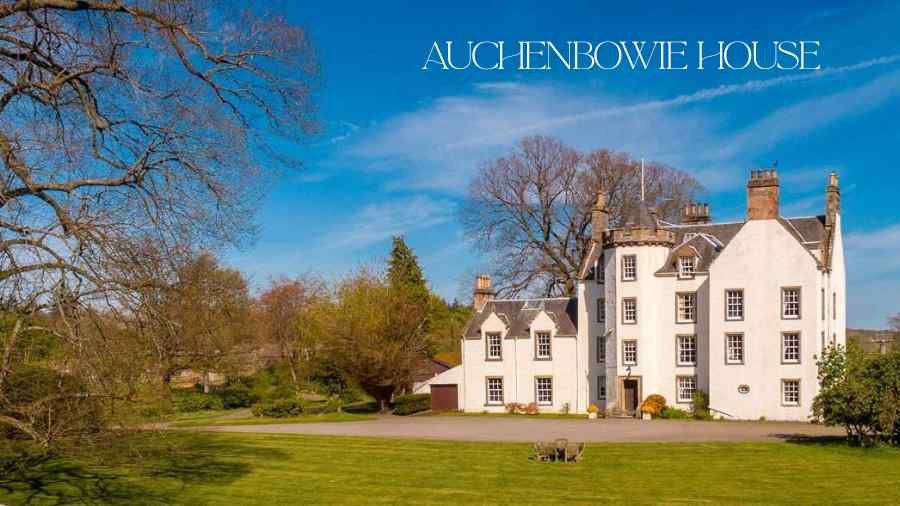
Auchenbowie House stands as a timeless emblem of Scotland’s architectural and cultural evolution. Located just a few miles south of Stirling, this historic laird’s house reflects centuries of change, resilience, and refined craftsmanship. With its deep roots in the Scottish landscape, Auchenbowie House has transitioned from a 17th-century noble residence to a living monument that bridges heritage and modern innovation.
The Origins of Auchenbowie House
The story of Auchenbowie House begins in the mid-16th century when the lands were acquired by Robert Bruce, the Provost of Stirling. He was a descendant of the legendary Robert the Bruce, a connection that immediately elevated the estate’s prestige. Set amidst rolling countryside and open vistas, Auchenbowie was strategically positioned near Stirling, a town long associated with Scotland’s royal and military history.
Construction of the house began in the 17th century, blending traditional Scottish vernacular with influences from Renaissance Europe. Its position on raised ground provided sweeping views of the surrounding farmlands and ensured good defensive visibility—an essential consideration in earlier centuries when feuds between clans and families were common.
The original structure likely served not only as a family home but also as a symbol of power and prosperity. In those times, large stone houses such as Auchenbowie were not merely dwellings but statements of influence, embodying craftsmanship, wealth, and social hierarchy.
Architectural Grandeur Through the Ages
The first known structure was built around 1666 in a distinct L-plan layout, typical of Scottish laird’s houses of that period. Built primarily from local stone, it featured thick walls, crow-stepped gables, and tall chimneys. These architectural features combined utility and artistry, ensuring both durability and aesthetic appeal.
Throughout the 18th and 19th centuries, Auchenbowie House underwent several expansions. In 1768, a major extension added more formal rooms, aligning with Georgian tastes that favoured symmetry and balance. Later Victorian modifications introduced refined interior details, decorative fireplaces, and improved glazing. Despite these changes, the house retained its fundamental structure and historic charm.
Inside, the grand staircase became a defining feature, winding elegantly through multiple levels. High-ceilinged reception rooms, ornate cornices, and intricately carved fireplaces displayed the owners’ taste and the skill of Scottish craftsmen. The use of local materials gave the interior a unique warmth and authenticity, harmonising with the surrounding landscape.
The dining room’s vaulted ceiling remains one of the most admired elements, alongside timber panelling and turret-shaped dressing rooms that add character to the house’s irregular floor plan. Many of these features have been carefully preserved or restored over the centuries, maintaining the original soul of the property while allowing for modern comfort.
The Estate and Grounds
Auchenbowie House sits amid an estate of woodlands, lawns, and cultivated gardens. The most notable among these is the walled garden, an essential component of grand Scottish estates. Historically, this garden would have provided fruits, herbs, and vegetables for the household, protected by high stone walls that maintained a favourable microclimate.
Over time, the walled garden fell into disuse and partial ruin. However, its outline remains, offering an evocative reminder of the estate’s former self-sufficiency. Mature trees, open meadows, and remnants of old carriage drives paint a vivid picture of its former splendour.
The property’s stone sundial and ornamental gates add further heritage value. Each corner of the grounds whispers a fragment of history—whether of a gardener tending the roses or of horses once trotting down the drive under canopies of oak and ash.
From the Bruces to the Munros
Ownership of Auchenbowie House has passed through several notable Scottish families. The Bruce lineage retained the estate for generations, but a dramatic event in the early 18th century—a fatal duel—led one of the Bruces to flee Scotland. The estate then transferred through marriage to the Munro family, who would become long-standing custodians of Auchenbowie.
Under the Munros, the house became a hub of intellectual and social gatherings. In 1787, the great Scottish poet Robert Burns recorded in his travel notes that he visited Auchenbowie and dined with a fellow poet from the Munro family. This meeting stands as one of many moments where Scottish culture and aristocracy intertwined within the house’s walls.
Centuries later, Auchenbowie again played host to a figure of historical significance. Winston Churchill visited the house during his youth, staying with relatives from the Munro family. It is said that he used part of his time there to write and reflect, marking another remarkable chapter in the estate’s literary and political connections.
Twentieth-Century Changes and Restoration Efforts
Like many historic houses, Auchenbowie faced challenges in the modern era. The costs of maintenance, changing ownership patterns, and evolving lifestyles meant that many such estates across Scotland struggled to survive intact.
In the 20th century, Auchenbowie changed hands several times. By the 1960s, the estate had developed equestrian facilities within the old walled garden, transforming it into a riding school. Later owners worked tirelessly to restore the property, addressing structural issues, rewiring electrical systems, and installing modern plumbing while ensuring minimal disruption to the building’s historical integrity.
In 2006, a new chapter began when Robert and Connie Donnelly took ownership. Their approach combined heritage sensitivity with modern sustainability. They introduced eco-friendly heating systems and improved insulation, ensuring that Auchenbowie would stand strong for generations to come.
In recent years, the estate has drawn attention once more under new ownership. A team led by an Asian entrepreneur with deep respect for Scottish heritage has invested in reviving the house and estate. Their ambitious plans include restoring the walled garden and integrating it into a forward-thinking, sustainable project.
The Vision for the Future: A Distillery and Botanical Revival
One of the most exciting developments for Auchenbowie House is the proposal to convert the old walled garden into a boutique whisky distillery. This project, approved by local authorities, aims to blend Scotland’s iconic whisky heritage with environmental consciousness.
The distillery will operate with sustainable principles—using renewable energy, recycling water, and cultivating botanicals within the garden walls. It represents not only an innovative commercial venture but also a deeply symbolic act of regeneration. The walled garden, once the heart of estate life, will once again be filled with life, fragrance, and purpose.
This revival highlights how historic estates can adapt to the demands of the 21st century without losing their soul. It also underlines Scotland’s evolving relationship with its heritage—one that values both preservation and reinvention.
Cultural Significance and Legacy
Auchenbowie House holds an exceptional place in Scottish culture. Architecturally, it bridges eras: the solidity of the 17th century merges with the grace of Georgian and Victorian refinements. Historically, it has hosted poets, politicians, and families who contributed to Scotland’s story.
Beyond the physical structure, the house embodies broader Scottish values—resilience, pride, and an enduring connection to the land. Its revival in modern times reflects a collective recognition that heritage is not static; it evolves through those who preserve and reinterpret it.
The planned walled garden distillery adds a new layer to that legacy. It represents not just a business initiative but a living tribute to craftsmanship, sustainability, and creativity—all values deeply rooted in Scottish tradition.
Educational and Tourism Potential
Although Auchenbowie House remains primarily a private estate, its potential for educational and cultural engagement is vast. With careful planning, it could host guided tours, heritage workshops, and exhibitions that tell the story of Scottish architecture and rural life. Educational programmes focusing on conservation, history, and sustainable land management could also find a natural home here.
Visitors drawn to Stirling for its castles and battlefields could be offered an intimate view of domestic Scottish history through Auchenbowie’s halls and gardens. The combination of authenticity, accessibility, and historical depth could make it a cultural gem within central Scotland’s tourism landscape.
A Living Example of Heritage and Modernity
What makes Auchenbowie House so compelling is its ability to embody both past and future. Every corner of the estate speaks of endurance and adaptation—from medieval craftsmanship to modern engineering. The thoughtful balance between preservation and progress ensures that it remains relevant and inspiring.
The use of sustainable technologies, coupled with its proposed distillery project, could serve as a blueprint for other heritage properties seeking new life. In an age where cultural preservation often battles economic practicality, Auchenbowie demonstrates that both can coexist.
Conclusion
Auchenbowie House is more than an architectural landmark—it is a living chapter in the story of Scotland. From its 17th-century beginnings under the Bruces to its stewardship by the Munros and its present-day revival, the estate represents endurance, identity, and the Scottish spirit.
The careful blending of tradition with innovation, particularly through the revival of the walled garden and sustainable distillery project, ensures that Auchenbowie continues to inspire future generations. Its stone walls may be centuries old, but its heartbeat—rooted in creativity, culture, and care—remains strong.