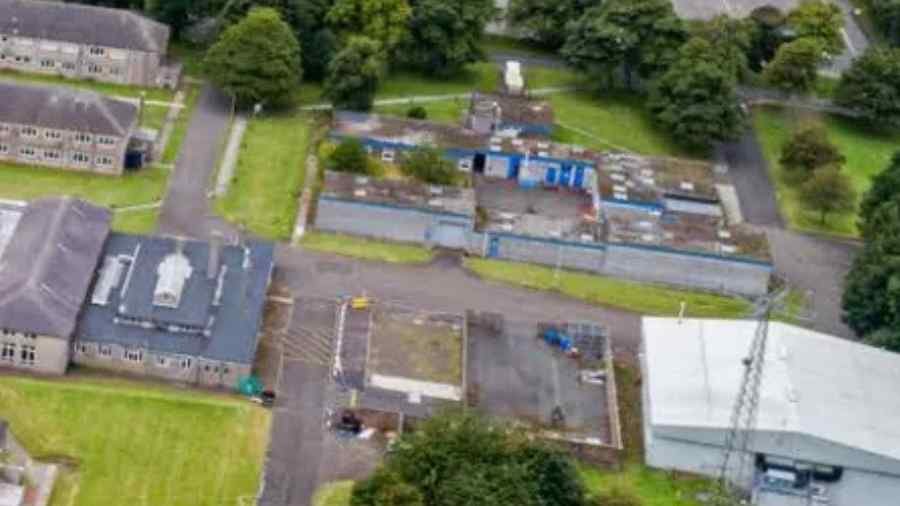
Craigiehall Barracks stands as a remarkable testament to Scotland’s military heritage and changing urban landscape. Once the headquarters for the British Army in Scotland, the site is now undergoing a sweeping transformation into a vibrant residential community.
Origins and Early History
The story of Craigiehall stretches back several centuries, long before its military days. The Craigie estate was first mentioned in the reign of King David I (1124–1153). Over time, the property changed ownership several times through inheritance and sale. In the late 17th century, it was acquired by William Johnstone, 2nd Earl of Annandale and Hartfell, through marriage.
In 1695, the Earl commissioned Sir William Bruce—Scotland’s leading classical architect—to design a grand country house. Completed in 1699, Craigiehall House became an elegant example of Scottish Palladian architecture. Its symmetrical façade, fine stonework, and balanced proportions reflected the sophistication of its owner and the emerging architectural trends of the period.
During the 18th and 19th centuries, the estate flourished. Landscaped gardens, woodland walks, and decorative features such as a temple on Lennie Hill and an ornamental bridge over the River Almond were added. The house and grounds together formed one of the finest country estates near Edinburgh, symbolising both wealth and refinement.
Transition to Military Use
Craigiehall’s transformation from aristocratic estate to military base began during the Second World War. In 1939, as Britain prepared for conflict, the estate was requisitioned by the War Office. Initially used as a temporary military camp, it soon evolved into a key administrative site.
After the war, in 1951, the Ministry of Defence formally purchased Craigiehall. The British Army began expanding the site with new barracks, offices, and married quarters. By 1955, Army Headquarters Scotland relocated from Edinburgh Castle to Craigiehall, making it the heart of Scottish military operations.
Throughout the second half of the 20th century, Craigiehall Barracks played a vital role in regional defence. It hosted a range of administrative and operational units, including the 52nd Lowland Brigade and later the 2nd Infantry Division. The site included not only the historic mansion but also a Cold War-era Anti-Aircraft Operations Room—a reinforced concrete structure built for command and control functions during the tense decades of the nuclear age.
Stories and rumours have long surrounded the site. Some locals claimed that Rudolf Hess, the high-ranking Nazi official who parachuted into Scotland in 1941, was briefly held at Craigiehall. While no official evidence supports this, it adds an air of mystery to the estate’s wartime history.
Architectural and Heritage Significance
Craigiehall House remains a masterpiece of 17th-century Scottish design. Classified as a Category A listed building, it retains many original features: intricate plaster ceilings, carved fireplaces, grand staircases, and finely proportioned rooms. Later additions by architects William Burn and David Bryce harmonised with the original design, enhancing rather than overwhelming it.
The surrounding structures, such as the Cold War operations room and mid-century military buildings, hold historical value for different reasons. They reflect Britain’s defensive architecture through the 20th century. Together, the classical mansion, modern barracks, and landscaped grounds create a multi-layered record of Scottish history—aristocratic, military, and civic.
Closure and Decommissioning
In 2011, the UK Ministry of Defence announced the closure of several bases as part of a cost-saving Defence Basing Review. Among them was Craigiehall Barracks. Its headquarters functions were transferred to other Scottish sites, notably Forthside Barracks in Stirling, and the base’s operational role gradually wound down.
Although closure was planned for 2014, the process took several more years. The final military personnel, including units such as the 521 Explosive Ordnance Disposal Squadron, remained until about 2019. Once vacated, the MOD began preparing the land for sale, carrying out environmental assessments and removing obsolete infrastructure.
The closure marked the end of nearly seventy years of continuous military presence. Yet it also opened the door to a new chapter—one that would see Craigiehall reborn as part of Edinburgh’s expanding residential belt.
Sale and Redevelopment Plans
In 2024, Craigiehall Barracks was sold to a consortium led by Miller Developments and the William Pears Group. The purchase included roughly ninety-six acres of land and seventy-eight former service homes. The consortium quickly announced ambitious plans to transform the area into a mixed-use community named Craigiehall Meadows.
The redevelopment aims to blend the site’s heritage with modern living. The historic Craigiehall House will be preserved and repurposed, while the surrounding land will feature new homes, gardens, and green corridors. The developers envision a sustainable neighbourhood offering two- to five-bedroom homes, communal parks, walking paths, and leisure spaces—nestled among mature woodlands on the banks of the River Almond.
The site’s proximity to Edinburgh and South Queensferry gives it a strong appeal for commuters. Early sales of refurbished military houses have already attracted considerable interest, and planning authorities have expressed support for the sensitive reuse of the brownfield land.
Challenges of Transformation
Turning a former military headquarters into a thriving civilian community presents complex challenges. Heritage protection must be balanced with practical development needs. The Category A listed house requires ongoing maintenance, while other historical structures must be either preserved or integrated sympathetically.
Infrastructure also needs significant upgrading—roads, utilities, and drainage systems designed for military use must meet modern residential standards. Environmental remediation is another factor, as decades of fuel storage and industrial use may have left contamination in certain areas.
Community consultation and transport planning are equally vital. The development must connect seamlessly with surrounding villages and ensure sufficient access, parking, and public transport options. Nonetheless, developers remain confident that Craigiehall Meadows can become a model example of adaptive reuse.
Craigiehall Barracks in Context
Across the United Kingdom, many decommissioned military sites have been converted into residential or commercial spaces. However, few possess the blend of architectural beauty, historical depth, and prime location found at Craigiehall. The estate’s layered narrative—from 17th-century grandeur to Cold War command centre—offers a unique story that enriches the project’s identity.
If redevelopment proceeds as planned, Craigiehall Meadows could join the ranks of successful transformations such as the Quartermile development in central Edinburgh, itself built on a former hospital site. By preserving heritage while introducing modern amenities, Craigiehall’s revival could serve as a model for future urban regeneration across Scotland.
The Future Outlook
The vision for Craigiehall’s future is one of balance—between preservation and progress. The redevelopment will retain historic landmarks, enhance green spaces, and provide hundreds of new homes without compromising the estate’s character.
Planners also anticipate reopening certain grounds to the public, encouraging residents and visitors to enjoy woodland walks and riverfront paths that have long been restricted. Over time, Craigiehall Meadows may evolve into a thriving semi-rural community where history and modern life coexist harmoniously.
Cultural and Economic Impact
Economically, the project represents a major investment in the Edinburgh region. Construction activity will create hundreds of jobs, while new residents will contribute to local shops, schools, and services. Environmentally, the inclusion of green infrastructure, tree retention, and sustainable building practices aims to reduce the carbon footprint.
Culturally, the site’s layered history offers educational potential. Interpretive displays and heritage trails could help residents understand Craigiehall’s evolution—from noble estate to army HQ and, finally, to a modern neighbourhood. Such initiatives strengthen community identity and ensure that history remains alive within the new development.
A Living Legacy
Craigiehall Barracks is more than a relic of military history—it is a symbol of adaptation and continuity. Over more than three centuries, it has served noble families, wartime strategists, and now, a new generation of Scottish homeowners. Its rebirth demonstrates how careful planning and respect for the past can create something enduring for the future.
As the project progresses, Craigiehall Meadows promises to become one of Edinburgh’s most desirable addresses—a place where tradition meets innovation, where architecture and nature blend seamlessly, and where the echoes of history enrich modern life.
Conclusion
Craigiehall Barracks embodies the evolution of Scotland itself: steeped in heritage, resilient through change, and ready for renewal. From a 17th-century country estate to a key military headquarters and now to a forward-looking residential community, its story mirrors the nation’s capacity to preserve the past while embracing the future.