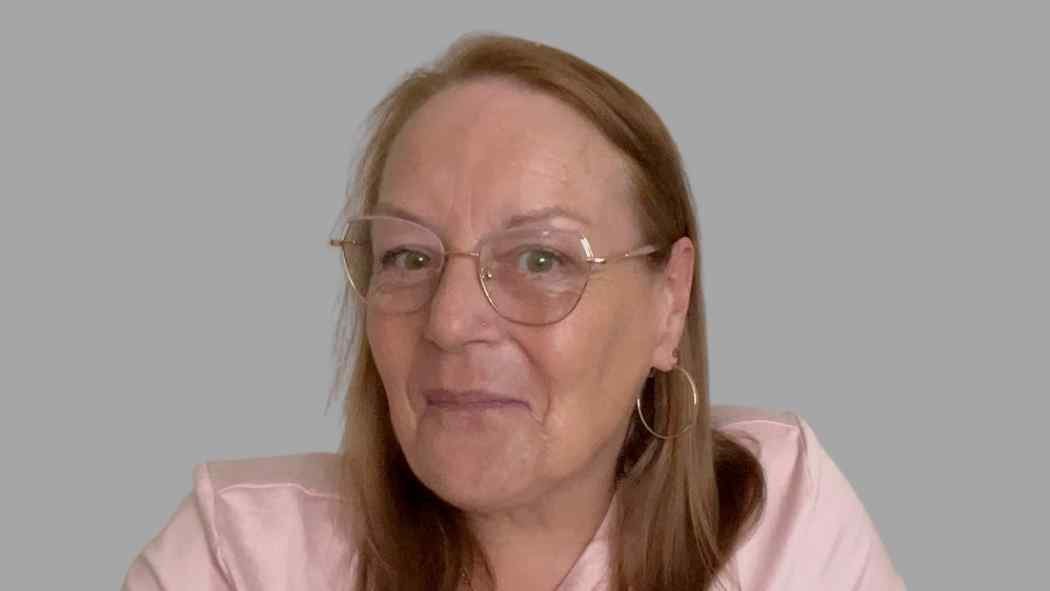
The world has always been fascinated by the unexplained — from eerie shadows in ancient forests to strange creatures said to roam the countryside. Among those who have dedicated their lives to exploring such mysteries stands Deborah Hatswell, a British investigator, author, and podcaster whose work has brought a renewed focus to the UK’s lesser-known paranormal and cryptid phenomena. Through her podcast “BBR Investigations – Cryptids, Paranormal & Unexplained Events” and her extensive case archives, Deborah has become one of the most recognised figures in the British cryptid and paranormal research community.
Her storytelling blends witness testimony, investigative curiosity, and a deep sense of empathy for those who have experienced the unexplainable. For over two decades, Hatswell has sought not only to uncover the truth behind unusual sightings but also to give a voice to ordinary people who encountered extraordinary things.
Early Life and First Encounter
Deborah Hatswell’s journey into the paranormal world began with a life-changing experience in the early 1980s. As a teenager, she reported seeing a large, human-like creature while walking in a wooded area near her home in Greater Manchester. This sighting left an indelible mark on her — not just as a frightening memory but as a catalyst for a lifetime of inquiry.
At that time, the concept of “cryptids” or “British Bigfoot” was hardly known in the United Kingdom. Deborah’s encounter sparked years of questions with few answers. Determined to understand what she saw, she began documenting similar reports from across the country. Over time, she realised that she was far from alone — countless individuals had witnessed equally strange things, from huge shadowy figures to glowing lights in the woods.
This early experience shaped Deborah’s belief that the paranormal should not be dismissed as superstition or fantasy. Instead, she viewed it as a complex human phenomenon deserving serious attention, empathy, and investigation.
The Birth of BBR Investigations
Out of her personal experiences grew an organised project: BBR Investigations (Bigfoot and British Research). What started as a small community of like-minded enthusiasts evolved into a wide-reaching investigative network. Deborah’s goal was simple yet ambitious — to document and share real-life encounters with unexplained entities across the British Isles.
BBR Investigations soon became a trusted source for witness reports on everything from cryptid creatures and UFO sightings to haunted locations and psychic phenomena. Unlike sensational television shows that often dramatise paranormal events, Deborah took a grounded, empathetic approach. She believed that each witness should be treated with respect, recognising that many had struggled for years to talk about what they had seen.
Her open-minded yet investigative style allowed people to come forward with confidence. Through emails, interviews, and podcasts, she gathered hundreds of accounts, building one of the most detailed archives of British paranormal activity in existence today.
The Rise of the Podcast
The real breakthrough came when Deborah launched her podcast, “BBR Investigations – Cryptids, Paranormal & Unexplained Events.” Through this platform, she reached an international audience eager to hear about strange encounters from the UK and beyond. Each episode features first-hand stories, detailed field investigations, and thoughtful commentary.
Listeners are drawn to her calm yet curious tone — she never ridicules witnesses or dismisses their fears. Instead, she guides them through recounting their experience, analysing patterns, and connecting the dots between seemingly unrelated phenomena. Over time, her show has expanded to include topics such as ancient folklore, shapeshifters, haunted homes, time anomalies, and psychic experiences.
What makes her podcast stand out is its combination of realism and wonder. Deborah doesn’t claim to have all the answers, but she encourages listeners to think critically and compassionately. She invites discussion rather than dogma, and that is why her audience has continued to grow year after year.
Investigating Cryptids in the UK
Cryptid research is often dominated by stories from North America — Bigfoot, Sasquatch, or the Mothman. However, Deborah Hatswell brought attention to the British side of these mysteries. Through her investigations, she compiled reports of wild, ape-like creatures sighted in rural parts of England, Scotland, and Wales. Some witnesses described tall, hairy figures crossing roads; others spoke of glowing eyes seen deep in forests.
While sceptics dismiss such accounts as misidentifications or folklore, Deborah takes a middle-ground approach. She recognises that eyewitness testimony can be unreliable but argues that repeated patterns in hundreds of stories deserve examination. In her words, “Something is happening, and ignoring it won’t make it disappear.”
Her investigations also touch on other mysterious beings from UK legends — black shucks (phantom dogs with glowing red eyes), woodwose (wild men of the forest), and spectral apparitions that seem to blur the line between folklore and reality. By connecting ancient myths to modern sightings, Deborah’s work bridges the gap between history and contemporary mystery.
Exploring the Paranormal and the Unseen
Beyond cryptids, Deborah Hatswell has delved into other unexplained fields such as hauntings, psychic connections, alien abductions, and time anomalies. She often highlights the psychological and emotional impact of these experiences. Rather than focusing solely on the supernatural aspect, she studies how the witnesses’ lives change afterward — their fear, confusion, and isolation.
She has often stated that many experiencers develop lifelong anxiety or trauma, not because of what they saw, but because no one believes them. In this sense, her work also functions as a form of social support. By providing a safe platform, she helps witnesses find relief and understanding through storytelling and community.
Her research also considers how generational patterns may exist in paranormal encounters. Some of her guests report family members having similar experiences, which she refers to as “paranormal bloodlines.” While this concept remains controversial, it adds an intriguing layer to the discussion of whether certain people are more attuned to unexplained energies or dimensions.
Publications and Writing Style
Deborah is also an accomplished author. Her books compile witness testimonies and in-depth analyses of cryptid and paranormal encounters. Among her best-known works are People Who Witnessed Dog Men, Werewolves, Shucks and Wulvers and British Bigfoot Reports. These titles showcase her dedication to preserving the oral history of those who experienced something beyond the ordinary.
Her writing style is personal and conversational. She avoids overly technical language, choosing instead to communicate in a tone that makes readers feel as if they are listening to a trusted friend. This accessibility has made her work appealing to both dedicated researchers and casual readers interested in the mysterious side of life.
Criticism and Controversy
As with any figure in the paranormal field, Deborah Hatswell’s work has not escaped criticism. Some sceptics question the validity of witness reports, arguing that many can be explained through psychology, misperception, or environmental factors. Others view her research as anecdotal and unscientific.
However, Deborah rarely claims to offer definitive proof. Her approach is experiential rather than experimental — she focuses on the human element behind each story. She openly acknowledges that not every account can be verified, but insists that personal experiences still have value. Her goal, she often explains, is not to convince the sceptical but to document and preserve what people truly believe they have encountered.
This perspective has earned her both critics and admirers. Yet, even those who doubt the supernatural side of her work recognise her dedication and compassion for witnesses who often have nowhere else to turn.
Community and Cultural Impact
What sets Deborah apart is the sense of community she has created. Through her website, social media groups, and live events, she connects witnesses from across the UK and beyond. Her audience includes people who have felt isolated for years after a strange encounter. Many say that sharing their stories through BBR Investigations helped them find closure and understanding.
In the broader cultural context, Deborah’s work has helped revive interest in Britain’s folklore. Many listeners who initially tuned in for entertainment found themselves researching the old myths of their own regions — stories of spectral animals, wild men, or haunted moors passed down through generations. In this way, her project also serves as a cultural preservation effort, reminding people of the folklore that shaped the British landscape.
Influence on the Paranormal Field
Over the past decade, Deborah Hatswell has become a respected voice in a field often dismissed by mainstream media. She has been invited to paranormal conventions, podcasts, and documentaries. Researchers and enthusiasts recognise her persistence in compiling first-hand British accounts, which were previously scattered or forgotten.
Her investigative work has inspired a new generation of podcasters and amateur researchers to approach the unexplained with empathy and open-mindedness. In contrast to sensational media portrayals, Deborah promotes calm, critical exploration. This influence is particularly visible among UK-based cryptid groups, many of which cite her as their inspiration.
Why Deborah Hatswell’s Work Matters
In an era of digital distractions and scepticism, Hatswell’s work serves as a reminder that mystery still exists. Her investigations are not merely about ghosts or creatures but about the boundaries of human experience. Whether one believes in the supernatural or not, the emotional authenticity of her witnesses reveals much about fear, belief, and the need for understanding.
She challenges listeners to remain curious — to consider that the world may hold phenomena science has yet to explain. Her respectful handling of witnesses’ stories sets a benchmark for ethical investigation in a field prone to exaggeration.
Future Outlook
As technology evolves, so does Deborah’s approach to documentation. She continues to collect new cases, organise public talks, and mentor others who wish to explore the unexplained responsibly. Her goal is to ensure that even the strangest stories are preserved without mockery.
Her future plans reportedly include expanding her research archives, producing more detailed case studies, and exploring connections between modern sightings and ancient mythology. With each episode and publication, she continues to remind her audience that the unexplained is not just about fear — it’s about wonder.
Conclusion
Deborah Hatswell stands as a significant figure in Britain’s world of paranormal and cryptid investigation. Through her personal courage, extensive research, and compassionate storytelling, she has turned decades of witness accounts into a growing archive of unexplained phenomena.
While sceptics debate the reality of her subjects, few can deny the importance of her role in giving ordinary people the chance to share extraordinary experiences. Her legacy lies not in proving or disproving mysteries but in encouraging curiosity and compassion in the face of the unknown.