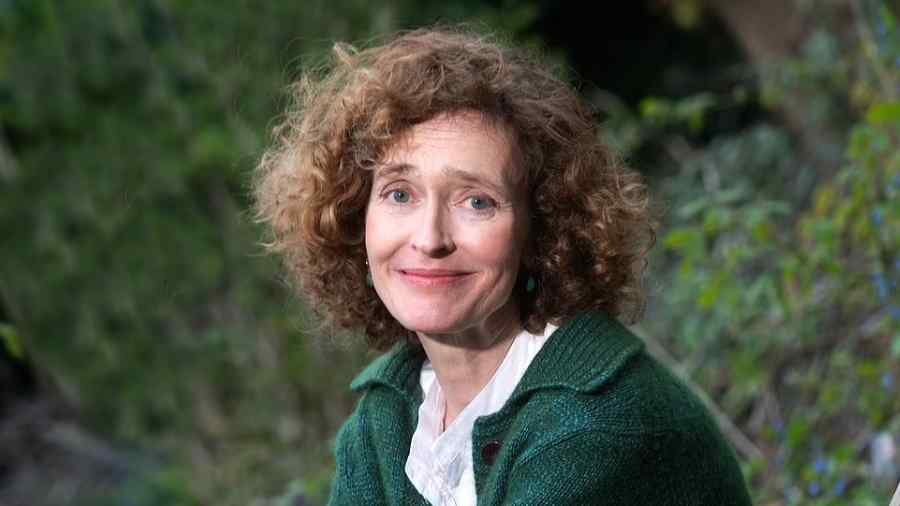
Catherine Swire is one of those rare contemporary British writers whose work stands delicately at the intersection of pain, memory, and renewal. Her life, steeped in literary and emotional complexity, reflects a journey that is as much personal as it is universal. Born into an intellectually vibrant environment, Swire developed a profound love for words and landscapes early in life. She studied English literature at the University of Oxford, where her fascination with language, symbolism, and the emotional power of storytelling began to take deep root. Her academic background gave her a strong foundation in classical and modern literature, while her time at Oxford nurtured her sensitivity to the nuances of language and the emotional depth that words can hold.
After completing her degree, Catherine pursued further studies in Canada, expanding her understanding of cross-cultural literature and deepening her engagement with poetic traditions. This academic exposure played a crucial role in shaping her literary voice—one that seamlessly blends intellectual depth with raw human emotion. Over the years, she has lived and worked in various parts of the United Kingdom, but it is the landscapes around the Malvern Hills and the Isle of Skye that seem to echo most deeply through her poetry.
The Turning Point: A Life Marked by Loss
The defining event of Catherine Swire’s life came with an unimaginable tragedy. Her sister, Flora Swire, was one of the 270 victims of the 1988 Lockerbie bombing. The grief that followed was profound and long-lasting, shaping Catherine’s worldview and her artistic expression in every possible way. For years, she found herself unable to write or even read, as if language itself had deserted her in the face of such immense loss.
Yet from this silence emerged something extraordinary. Rather than turning away from the pain, she began to explore it through the medium of poetry and reflective prose. The trauma became a lens through which she examined life, nature, and the fragile connections that bind human beings to the world around them. In her later works, she would describe this process as a form of reawakening—a return to voice, breath, and meaning.
Flame, Ash, Feather: The Book That Defined Her
Catherine Swire’s most acclaimed work, Flame, Ash, Feather: A Dozen Eggs from Lockerbie, published by Black Spring Press, stands as a remarkable testament to resilience and transformation. The book is structured around twelve short sections, each corresponding to an egg from her own hens—a symbolic reflection of rebirth, fragility, and continuity. In these pieces, Swire uses the metaphor of birds and flight to explore grief, love, and survival.
The work is neither purely poetry nor straightforward prose; it is a hybrid form that mirrors the fragmented experience of trauma. Each piece is vivid, tactile, and deeply human. Through images of hens scratching in the soil, feathers caught in wind, and ash settling on forgotten ground, Swire captures the paradox of loss—the way destruction and beauty coexist in the same breath.
Critics have praised Flame, Ash, Feather for its originality and emotional honesty. The Times Literary Supplement called it a “highly original account of traumatic grief,” while readers have connected deeply with its meditative rhythm and earthy imagery. It is not a book that seeks pity; rather, it seeks understanding. It shows that even in the most devastating circumstances, there can be light, renewal, and the faint sound of wings.
The Symbolism of Birds and Nature
In Swire’s writing, nature is never a mere backdrop. It is a living presence—one that breathes, grieves, and renews alongside the human soul. Birds, in particular, serve as powerful symbols. They represent voice, freedom, and transcendence, but also fragility and mortality. Through her chickens and wild birds, she finds metaphors for the human condition.
For Catherine Swire, the act of observing birds became a form of meditation. She writes of their patterns, their silences, and their small daily rituals as mirrors of human existence. The hens in her garden became teachers of patience and simplicity, reminding her of how life persists through the smallest gestures. This connection between animal life and emotional healing gives her writing an ecological depth that aligns her with the modern movement of eco-poetry—a literary approach that fuses environmental awareness with spiritual introspection.
Soil and the Healing Power of the Earth
Before Flame, Ash, Feather, Catherine Swire published another collection titled Soil, which explored similar themes of trauma, landscape, and renewal. In Soil, the ground itself becomes a metaphor for memory. She reflects on how the land carries stories, absorbing human sorrow and returning it as new life.
Her walks through the Malvern Hills serve as both literal and spiritual journeys. The act of walking becomes a form of writing in motion—a rhythm through which she finds connection and meaning. In her work, the earth holds both loss and hope. It buries the past but also nurtures new beginnings.
Writing as Recovery
Catherine Swire has spoken openly about how writing helped her regain her sense of self after years of silence. For a long time, she could not face the written word; even reading seemed impossible. But as she began tending to animals and reconnecting with nature, language slowly returned. The process of writing became therapeutic—a way to navigate grief rather than escape it.
In interviews, she often describes her method as organic and unforced. She writes in notebooks, often outdoors, allowing the natural world to shape her sentences. Time, form, and structure emerge naturally, much like the growth of plants or the rhythm of the seasons. This naturalistic approach gives her work an authenticity that readers find deeply moving.
A Voice Rooted in Landscape
Landscape plays a central role in Swire’s artistic identity. The Malvern Hills, where she spends much of her time, are not simply beautiful settings—they are active participants in her stories. The changing light, the shifting seasons, and the quiet endurance of the land all mirror her internal world.
Her fascination with the British countryside, combined with her background in English literature, gives her work a distinctly layered quality. She often references medieval texts, ancient hymns, and mythic imagery, blending them seamlessly with contemporary reflections. The result is writing that feels timeless—anchored in both history and emotion.
Workshops, Teaching, and the Gift of Sharing
Beyond her own publications, Catherine Swire has also devoted herself to helping others find their voices. She conducts creative writing and poetry workshops across the UK, often focusing on themes of healing, nature, and personal expression. Her sessions encourage participants to use the landscape as a source of inspiration and emotional grounding.
In a world often dominated by speed and distraction, Swire’s teaching philosophy offers something radically simple: attention. She invites writers to listen—to the wind, the soil, the silence between words—and to trust that meaning will emerge from stillness.
Air Loom: A Glimpse into Her Future Work
Swire’s upcoming project, tentatively titled Air Loom, is set to expand on her exploration of landscape and perception. The book, expected to release in 2025, will reportedly weave together fiction and reflection, examining how time and weather shape our sense of identity. While details remain limited, early commentary suggests that Air Loom will continue her tradition of blending poetic language with psychological depth.
This forthcoming work could mark a new phase in her career—one that moves from private reflection toward broader philosophical questions about human connection to the natural world. If Flame, Ash, Feather was about recovering voice from silence, Air Loom may well be about learning to speak with the world rather than just about it.
Critical Reception and Literary Significance
Catherine Swire’s work has earned recognition not only for its emotional resonance but also for its formal innovation. Critics admire how she combines the lyrical precision of poetry with the intimacy of memoir and the discipline of prose. Her use of hybrid forms challenges traditional boundaries, reflecting the fragmented, non-linear nature of grief itself.
Moreover, her themes resonate with a growing audience interested in eco-poetry and trauma literature. At a time when environmental and emotional awareness are converging in public discourse, Swire’s writing feels both timely and timeless. She offers an alternative to despair—not through denial of suffering but through acceptance and transformation.
Legacy and Influence
While Catherine Swire’s literary career is still evolving, her influence is already visible among new generations of poets and writers who seek to blend personal experience with environmental consciousness. Her courage in transforming personal pain into universal art has made her a quiet yet powerful voice in modern British literature.
She represents a kind of authenticity that feels increasingly rare. In a world obsessed with speed, consumption, and performance, Swire’s work reminds readers of the value of stillness, honesty, and connection. She demonstrates that language can be both a tool for mourning and a means of rebirth.
Conclusion
Catherine Swire is not just a poet; she is a translator of silence. Her writing stands as proof that even the deepest wounds can yield beauty when expressed with honesty and care. Through her explorations of landscape, birds, and the cycles of life, she invites readers to witness the quiet persistence of hope beneath layers of sorrow.
In her hands, grief becomes art, and art becomes a pathway back to life. Whether through the fragile shell of an egg, the movement of wings, or the stillness of soil, Swire captures the eternal truth that healing often begins in the most unexpected places. Her voice, grounded in nature and illuminated by compassion, ensures that Catherine Swire will remain one of the most distinctive literary figures of her generation—a poet who turned personal tragedy into a testament of resilience, beauty, and grace.