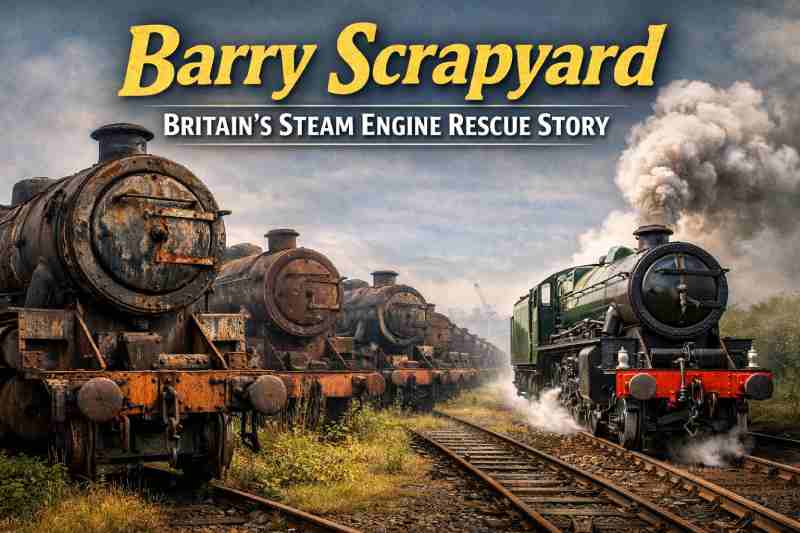
The story of Barry Scrapyard is one of the most extraordinary chapters in British industrial and railway history. What began as an ordinary scrap operation in South Wales unexpectedly became the centre of one of the largest preservation successes ever seen. At a time when steam locomotives were being rapidly dismantled and forgotten, Barry Scrapyard quietly turned into a sanctuary—albeit an unintended one—for hundreds of historic engines.
The Origins of Barry Scrapyard
Barry Scrapyard was operated by Woodham Brothers and located at Barry Docks in South Wales. The company initially specialised in scrap metal, particularly surplus materials from railways, ships, and industrial operations.
During the mid-20th century, Britain was undergoing a major transformation in its railway system. Steam locomotives, once the backbone of transport, were being phased out in favour of diesel and electric engines. As a result, thousands of steam locomotives were withdrawn from service and sent for dismantling.
Barry Scrapyard became one of the main destinations for these retired engines.
The Decline of Steam and the Rise of Scrap Yards
In the late 1950s and 1960s, British Railways implemented a modernisation plan that aimed to replace steam locomotives with more efficient technologies. This transition happened quickly, leaving little time for preservation efforts.
Scrap yards across the country received a steady flow of locomotives. Most were dismantled within weeks or months. However, Barry Scrapyard operated differently.
Instead of immediately cutting up locomotives, Woodham Brothers focused on scrapping smaller and more manageable items such as freight wagons. These were easier to process and generated quicker profits. Steam locomotives, on the other hand, were large, complex, and required more time and labour to dismantle.
As a result, hundreds of locomotives were left standing in the yard for years.
Why Barry Scrapyard Became Unique
The uniqueness of Barry Scrapyard lies in a simple but powerful combination of circumstances:
- A high volume of locomotives arriving at once
- A business strategy that prioritised easier scrap materials
- Limited resources to dismantle large engines quickly
This created an unusual situation where locomotives remained intact long enough for enthusiasts to take notice.
At its peak, Barry Scrapyard held nearly 300 steam locomotives. Rows of engines stood idle, exposed to the elements, slowly rusting but largely complete. While other scrapyards had already destroyed their stock, Barry still had a vast collection waiting.
The Beginning of the Preservation Movement
By the late 1960s, railway enthusiasts began to realise that Barry Scrapyard represented a rare opportunity. These locomotives, though neglected, were still salvageable.
Preservation groups, many of them newly formed, started raising funds to purchase engines directly from Woodham Brothers. Remarkably, the company was willing to sell locomotives at scrap value.
This opened the door for enthusiasts to rescue engines that would otherwise have been lost forever.
The Scale of the Rescue Effort
The numbers associated with Barry Scrapyard are astonishing:
- Approximately 297 locomotives were sent to the yard
- Around 213 locomotives were rescued
- Many of these engines have since been restored
This makes Barry Scrapyard responsible for saving the majority of preserved steam locomotives in the United Kingdom.
Without this scrapyard, the heritage railway movement would look very different today. Entire classes of locomotives might have vanished completely.
Life Inside Barry Scrapyard
Visitors to Barry Scrapyard during its peak years often described it as both haunting and fascinating.
Locomotives were lined up in long rows along the sidings. Grass and weeds grew between the tracks. The sea air from nearby docks contributed to corrosion, giving the engines a weathered appearance.
Despite the decay, many locomotives remained structurally sound. Key components were still intact, making restoration possible.
For enthusiasts, the yard became a place of discovery—a chance to see rare engines up close and imagine their potential revival.
The Role of Dai Woodham
A central figure in the story of Barry Scrapyard is Dai Woodham, the owner of Woodham Brothers. His approach to business inadvertently shaped the future of railway preservation.
Rather than rushing to dismantle locomotives, he allowed them to remain in storage while focusing on more profitable scrap. He also maintained a willingness to sell engines to preservation groups.
Although he did not set out to become a saviour of railway heritage, his decisions made it possible for hundreds of locomotives to survive.
Restoration: From Rust to Revival
Rescuing a locomotive from Barry Scrapyard was only the beginning. Restoration was a long and challenging process.
Many engines required:
- Complete mechanical overhauls
- Replacement of missing or damaged parts
- Boiler repairs and safety certification
- Extensive cleaning and repainting
Restoration projects often took years or even decades. They relied heavily on volunteers, donations, and community support.
Despite these challenges, many Barry-rescued locomotives are now fully operational and run on heritage railways across the UK.
Famous Locomotives from Barry Scrapyard
Several well-known locomotives owe their survival to Barry Scrapyard.
One notable example is GWR 5972 “Olton Hall”, which later gained international fame as the Hogwarts Express in the Harry Potter films. Its journey from rusting scrapyard relic to cinematic icon perfectly illustrates the transformative impact of preservation efforts.
Other locomotives have become stars of heritage railways, attracting visitors and helping to educate new generations about Britain’s industrial past.
The Cultural Impact of Barry Scrapyard
Barry Scrapyard did more than save locomotives—it helped shape a movement.
The availability of engines encouraged the growth of heritage railways throughout the UK. Lines that had been closed or abandoned were revived, often using locomotives rescued from Barry.
This led to:
- Increased public interest in railway history
- The creation of volunteer-based preservation organisations
- The development of tourist attractions centred on steam railways
Today, heritage railways are a significant part of Britain’s cultural landscape, and Barry Scrapyard played a key role in making that possible.
The End of an Era
By the 1980s and early 1990s, the number of locomotives remaining at Barry Scrapyard had significantly decreased. Most had either been scrapped or rescued.
The final locomotives were removed in the 1990s, marking the end of the scrapyard’s role in railway preservation.
The site itself has since been redeveloped, and little physical evidence remains of its historic past. However, its legacy lives on through the locomotives that were saved.
Why Barry Scrapyard Still Matters Today
The importance of Barry Scrapyard cannot be overstated. It represents a turning point in how industrial heritage is valued and preserved.
Key reasons for its lasting significance include:
- It saved the majority of surviving British steam locomotives
- It enabled the growth of heritage railways
- It demonstrated the power of grassroots preservation efforts
Without Barry Scrapyard, Britain’s railway heritage would be far poorer.
Lessons from Barry Scrapyard
The story of Barry Scrapyard offers several important lessons:
- Preservation can happen in unexpected ways
- Business decisions can have unintended historical impact
- Community effort is essential for large-scale restoration projects
It also highlights the importance of recognising the value of historical artefacts before they are lost.
FAQs
What was Barry Scrapyard originally used for?
Barry Scrapyard was primarily a scrap metal yard operated by Woodham Brothers, handling materials from railways and industry.
How many locomotives were saved from Barry Scrapyard?
Over 200 steam locomotives were rescued, making it one of the largest preservation efforts in history.
Why were locomotives left untouched for so long?
Woodham Brothers prioritised scrapping wagons and easier materials, leaving the more complex locomotives untouched for extended periods.
Conclusion
Barry Scrapyard stands as a remarkable example of how history can be preserved against the odds. What began as a simple scrap yard became the unlikely guardian of Britain’s steam locomotive heritage. Through a combination of circumstance, business decisions, and passionate enthusiasts, hundreds of engines were saved from destruction.
Today, the legacy of Barry Scrapyard lives on in the preserved locomotives that continue to run on heritage railways. These machines are not just relics of the past—they are living reminders of a time when steam powered the nation and of a scrapyard that changed history forever.