Claire Shenstone: The Visionary British Artist Who Redefined Portraiture Through Fabric and Emotion

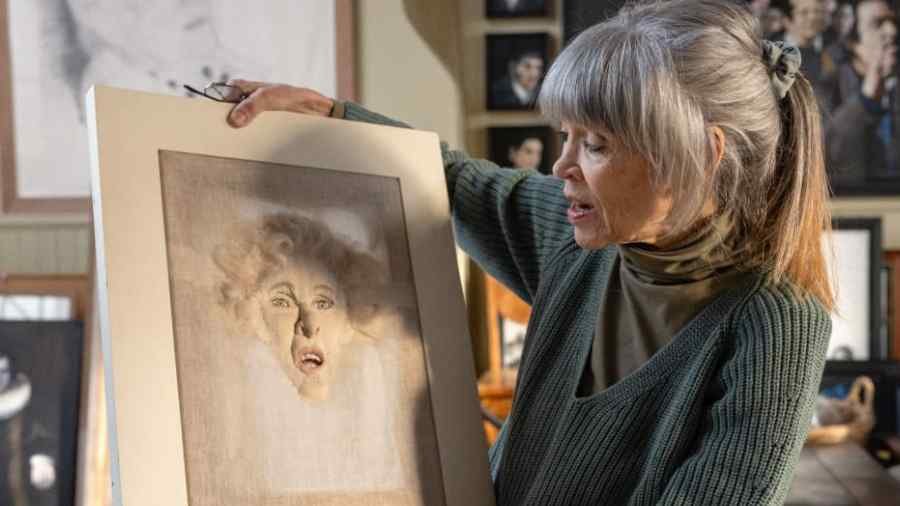
Claire Shenstone is a name that resonates with originality, depth, and fearless creativity within the world of British art. Known primarily for her evocative “cloth relief heads” and hauntingly expressive portraits, Shenstone occupies a unique position in contemporary art. Her work challenges traditional definitions of portraiture by merging sculpture, painting, and emotion into one compelling form. She captures not just the physical features of her subjects, but their psychological essence—the part of them that lies beneath the surface.
Born in England in the late 1940s, Claire Shenstone’s journey from art student to internationally recognised portrait artist is a testament to her unyielding devotion to truth and form. Her artworks have graced prestigious galleries such as the National Portrait Gallery and the Sainsbury Centre for Visual Arts, and her name is forever linked with that of Francis Bacon, one of the greatest painters of the twentieth century, who became both her mentor and admirer. But Shenstone’s legacy goes far beyond her connection to Bacon; it is rooted in her vision, her relentless experimentation, and her belief that art should expose the inner self as much as the outer one.
Early Life and Education
Claire Shenstone was born in 1948 in England, during a time when British art was entering a new era of modernist experimentation. She developed an interest in creative expression early on, exploring how human emotion could be conveyed through texture, form, and colour. After completing her early education, Shenstone enrolled in the Central School of Art and Design in London, where she pursued a foundation course from 1972 to 1973.
She then continued her studies at the Chelsea School of Art, one of London’s most influential institutions for young artists. It was here that she honed her skills in painting and began to develop her distinctive style—a mix of figurative intensity and emotional exploration. After earning her degree in 1976, she went on to the Royal College of Art, completing her Master’s degree in 1979.
Her time at the Royal College of Art proved pivotal. She experimented with fabric and relief sculpture, gradually moving away from flat painting into more tactile forms. What began as an exploration of texture evolved into a signature style that would later define her artistic identity.
The Encounter with Francis Bacon
One of the most significant turning points in Shenstone’s life came when the legendary painter Francis Bacon saw her work during her student years. Impressed by her innovative cloth relief portraits, Bacon purchased one of her early pieces, titled Janet, from her degree exhibition. This marked the beginning of a fascinating friendship and artistic collaboration that lasted for several years.
Bacon was captivated by Shenstone’s ability to capture psychological depth through fabric. He later invited her to create a series of cloth portraits of himself—a task that led to four years of intimate sittings and exchanges between the two artists. Through these sessions, Shenstone developed an even deeper understanding of human vulnerability and identity, ideas that would continue to influence her later work.
While their relationship was grounded in mutual artistic respect, it also represented a meeting of minds between two very different generations of artists. Bacon was a global figure of post-war expressionism, while Shenstone represented a younger, more experimental spirit. Their collaboration blurred the boundaries between painting, sculpture, and psychological study, producing works that remain remarkable for their emotional intensity.
The Invention of the “Cloth Head”
Perhaps the most defining aspect of Claire Shenstone’s artistic legacy is her invention of the “cloth head”—a sculptural form that combines fabric, portraiture, and emotion. Rather than relying solely on paint, Shenstone used soft textiles to model her subjects’ faces and features, creating works that exist somewhere between painting and sculpture.
The use of fabric allowed her to explore fragility and impermanence—concepts deeply tied to human existence. The cloth could wrinkle, fold, or stretch, mirroring the subtle changes of emotion and experience. Each piece carried both physical and psychological depth, as if the material itself held memories of the person it portrayed.
These works are not lifelike in a conventional sense; instead, they evoke an eerie, almost spiritual presence. They feel alive yet dreamlike, tangible yet mysterious. Shenstone’s cloth heads challenge the notion that portraiture should merely imitate reality. Instead, they expose the emotions, traumas, and inner complexities that define human beings.
Her approach also bridges the gap between craft and fine art. By using fabric—a traditionally domestic material—Shenstone elevated the ordinary into the extraordinary. In doing so, she gave new meaning to what portraiture could represent in modern times.
Artistic Philosophy and Style
Claire Shenstone’s art is driven by a profound understanding of emotion. She once explained that her goal was not to paint the likeness of a person, but rather to reveal “what lies beneath the mask.” This statement reflects her belief that true portraiture should go beyond surface appearances.
Her work is often described as psychological realism—a style that does not depend on accuracy of detail but on truth of feeling. Her portraits are introspective, filled with tension and silence. They invite viewers to look inward, to confront the fragility and mystery of their own humanity.
Shenstone’s colour palette tends to be muted, often dominated by earthy tones and shadowed contours. This subdued approach draws attention away from glamour and towards introspection. Even her brushwork feels deliberate and contemplative, as if she is sculpting emotion rather than applying pigment.
Her influences range from the expressionism of Francis Bacon to the modernist sensibilities of Giacometti and Freud, yet her technique remains distinctly her own. Where others rely on intensity of paint, she relies on softness of fabric. Where others depict faces, she captures presence.
Recognition and Exhibitions
Over the years, Claire Shenstone’s art has been showcased in numerous prestigious exhibitions. Her solo shows have included Personification at the Sainsbury Centre for Visual Arts in 2002, and The Speaker and I at Ben Brown Fine Arts, London, in 2007. She has also been featured in group exhibitions such as the Whitechapel Open and exhibitions across leading London galleries.
Her work is part of several prominent public and private collections, including the National Portrait Gallery and the Sainsbury Centre. In recognition of her contribution to British art, she has received several awards, including the Public Choice Award at the Hunting Art Prize in 2001 and the Brian Sinfield Fine Arts Award in 2000.
Critics have praised her originality, describing her as an artist unafraid to cross boundaries. Where many contemporary painters focus on conceptual abstraction, Shenstone remains devoted to the human figure—but in a way that redefines it. Her figures are not static representations; they are living presences, caught between visibility and invisibility.
Later Life and Health Challenges
Despite her success, Shenstone’s career has not been without challenges. In her later years, she struggled with health issues, including a chronic lung condition that limited her physical ability to work. Yet, even in illness, she continued to paint and sculpt privately, driven by the same inner fire that had guided her since her youth.
Her resilience reflects the emotional courage that defines her art. For Shenstone, creating is not merely a profession—it is a necessity, a form of survival. Her late works, though less publicly exhibited, are said to contain some of her most personal expressions of vulnerability and endurance.
The Human Connection
What makes Claire Shenstone’s work so powerful is its humanity. Every piece speaks of connection—between artist and subject, between the seen and unseen, between body and soul. Her portraits invite the viewer to pause, to feel, to reflect. They are not loud or decorative, but deeply intimate.
She transforms the act of portrait-making into a conversation about identity, mortality, and empathy. In a world dominated by digital images and fleeting impressions, Shenstone’s slow, tactile process feels almost sacred. Each thread, fold, and shadow in her work becomes a metaphor for the layers that make up a human life.
Legacy and Influence
Today, Claire Shenstone stands as a quiet yet formidable force in British art. Her “cloth heads” have influenced younger artists seeking to merge mediums and explore emotion through unconventional materials. Art historians often regard her as a pioneer who blurred the lines between sculpture and painting long before it became fashionable in the contemporary art scene.
Her work reminds us that innovation in art is not about rejecting tradition, but about reinterpreting it. Shenstone took the centuries-old practice of portraiture and gave it new life—one that breathes through fabric and silence. She redefined how artists can represent the unseen dimensions of the human experience.
Her portraits remain timeless, their eyes unblinking, their presence unyielding. They seem to whisper stories of longing, resilience, and truth. Whether displayed in a museum or viewed in quiet solitude, they hold a mysterious power to touch the human spirit.
Conclusion
Claire Shenstone is not just an artist; she is a storyteller of the soul. Her work defies categorisation, existing between sculpture and painting, between reality and dream. Through her inventive use of fabric and her unflinching exploration of emotion, she has given the world a new language of portraiture—one that speaks directly to the heart.
In an art world often dominated by trends and spectacle, Shenstone’s work stands apart as a reminder of authenticity. She reminds us that true art is not about perfection or popularity; it is about honesty, vulnerability, and connection. Her legacy will endure not merely in museums or collections, but in the way she taught us to see—beyond the mask, into the truth that lives within.