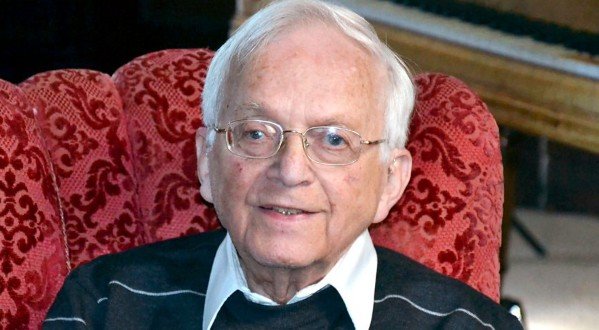
Freddie Knoller — even the name carries the weight of a story that refuses to be forgotten. Born in Vienna in 1921, Alfred “Freddie” Knoller emerged from the ashes of the Holocaust not merely as a survivor, but as a voice for countless lives extinguished, an educator, a writer, and a man who committed himself to ensuring that history’s darkest chapters are never erased.
Early Life: Vienna, Family Roots, and Growing Shadows
Freddie Knoller was born on 17 April 1921 into a Jewish family in Vienna. His parents, David and Marja Knoller, provided him with a warm, cultured upbringing, as Vienna itself was then one of Europe’s great centres of art, music and intellectual life. Yet even before Freddie reached adulthood, rising tides of antisemitism began to cast dark shadows over his world.
The annexation of Austria into Nazi Germany in 1938, known as the Anschluss, radically changed life for Jewish citizens. Laws were imposed stripping Jewish Austrians of civil rights, property, professional opportunities, safety. For young Freddie and his family, the threat escalated from whisper to roar. Many Jewish families sought refuge outside Austria; Freddie eventually made his way to Paris in an effort to escape persecution.
The War Years: Hiding, Resistance, Capture, and Deportation
Arriving in Paris did not offer Freddie the sanctuary he had hoped. After the German occupation of France, life for Jews became far more precarious. Freddie lived for a time under a false identity, hoping to blend in and wait out the storm. But survival under false names, rationing, curfews, betrayals, and the constant threat of discovery invalidated any sense of security.
He did not remain passive. At some point, Freddie engaged with elements of the French Resistance. But resistance of any kind carried tremendous risk. Eventually, Freddie’s luck ran out. He was arrested, detained at Drancy, the internment camp just outside Paris, which served as the major staging ground for the deportations of Jews from France to extermination camps.
From Drancy, Freddie was deported to Auschwitz-Monowitz (often simply called Monowitz, part of the Auschwitz complex) where the industrial machinery of death and forced labour awaited. Later, he endured an evacuation death march and subsequent imprisonment in Mittelbau-Dora, another camp infamous for its brutal labour regimes. His liberation finally came in Bergen-Belsen on 15 April 1945.
During those years Freddie witnessed and endured horrors: the loss of family; daily humiliation and fear; forced labour; sickness; starvation; near-unbearable brutality. His parents, David and Marja, were deported via Theresienstadt to Auschwitz, and they did not survive.
Liberation, Aftermath, and Physical Return
For many survivors, liberation was not the instant absconding from persecution that one might imagine. Freed from the concentration camps, Freddie was pulled back into the real world, yet that world was irreversibly altered. The scale of loss—of self, of family, of country—was overwhelming. He suffered physically and mentally, as did almost every survivor.
Displaced Persons camps, aid agencies, and other survivors became crucial in helping with the barest essentials: medical care, food, documentation. Freddie faced decisions about where to rebuild his life, what to do with memories that haunted him, whether to speak, whether to forget.
Rebuilding: Emigration, Identity, and New Beginnings
In 1947, two years after the war’s end, Freddie emigrated to the United States. The appeal was clear: a chance of safety, of anonymity, of rebuilding. But alongside opportunity came challenges—relearning to live, managing trauma, forging identity as a survivor in a place far distant from the old world.
Five years later, in 1952, he relocated again—this time to the United Kingdom, which was to become his adopted home. Britain became the landscape in which he would root himself, turning his traumatic past into public testimony. He found work, built community, formed personal relationships. Yet the war and its memories never completely receded; they became part of him, and part of his mission.
Becoming a Witness: Writing, Speaking, and the Power of Testimony
Freddie Knoller chose never to remain silent. He authored several works that laid bare his experiences, not with sensationalism, but with measured honesty. Two of his better-known books are Desperate Journey: Vienna-Paris-Auschwitz (published in 2002) and Living with the Enemy (2005). These writings do not merely chronicle suffering; they explore human dignity in extremity, the moral questions survivors must grapple with, and the enduring need to confront hatred.
In addition to his books, Freddie spent decades visiting schools, museums, foundations, and documentaries. One of the most prominent works is the BBC documentary Surviving the Holocaust: Freddie Knoller’s War, which gives viewers a direct encounter with his memories—his pain, shame, anger, but also stoic insight and hope. His speaking engagements were not rhetorical exhibitions—each time, he reminded his audiences of what ordinary people had been capable of, both for evil and for selfless courage.
Themes of Freddie Knoller’s Message
The Fragility and Value of Identity
Freddie’s journey under false names; his status as a Jew fleeing persecution; his emigration—all underscore how identity is constantly threatened under oppressive regimes. Yet they also show that identity, even when denigrated, can be a source of strength.
Memory as a Moral Imperative
Freddie Knoller believed that remembrance is not mere reflection—it is a duty. By telling what he saw and what he lost, he insisted that the world take responsibility, acknowledge horror, and guard against repetition.
The Complexity of Human Morality
In his life and writings, Freddie wrestled with moral ambiguity: collaboration, resistance, survival, betrayal, guilt. There were no simple villains or heroes; there was the messy reality of human decisions under impossible duress. His narrative forces us to ask: what would I do, if confronted with the depths of barbarism?
Resilience in the Face of Catastrophe
Physically, mentally, spiritually—survival required endurance. Freddie’s life reminds that resilience can be forged through suffering, but never without scars.
Honours, Recognition, and Later Life
Freddie Knoller’s contributions were widely recognised. In the UK, he was awarded the BEM (British Empire Medal) for his services to Holocaust education and memorialisation. Though honours are modest compared to what he endured, they reflect how his testimony came to be respected and how society began to see survivors not only as victims but as vital holders of history.
He continued to give talks well into old age, participating in exhibitions, interviews, and educational programmes. His life in Britain was quiet in many respects, but his voice remained public, clear, focused, unbowed.
Freddie Knoller passed away on 26 January 2022 at the age of 100. With his death, the world lost a first-hand witness, but his legacy is very much alive.
Why Freddie Knoller Matters Today
In an age where memories are at risk—through burn-out, misinformation, denial—Knoller’s story stands as a counterweight. Several factors make his life deeply relevant even now:
Rising antisemitism, racism, xenophobia: these are not relics of the past, but recurring threats. Understanding the roots—and the effects—of prejudice helps in resisting it.
Holocaust denial and distortion are still real problems. Testimony like Freddie’s counters falsehoods with the force of lived experience.
The ethics of complicity and civic responsibility remain crucial. Freddie’s experiences raise questions about bystanders, resistors, collaborators, and the costs of both action and inaction.
Mental health and trauma: Survivors like Freddie teach us that surviving is not the end, but the start of a complicated process of recovery, meaning-making, and speaking truth to power.
Lessons from Freddie Knoller’s Life
Never underestimate small acts of kindness. In extreme situations, even a sparse morsel of compassion can mean the difference between despair and hope.
Record and share truth. Knoller’s writing, his lectures, his participation in documentaries ensured that memory was not relegated to dusty archives.
Teach the past actively. He visited schools, spoke to young people—ensuring future generations see themselves in history, not outside it.
Embrace moral complexity. Heroes and villains are made in history, but in real life, many choices are hard, ambiguous, painful.
Resilience is not forgetting, but learning to live with memory. Suffering did not vanish for Freddie, but he wove it into a life that made difference.
Conclusion
Freddie Knoller’s life is not just a chronicle of suffering or survival—it is proof of what a single person can do with memory, with testimony, with moral clarity. Born into a world that tried to erode his humanity, he refused to be erased. Through books, speeches, interviews, he transformed private pain into public awareness.
In remembering Freddie Knoller, we do more than honour one man; we uphold the importance of history, of truth, and of resistance against hatred. May his legacy continue to inspire, warn, and unite.