Lizzie Riches: The Timeless Elegance of Imagination and Artistry
 News TimelyOctober 15, 2025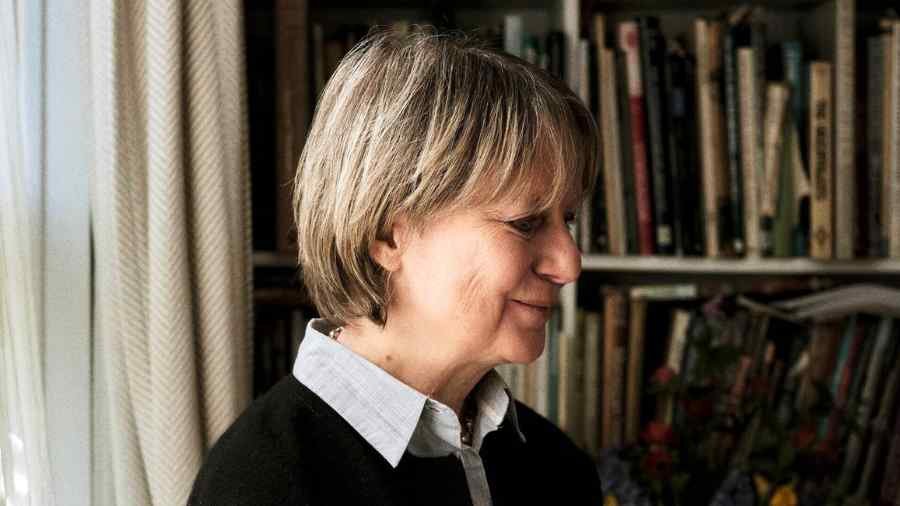
Lizzie Riches is one of Britain’s most distinctive and imaginative painters, whose work stands gracefully between realism and fantasy. Born in London in 1950, she has spent decades refining a unique style that merges the precision of Elizabethan portraiture with the enchanting vitality of nature. Her paintings are instantly recognisable — richly detailed, dreamlike, and often filled with symbolic flora and fauna that tell their own stories. With each brushstroke, Riches captures the charm of history and the heartbeat of modern emotion.
Unlike many contemporary artists who rely on abstract expression or digital reinterpretations, Lizzie Riches preserves a deeply traditional aesthetic — but infuses it with originality and mystery. Her art feels alive, as if her painted characters have stepped out of another century yet speak directly to the viewer’s soul. Over the years, she has built a celebrated career, earning a place in major collections and becoming a beloved figure within Britain’s cultural landscape.
Table of Contents
ToggleEarly Life and Education
Born in East London, Lizzie Riches spent her childhood near Epping Forest, an environment that played a crucial role in shaping her artistic sensibilities. The lush greenery, diverse wildlife, and seasonal beauty of the forest became an early source of inspiration. As a child, she was fascinated by natural forms, insects, and flowers — all of which later found their way into her paintings as recurring motifs.
Her parents encouraged her curiosity, taking her to art galleries and museums where she first encountered the works of Renaissance and Elizabethan masters. A visit to Audley End House at the age of five left a lifelong impression, igniting her fascination with historical portraiture. The richness of Elizabethan attire, the symbolic use of plants and objects, and the grace of the subjects became part of her creative DNA.
Riches studied at Camberwell School of Art, where she developed her technical foundation, and later attended Goldsmiths’ College, further refining her understanding of artistic theory, composition, and colour. These formative years were crucial, helping her cultivate both discipline and imagination — two qualities that define her work to this day.
The Artistic Vision of Lizzie Riches
The art of Lizzie Riches cannot be confined to a single genre. It is a fusion of portraiture, symbolism, and storytelling. Her subjects are often positioned in a classical stance reminiscent of sixteenth-century portraiture, yet they exist in a world subtly tinted with modernity and surrealism.
She draws from a range of influences — from Elizabethan miniatures to Pre-Raphaelite romanticism, from botanical illustrations to theatre and folklore. Every painting carries a narrative, often built around themes of identity, transformation, and the human relationship with the natural world.
Her technique reveals a remarkable command of detail. Every petal, feather, or pearl in her compositions is rendered with almost scientific precision, yet the overall effect is never clinical. Instead, it feels enchanted — as though each object and creature exists in symbolic harmony with the subject’s inner world.
Nature as a Central Theme
One cannot understand Lizzie Riches without understanding her relationship with nature. Plants, animals, and insects appear not merely as decorations but as living participants in her visual stories. Roses, peonies, bees, and birds frequently surround her subjects, each chosen with intent. A butterfly might represent change, a pomegranate fertility, and a tulip the fleeting beauty of youth.
Her deep respect for the natural world may trace back to her upbringing near Epping Forest, where she learned to observe the fine details of wildlife. In her work, nature becomes both setting and symbol — a mirror of human emotion and fragility. Her canvases seem to breathe, as if infused with the same life force she celebrates through her art.
Stylistic Characteristics and Signature Approach
Riches’s art combines technical mastery with symbolic richness. Her use of colour is both subtle and striking — a careful balance between warm earth tones and luminous hues. Costumes, jewellery, and fabrics are meticulously detailed, echoing the refinement of historic portraiture while maintaining a modern sensibility.
She often places her figures in shallow spaces, allowing the viewer’s attention to focus on the intricate surfaces and textures. The backgrounds, while simple, are rich with meaning. Whether it’s a garden wall, a patterned curtain, or a dark void, each backdrop enhances the psychological and symbolic presence of the subject.
This approach gives her paintings a timeless quality. They could belong to the court of Queen Elizabeth I or a modern-day fantasy realm. What makes them unique is how they transcend time altogether — grounded in tradition yet alive with originality.
Career Milestones and Exhibitions
Lizzie Riches’s professional journey began in the mid-1970s when she joined the Portal Gallery in London, a renowned platform for imaginative British painters. Her association with the gallery became a cornerstone of her career, introducing her work to collectors and critics who admired her technical skill and narrative depth.
Over the years, she has exhibited widely in London, Paris, Chicago, and New York. Her paintings have featured in major group shows and solo exhibitions, gaining acclaim for their balance of beauty, wit, and symbolism. Riches’s works have also been included in London’s Art in the Underground series, where her distinctive visual language reached an even broader public audience.
Her art is part of several prestigious collections, both private and corporate. Collectors such as Ringo Starr, Sir Roy Strong, and Nicholas Rothschild have acquired her paintings, alongside institutions including Prudential, Accenture, and the Sainsbury Collection. These acknowledgements testify to her universal appeal and artistic integrity.
Inspiration from History and Myth
The historical element in Lizzie Riches’s work is not nostalgic imitation but a reinterpretation. She borrows the visual grammar of Elizabethan art — the posture, the ornate costumes, the compositional symmetry — and transforms it into something psychologically alive. Her figures may wear ruffs and gowns, but their expressions and gestures convey deeply contemporary emotions.
There is often an undercurrent of mythology and folklore in her paintings. She explores feminine archetypes — queens, saints, muses, and heroines — presenting them as both powerful and vulnerable. Through this lens, she comments on the timelessness of human experience, suggesting that the struggles and desires of the past remain relevant today.
The Emotional Core of Her Work
Beneath the splendour of costumes and colour lies an emotional intelligence that gives her art lasting resonance. Her subjects often gaze directly at the viewer, their expressions calm yet introspective. There is an intimacy in her portraits, a quiet dialogue between artist, subject, and observer.
The emotional depth of her paintings comes from her belief that art should not merely be seen but felt. She once described her aim as “creating images that invite the viewer to step into a world of imagination and contemplation.” That sense of invitation defines her art — each painting feels like a secret garden one enters slowly, discovering meaning with every glance.
Legacy and Continuing Influence
Lizzie Riches’s influence extends beyond her paintings. She represents a generation of artists who resist the rush toward digital and conceptual art, preferring to uphold craftsmanship and imagination. Her meticulous approach, rooted in storytelling and symbolism, has inspired younger artists to rediscover the beauty of traditional methods.
Her work also contributes to the ongoing dialogue between past and present in British art. By blending historical aesthetics with modern emotion, she bridges centuries — reminding us that the language of beauty, nature, and humanity never grows old.
Recognition and Critical Reception
Art critics often describe Lizzie Riches’s work as “poetic realism.” While her compositions are meticulously planned, they never feel rigid. There is always a hint of fantasy — a whisper of dreams behind the realism. Reviewers have praised her for revitalising classical portraiture with subtle humour and emotional nuance.
She has been featured in major art reference publications such as The Dictionary of 20th Century British Artists and Who’s Who in the Arts. These inclusions reflect her established position in the British art scene and her contribution to the country’s visual heritage.
Personal Life and Working Philosophy
After moving to Norfolk in the 1970s, Lizzie Riches embraced the quiet beauty of rural life. The tranquillity of her surroundings continues to nourish her creativity. She once noted that her studio, filled with sketches, plants, and collected objects, feels like a small museum of inspirations.
Her process is meditative and deliberate. She begins with detailed preparatory drawings, studies textures and botanical forms, and often researches historical garments before beginning a painting. The result is a harmony between intellect and emotion — every element, no matter how small, serves the larger narrative.
The Enduring Appeal of Lizzie Riches
The continuing fascination with Lizzie Riches’s art lies in its ability to evoke wonder. Her paintings do not demand immediate interpretation; they invite slow contemplation. In a world increasingly driven by speed and superficial trends, her work offers a refuge of stillness and meaning.
Collectors, art students, and historians alike are drawn to her ability to connect the viewer with something eternal — the quiet dignity of a face, the symbolism of a flower, the dance between imagination and discipline. Lizzie Riches remains a reminder that true artistry lies in sincerity, patience, and a deep respect for the world’s beauty.
Conclusion
Lizzie Riches stands as a guardian of timeless artistry — a painter who bridges centuries through vision and craftsmanship. Her works breathe life into history while speaking directly to the present. Whether one views her as a storyteller, a realist, or a dreamer, there is no denying her place among the most enchanting artists of modern Britain.
Through her detailed portraits and poetic symbolism, she invites us to look beyond the surface — to see beauty not as decoration but as meaning. Lizzie Riches’s art will continue to inspire generations, not merely for its elegance but for its reminder that imagination, when guided by heart and skill, becomes eternal.