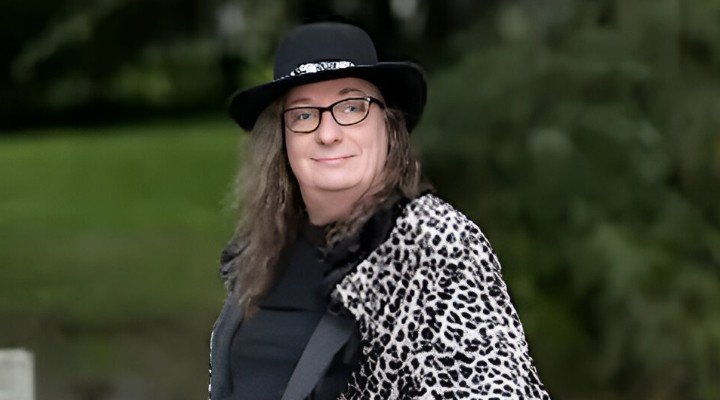
Miranda Yardley is a British writer, accountant, and self-described transsexual who has become one of the most recognised and controversial voices in the gender debate. Known for her sharp intellect and willingness to question prevailing ideologies, Yardley represents a complex intersection between trans identity and feminist thought. She identifies as a trans woman but stands firmly against what she calls “the erasure of biological sex and the silencing of women’s voices in the name of inclusion.”
Early Life and Career
Born in England, Miranda Yardley pursued a professional career in accounting before becoming known for her outspoken views on gender and feminism. She once served as the publisher of Terrorizer magazine, a publication covering heavy metal music. Her shift from the music industry to activism and commentary came as the cultural debates surrounding gender identity grew in intensity in the early 2010s.
As a transsexual woman, Yardley began engaging in public discussions around how gender identity laws affect women’s rights and social policy. Unlike many public commentators, she writes from personal experience of transition, giving her arguments both authority and empathy.
The Gender Critical Position
Yardley’s central belief is that sex and gender are distinct concepts — one biological, the other social. She supports the rights of individuals to live as they choose, but she warns that blurring sex and gender in law and public discourse risks undermining women’s safety, fairness in sport, and medical ethics.
She often aligns with what is called the “gender critical” perspective — a movement that defends the idea that biological sex should remain a protected and relevant category in policy, research, and public life. However, unlike some who approach the issue from outside the transgender community, Yardley’s lived experience adds credibility to her critique.
Her view can be summarised in one of her public statements: “Acknowledging sex reality does not deny anyone’s humanity. It is the foundation of safeguarding and fairness.”
Advocacy and Public Engagement
Yardley has been an active contributor to parliamentary consultations on reforms to the UK Gender Recognition Act. In her submissions, she has opposed self-identification policies that allow people to legally change their sex without medical assessment or diagnosis. She argues that while gender expression should be free, changing the legal definition of sex carries profound social consequences.
Her activism is not limited to law. She frequently engages in discussions about social media censorship, women’s sports, and the medicalisation of gender-nonconforming youth. Yardley believes that children struggling with identity should be met with compassion, but also with caution. She promotes a therapeutic approach over immediate medical intervention, warning of irreversible outcomes when young people are hastily guided towards hormones or surgery.
Conflict and Controversy
Given the polarised nature of gender discourse, Yardley’s stance has drawn both praise and hostility. Many feminists and human rights advocates commend her for courageously speaking truth in a climate where dissent is often stigmatised. Others accuse her of undermining transgender activism and fuelling division.
Yardley herself has acknowledged the personal cost of holding unpopular opinions. She has faced online harassment and professional backlash. Yet she continues to write and speak openly, insisting that debate is essential for democracy. Her resilience reflects a deeper principle: that free speech must apply even to those who challenge orthodoxy from within their own community.
Philosophy and Core Ideas
At the heart of Yardley’s philosophy is a belief in material reality — the idea that biological sex is immutable and must not be replaced by self-declared identity in law or policy. She distinguishes between transsexuals, who transition medically and socially, and the broader category of transgender people, some of whom may not experience gender dysphoria.
She frequently argues that modern activism has drifted from medical and psychological understanding towards ideology. Yardley maintains that empathy for trans people should never come at the expense of women’s boundaries or children’s wellbeing.
Her writing often returns to these themes:
The importance of safeguarding women’s spaces.
The right to question gender orthodoxy without being silenced.
The defence of truth and evidence in public debate.
Writing and Publications
Miranda Yardley’s essays appear across British and international media. She has written for New Statesman, Morning Star, AfterEllen, and her personal blog. Her work includes analytical pieces on gender law, philosophical reflections on identity, and commentary on how political movements shape language.
One of her well-known essays, “Girl Dick, the Cotton Ceiling and the Cultural War on Lesbians,” dissects the tension between lesbian identity and transgender inclusion within queer spaces. Another, “Kellie Maloney, Newsnight and the Debate the Transgender Community Refused to Have,” critiques the reluctance to engage in honest discussion about gender in mainstream media.
Her writing style is direct, sometimes provocative, but consistently thoughtful. She avoids slogans, preferring evidence-based reasoning. That intellectual rigour has made her a key reference point in feminist and academic discussions about sex and gender.
Personal Identity and Perspective
Despite being labelled by some as anti-trans, Yardley consistently reaffirms her support for transsexual rights. She distinguishes between supporting individuals and supporting ideologies. Her argument is that one can defend the dignity and freedom of trans people without denying biological facts.
She often reflects on her own journey — how transitioning gave her understanding of gender dysphoria but also insight into how society constructs identity. In interviews, she has said that she transitioned not to become a woman, but to live more comfortably as herself. This nuanced perspective sets her apart from both mainstream transgender activism and conservative critics.
Feminism and Women’s Rights
Yardley’s alignment with feminist thought is central to her activism. She considers herself a feminist ally who seeks to protect the gains women have made through decades of struggle. She believes that policies allowing male-born individuals into female-only spaces threaten those hard-won rights.
Her feminist engagement is rooted in material analysis — understanding how sex impacts social roles, pay gaps, and violence statistics. She warns that replacing “women” with gender-neutral terms in law and research risks erasing data that reveals inequality.
Criticism and Responses
Miranda Yardley’s critics argue that her stance ignores the lived experiences of transgender people who do not identify with binary categories. Some accuse her of legitimising discrimination. Yardley responds that protecting women’s rights and questioning policy is not hate speech, but responsible civic engagement.
She often challenges those who claim to speak for all trans people, pointing out the diversity of opinion within the community itself. For her, true inclusion must allow disagreement.
Influence and Legacy
Yardley’s influence extends beyond Britain. Her writings circulate widely among gender-critical activists, academics, and journalists around the world. She has helped articulate a framework for discussing gender that blends empathy with realism.
Her legacy is likely to be one of intellectual courage — the willingness to question popular narratives without fear of being ostracised. Whether one agrees with her or not, Miranda Yardley has undeniably shaped the modern conversation about sex, gender, and truth.
Conclusion
Miranda Yardley stands as one of the most intellectually intriguing figures in the contemporary gender debate. As a transsexual woman who defends biological reality and women’s rights, she embodies the complexities of identity in the 21st century. Her work urges society to balance compassion with critical thinking, inclusion with honesty, and progress with principle.
In an era where discourse is often reduced to slogans, Yardley’s insistence on clarity and evidence offers a rare form of integrity. She reminds us that progress is not achieved by silencing dissent, but by engaging with it. Her voice — challenging, informed, and deeply human — will continue to resonate in discussions about gender and equality for years to come.