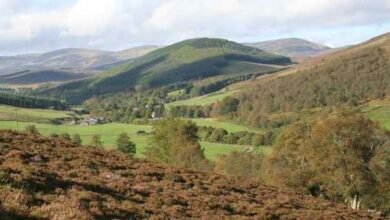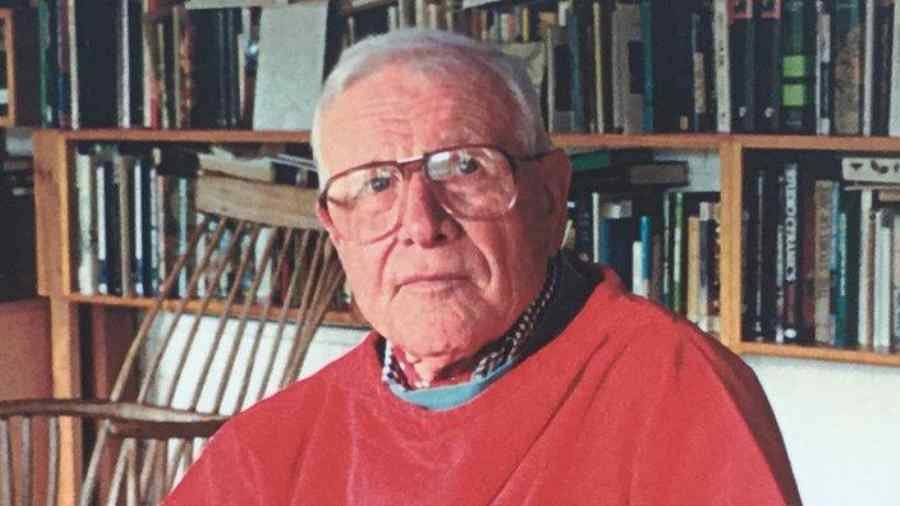
Ogwyn Davies remains one of the most celebrated figures in modern Welsh art, a painter whose deep connection to his homeland’s culture, language, and landscape shaped a visual legacy that continues to inspire. Born in 1925 in the small town of Trebanos in South Wales, Davies lived through a transformative era for Welsh identity. His art reflected the spiritual and physical beauty of his surroundings, blending the emotional depth of his homeland with a modernist sensibility that transcended regional boundaries. Over six decades, he established himself as a key figure who captured the essence of Wales — its rugged hills, quiet chapels, and poetic soul — through a unique and evolving artistic voice.
Early Life and Education
Ogwyn Davies was born in the heart of the Swansea Valley, an area surrounded by the beauty of the Welsh hills and the hardworking spirit of its people. The industrial environment of his youth contrasted sharply with the serenity he would later seek in his art. After completing his schooling, Davies served in the Royal Air Force from 1943 to 1947 during the Second World War. Those formative years exposed him to broader perspectives and cultures, yet his heart remained tied to the hills and valleys of Wales.
After his military service, he enrolled at the Swansea School of Art, where he studied from 1947 to 1952. There, he developed a foundation in drawing, composition, and colour theory, while also being exposed to European art movements that influenced his later experimentation with texture and abstraction. His education instilled not just technical skill but also a deep understanding of the relationship between form and emotion — something that became the hallmark of his career.
The Path to Teaching and Artistic Discovery
In 1955, Ogwyn Davies accepted a position as an art teacher at Ysgol Uwchradd Tregaron, a secondary school in the rural heart of Ceredigion. What was meant to be a teaching role soon became a lifelong connection with the town and its community. He remained there until 1985, inspiring countless students to appreciate the expressive potential of art.
Teaching did not restrict his creativity — instead, it grounded it. The Welsh countryside around Tregaron became the living canvas that fuelled his imagination. His daily walks, the changing light across the valleys, and the architectural simplicity of chapels and farms offered him endless inspiration. The rhythm of rural life — the seasons, the sense of belonging, the connection between language and landscape — deeply influenced his paintings.
During his teaching years, Davies balanced his dual roles as educator and artist, steadily building a reputation through local exhibitions and art societies. By the time he retired, he had already established himself as one of Wales’s most respected painters, known for both his authenticity and his innovation.
Artistic Themes and Philosophy
Ogwyn Davies’s art is not merely representational; it is poetic. Each brushstroke tells a story of place, memory, and emotion. His paintings often explore rural architecture — barns, chapels, farmhouses — not simply as physical structures but as symbols of endurance, spirituality, and community. He once reflected that in these old buildings, “you can sense the human association of several generations.” To Davies, every weathered wall and wooden door carried whispers of history and belonging.
Language played a profound role in his creative philosophy. Davies was a passionate Welsh speaker and saw language as inseparable from national identity. In some of his later works, he incorporated Welsh words and phrases directly into his paintings. This fusion of text and texture represented his belief that art and language were two expressions of the same cultural soul. His piece inspired by the 1997 Welsh devolution referendum, featuring the repeated word “Ie” (meaning “Yes”), became a visual celebration of national pride and political awakening.
Style, Techniques, and Materials
Davies was a master of versatility. He worked across oil, acrylic, collage, and mixed media, often combining traditional painting techniques with experimental approaches. His fascination with texture led him to incorporate unconventional materials — dust, sand, and natural pigments — into his canvases, echoing the earthy tones and rough surfaces of the Welsh landscape.
His compositions were often semi-abstract, blending recognisable shapes with expressive gestures. The influence of European artists such as Antoni Tàpies can be seen in his use of layered surfaces and a restrained yet powerful palette. However, unlike many modernists who distanced themselves from cultural identity, Davies’s abstraction always remained rooted in place. His art was modern, yet unmistakably Welsh.
The Influence of Landscape and Faith
One of Ogwyn Davies’s most iconic subjects was Soar y Mynydd, the remote Calvinist Methodist chapel nestled in the hills of Ceredigion. To many, this tiny whitewashed building symbolises spiritual solitude and the endurance of faith in the face of isolation. Davies’s interpretations of Soar y Mynydd capture not only the physical beauty of the location but also its emotional resonance — a quiet communion between humanity and nature.
Throughout his work, the Welsh landscape is not a backdrop but a living character. The hills, farms, and skies pulse with rhythm and energy, reflecting his deep empathy with the environment. His brushwork often conveys movement — wind through grass, shifting clouds, the interplay of shadow and light — as if the land itself breathes.
Davies’s art also carries a spiritual quality that transcends organised religion. His use of light suggests hope and renewal, while his muted tones evoke reflection and memory. Through his canvases, he invited viewers to see the sacred in the ordinary — to find poetry in the everyday textures of Welsh life.
Exhibitions and Recognition
Over six decades, Ogwyn Davies exhibited widely across Wales. His works were shown in both solo and group exhibitions, gaining admiration from critics, collectors, and fellow artists. In 1994, he was elected a member of the prestigious Royal Cambrian Academy — an honour that recognised not only his technical skill but his contribution to Welsh cultural identity.
His paintings are now held in major public collections, including the National Library of Wales, the National Museum of Wales, and numerous regional galleries. These institutions have ensured that his work remains accessible to future generations, preserving the spirit of his art as a cornerstone of post-war Welsh creativity.
Davies’s exhibitions were not grandiose affairs. They were sincere celebrations of Welsh life, attracting people who saw in his art a mirror of their own roots. He remained humble throughout his career, often more comfortable in his quiet studio than in the limelight.
Legacy and Cultural Impact
Ogwyn Davies passed away in December 2015 at the age of 90, leaving behind a body of work that continues to shape the conversation around Welsh identity in art. His influence extends beyond his paintings; as a teacher, he nurtured a generation of artists who carried forward his love for culture and creativity.
What sets Davies apart is the way he merged modern artistic innovation with cultural authenticity. While many 20th-century artists pursued abstraction as a universal language, Davies used it to express something deeply local and personal. His art proved that modernism could coexist with heritage — that one could be contemporary without abandoning one’s roots.
His work also stands as a testament to the importance of place in artistic identity. In an age of globalisation, Davies’s art reminds us of the power of belonging — that creativity is most authentic when it springs from one’s own soil, language, and history.
The Market and Continuing Interest
In recent years, Ogwyn Davies’s paintings have continued to attract interest at auctions and exhibitions. Collectors value his work not just for its aesthetic beauty but for its emotional and historical significance. Pieces such as his interpretations of Soar y Mynydd and Dolbadarn Castle remain highly sought after, often commanding impressive bids from art enthusiasts who appreciate the blend of spirituality and craftsmanship.
Art historians have also renewed their focus on Davies’s contribution to the broader narrative of post-war British art. His combination of regional subject matter with modernist form places him in dialogue with other greats of the period, yet his distinctly Welsh voice ensures his uniqueness.
Personal Character and Philosophy of Life
Beyond his artistry, Ogwyn Davies was known for his humility and quiet strength. Those who knew him describe a man deeply committed to his community, content in simplicity, and endlessly curious about the world around him. His daily routines — teaching, walking, sketching — reflected a life lived with purpose and awareness.
Davies saw art as a way of connecting people to their surroundings and to one another. He believed that even the smallest detail — a weathered door, a chapel bell, a fragment of language — could hold infinite meaning when observed with sensitivity. This philosophy not only shaped his art but also his teaching, inspiring countless students to see beauty where others might see only familiarity.
Conclusion
Ogwyn Davies was far more than a painter; he was a storyteller of the Welsh soul. His art captured the rhythm of life in rural Wales — its solitude, its faith, its enduring connection to land and language. Through his textured canvases and poetic vision, he gave voice to a nation often overlooked in the broader narrative of British art.
Today, his legacy endures as both inspiration and reminder. Inspiration — for artists seeking authenticity in their work, for those who wish to express their cultural identity without compromise. Reminder — that art’s true power lies not in grandeur or fame, but in honesty, emotion, and connection to place.